


Many film enthusiasts and military history buffs often wonder about the real-world backgrounds of iconic Hollywood tough guys. Specifically, people frequently ask whether and how was telly savalas in the military before he became an international television star and silver screen icon. The truth is that Aristotle Savalas did serve his country honorably during World War II, bringing genuine grit and battlefield understanding to his legendary movie roles. His wartime experiences clearly informed his imposing screen presence, especially when handling military equipment and small arms in classic war productions.
Long before he became famous as Kojak, Savalas experienced the discipline and physical demands of wartime army life firsthand. Historical collectors and firearm enthusiasts often appreciate his films because they showcase authentic mid-century weapons, ranging from standard service rifles to theatrical stage firearms like blank firing prop guns. Exploring his actual service record helps separate studio publicity myths from verified historical facts. This guide examines his wartime service, his transition into cinema, and the memorable military roles that defined his prolific acting career.



The Service Record of Telly Savalas and His Iconic Military Roles
The direct answer to whether Aristotle “Telly” Savalas served in the armed forces is an unequivocal yes. He enlisted in the United States Army during the height of World War II, serving from 1941 until 1943. While Hollywood publicity sometimes exaggerates the frontline exploits of famous actors, verified military documents confirm his active duty service during the global conflict. Understanding his actual army career provides fascinating context for the rugged, authoritative persona he brought to mid-century cinema.
Aristotle Savalas: Official Military Service and Wartime Record
Aristotle Savalas joined the military following the entry of the United States into the Second World War. Official records indicate that he entered military service in 1941, during a period of massive national mobilization across all military branches. Like millions of other young American men of his generation, he answered the call to duty without hesitation. His early service placed him directly into intensive military conditioning designed to prepare soldiers for deployment abroad.
Military archives document that Savalas was assigned to Company C of the 12th Medical Training Battalion, located within the 4th Medical Training Regiment at Camp Pickett, Virginia. Medical training regiments performed essential functions, preparing soldiers to administer first aid, manage field triage, and maintain sanitation under rigorous conditions. Training in a medical battalion required physical stamina, strict discipline, and swift decision-making skills. These core soldierly attributes later became hallmarks of his commanding presence on camera.
During his time at Camp Pickett, Savalas achieved the rank of corporal, reflecting his leadership capabilities and adherence to military standards. Instructors at military training centers demanded precision in drill, basic field craft, and small arms familiarization. Although medical personnel were non-combatants under the Geneva Convention, recruits received fundamental instruction in handling standard service equipment. This foundational knowledge gave Savalas an authentic familiarity with military hierarchy and protocol that stayed with him throughout his life.
Injuries, Medical Discharge, and Civilian Recovery
The military career of Savalas came to an unexpected conclusion in 1943 following a catastrophic motor vehicle accident. While traveling during his service period, he was involved in a severe collision that left him with life-threatening physical trauma. The crash resulted in multiple broken bones, a severe concussion, and significant internal injuries that required immediate hospitalization. Military physicians spent months treating his injuries and monitoring his gradual physical rehabilitation.
Due to the severity of his physical trauma, army medical evaluators determined that Savalas was no longer physically fit for active military duty. Consequently, he received an honorable medical discharge in 1943 after more than two years of dedicated service. Historical accounts frequently debate whether his injuries qualified for specific military decorations, but his honorable discharge remains undisputed. The long recovery period tested his resilience and forced him to reevaluate his future career path as a young civilian.
Reintegrating into civilian life during wartime presented unique challenges for medically discharged veterans. Savalas focused his energies on higher education, taking advantage of veteran educational programs to study psychology at Columbia University. His post-service recovery demonstrated a remarkable capacity to adapt to difficult circumstances and overcome physical adversity. That same inner fortitude later allowed him to navigate the highly competitive world of postwar media and professional acting.
From the State Department to Hollywood Stardom
Before entering the acting profession, Savalas utilized his intellect and communication skills in public service. During the late 1940s and early 1950s, he worked for the United States Department of State, hosting informational radio broadcasts for the Voice of America. This diplomatic communication work sharpened his vocal delivery and honed his natural ability to engage diverse audiences. His distinct, commanding baritone voice soon attracted attention from broadcasting executives in the burgeoning television industry.
Savalas transitioned from public diplomacy into television production, working behind the scenes as an executive producer and casting director at ABC News. He did not formally pursue professional screen acting until he was in his late thirties, making his dramatic debut relatively late compared to his peers. When an audition called for an actor who could deliver lines with convincing European accents and gritty realism, Savalas stepped into the role himself. Directors immediately noticed his natural charisma, imposing physical stature, and unmistakable bald appearance.
His military background and worldly experience gave him a distinct advantage over performers who had never worn a uniform. Savalas understood how soldiers walked, how officers delivered commands, and how comrades interacted under extreme pressure. Casting directors quickly recognized that he possessed an innate authority that could not be easily manufactured through drama school training. Within a decade, Savalas established himself as one of Hollywood’s premier character actors, earning critical acclaim and international recognition.
Authentic Small Arms and Firearms Handling on Screen
One of the most compelling aspects of classic twentieth-century war films is the visible authenticity in how actors handle period small arms. Actors who served in the military during World War II approached prop weapons with instinctive safety discipline and realistic handling techniques. Savalas carried rifles, submachine guns, and sidearms with the casual confidence of someone who understood real-world military equipment. That natural familiarity prevented his performances from appearing rehearsed or artificial.
Modern shooting enthusiasts and tactical students often study historical films to observe vintage weapon manipulation techniques. In many scenes, viewers can observe proper trigger discipline and realistic posture that mirrors genuine period military doctrine. Today, sports shooters practicing with replica airgun handling options often note the same fundamental grip principles that actors of that generation demonstrated on set. Savalas moved with his weapons in a practical manner, keeping muzzles pointed in safe directions even during chaotic action sequences.
The armorers working on major mid-century film sets relied heavily on real surplus weapons converted to fire blank cartridges. Working with live-action blank ammunition required strict adherence to safety protocols to prevent catastrophic set accidents. Because veterans like Savalas respected firearms, studio armorers trusted them with complex pyrotechnic and firearm sequences. That mutual trust between armorers and veteran actors created some of the most memorable combat scenes in cinema history.
The Dirty Dozen: Military Disobedience and Squad Dynamics
Released in 1967, The Dirty Dozen stands as one of the quintessential military action films of all time. Directed by Robert Aldrich, the production assembled an extraordinary cast composed largely of real-world military veterans, including Lee Marvin and Charles Bronson. Savalas was cast in the complex, villainous role of Archer Maggott, a deeply disturbed convict pressed into a dangerous commando mission. His unsettling performance demonstrated remarkable dramatic range, contrasting sharply with the heroic roles played by his fellow cast members.
The dynamic among the ensemble cast reflected the rough reality of military life and post-combat camaraderie. Behind the scenes, the shared military backgrounds of Marvin, Bronson, and Savalas established an unspoken bond of mutual professional respect. Their collective understanding of military structure allowed Aldrich to capture the tension between military discipline and personal defiance. The film received immense critical acclaim and cemented the reputation of Savalas as an elite Hollywood talent.
In terms of weaponry, the film prominently featured iconic American ordnance, including the M3 grease gun, the M1 carbine, and the Thompson submachine gun. The climactic assault on the French chateau showcases intricate tactical movements, fire-and-maneuver tactics, and coordinated room clearing. Savalas brought a visceral intensity to these climactic sequences, highlighting the volatile psychology of soldiers under extreme tactical stress. Even decades after its premiere, the movie remains a masterclass in military squad storytelling.
Battle of the Bulge: Tank Formations and Armored Warfare Realism
The 1965 epic Battle of the Bulge provided Savalas with another major platform to showcase his military screen presence. He portrayed Sergeant Guffy, a cynical, pragmatic tank commander navigating the brutal winter counteroffensive launched by German forces in 1944. Guffy represented the weary veteran non-commissioned officer who kept his crew focused on survival while maintaining combat effectiveness. Savalas balanced moments of sharp comedic relief with genuine tactical determination, making Guffy one of the film’s standout characters.
The production utilized expansive Spanish landscapes to recreate the frozen forests and rolling fields of the Ardennes. While historical purists often critique the film for using post-war tanks to stand in for German Panzers and American Shermans, the tactical maneuvers remain impressive. Viewers watch armored crews execute hull-down positioning, coordinated tank fire, and defensive retreat maneuvers against superior enemy armor. Savalas looked entirely at home inside the turret, barking commands over the intercom with believable authority.
Small arms also played a critical supporting role throughout the film, showing how armored crews depended on secondary weapons when dismounted. Crew members carried sidearms and compact carbines for close-range personal defense in the event their vehicles were immobilized. Savalas depicted this constant state of vigilance with convincing posture and situational awareness throughout every combat sequence. His performance anchored the human element of an otherwise massive, mechanized cinematic spectacle.
Kelly’s Heroes: Satire, Military Logistics, and Tactical Teamwork
In 1970, Savalas joined an all-star ensemble for Kelly’s Heroes, a brilliant blend of war adventure, heist cinema, and anti-authoritarian satire. Set behind enemy lines in wartime Europe, the plot follows a rogue group of American soldiers who discover a cache of gold bars. Savalas played Master Sergeant “Big Joe,” the exhausted platoon leader constantly trying to keep his men alive despite reckless officers and absurd circumstances. His exasperated leadership style served as the emotional and moral center of the entire film.
Despite its comedic tone, Kelly’s Heroes features surprisingly detailed and realistic representations of combined-arms combat. The battle scenes incorporate infantry fire teams, armored support, mortar barrages, and precision sniper engagements. Enthusiasts interested in military optics and precision marksmanship can study these sequences, much like modern hobbyists researching guidance on choosing an optical scope for long-range target shooting. The interaction between scout snipers and advancing riflemen highlights genuine battlefield teamwork and communication.
Savalas carried a Thompson submachine gun throughout the movie, demonstrating consistent muzzle control and deliberate shooting stances. Big Joe remains one of his most beloved roles because it captured the deep affection and protective instinct veteran sergeants felt for their squads. Rather than glorifying senseless combat, the character prioritized the welfare of his soldiers above all else. This grounded portrayal resonated strongly with real-world veterans who recognized the timeless archetype of the caring, battle-hardened non-commissioned officer.
Mackenna’s Gold and Nineteenth-Century Cavalry Arms
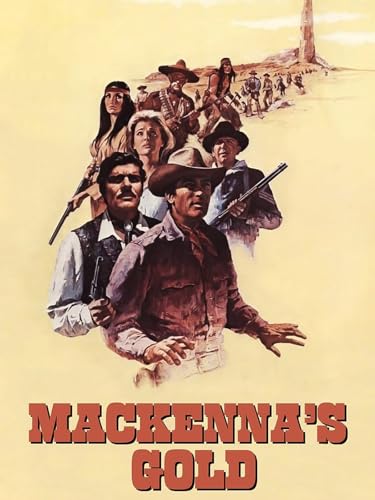
Branching outside twentieth-century conflicts, Savalas also showcased his command of military characterizations in the 1969 Western epic Mackenna’s Gold. In this production, he portrayed Cavalry Sergeant Tibbs, an officer struggling with greed and loyalty on the perilous Southwestern frontier. The transition from modern mechanized warfare to horseback cavalry tactics demonstrated his versatility as a dramatic performer. Tibbs represented the rigid, hardened frontier soldier accustomed to unforgiving terrain and constant tactical peril.
The film provides an intriguing look at nineteenth-century cavalry arms, including single-action revolvers, trapdoor carbines, and lever-action saddle guns. Frontier cavalry units relied on strict weapon maintenance and reliable horse-mounted marksmanship to survive isolated patrols. Savalas adapted his physical performance seamlessly, handling period revolvers and riding with the rigid posture expected of a seasoned frontier non-commissioned officer. His portrayal highlighted the psychological toll of prolonged isolation on remote military outposts.
Evaluating Vintage Military Cinema for Modern Historians and Collectors
Classic war cinema offers modern viewers, historians, and arms collectors a valuable window into mid-century military equipment. Films produced during the 1960s and 1970s often utilized genuine wartime surplus vehicles, authentic uniforms, and functional historical small arms. Because original surplus gear was plentiful at the time, these productions achieved a level of tactile, physical realism that modern digital effects rarely match. Examining these films allows historians to observe how vintage military equipment looked and moved under active field conditions.
For home media collectors, selecting classic war films provides an enjoyable way to study military history and cinematic craftsmanship. When evaluating vintage titles, collectors often look for high-definition remastering that preserves grain, audio fidelity, and technical visual details. Clear digital transfers reveal small details on uniforms, equipment pouches, weapon finishes, and vehicle markings that were previously obscured on television broadcasts. These physical media editions serve as valuable educational resources alongside formal military history texts.
Practical Takeaways on Military History and Screen Realism
The military legacy of Telly Savalas represents a proud chapter in the history of American wartime service and classic Hollywood cinema. His honorable service in the United States Army provided the bedrock for a career defined by authority, charisma, and dramatic excellence. By serving his country during a global crisis, Savalas joined a distinguished brotherhood of veteran actors who enriched cinema with their firsthand understanding of military duty. His memorable performances continue to entertain and educate audiences around the world.
Whether watching him command an armored tank crew, coordinate an assault with a submachine gun, or protect his squad behind enemy lines, viewers witness an artist who respected the uniform. For collectors and military history enthusiasts, his classic films remain essential viewing that showcase vintage equipment and timeless soldierly camaraderie. Aristotle Savalas demonstrated that true strength comes from resilience, dedication, and service to others, both in wartime and across a celebrated artistic career.


Write Your Review
No reviews yet. Be the first to share your experience!