


Shooters learning fundamental marksmanship quickly discover that placing shots on target depends on visual consistency before the trigger is pressed. In shooting sports and defensive training, what is sight alignment refers specifically to the mechanical centering of the front sight post within the rear sight notch. While modern shooters often explore handgun aiming systems and laser sights, mastering traditional iron sights remains essential for every platform. When a shooter establishes proper alignment, the top edges of the front and rear sights form an even horizontal plane while maintaining equal bands of light on either side of the front blade.
Achieving this relationship requires understanding the distinction between visual alignment and overall sight picture, along with the physical tools used to drift and adjust hardware. Firearms equipped with factory dovetailed sights, such as Glock square slides or AK pattern rifles, require precise physical adjustment when point of impact diverges from point of aim. Handheld pusher blocks, elevation tools, and instructional guides help shooters align both their visual focus and mechanical hardware correctly. Establishing a clear visual foundation ensures consistent downrange results whether firing handguns, carbines, or centerfire rifles.


The Principles and Mechanical Realities of Sight Alignment
Understanding how iron sights relate to one another forms the foundation of reliable marksmanship. Aligning the front and rear elements dictates where the barrel points in three-dimensional space across both handguns and rifles. Slight deviations at the firearm produce significant errors downrange, making optical and mechanical comprehension vital for consistent shooting.
The Geometric Foundation: Equal Height and Equal Light
The standard visual rule for open notch and post iron sights centers on the concept of equal height and equal light. When looking through a rear notch, the shooter must position the top edge of the front sight blade flush with the top surface of the rear sight. If the front post sits higher than the rear notch, the muzzle angles upward and shots strike high. Allowing the front sight to drop below the rear horizon drives the projectile low on the target.
Equal light governs horizontal centering within the rear aperture or notch. When the front post sits directly in the middle, the shooter sees equal slivers of visible space on both the left and right sides of the post. If the left light bar appears narrower than the right, the front post is leaning left, which forces the shot group to drift left. Maintaining both horizontal level and symmetric vertical spacing creates a true parallel alignment with the firearm bore axis.
Angular Error Versus Parallel Shift in Marksmanship
Marksmanship instructors frequently separate aiming errors into angular deviations and parallel shifts. A parallel shift happens when the sights remain aligned with each other, but the entire firearm sits slightly off target center. At twenty-five yards, a minor parallel offset results in an impact displacement that matches the initial offset. This type of deviation produces minimal dispersion across typical defensive handgun distances.
Angular error occurs when the front sight is improperly positioned inside the rear notch. Because the front and rear sights sit only a few inches apart along the slide or barrel, even a fraction of a millimeter of misplacement introduces an angle. That angular deflection multiplies continuously as the bullet travels through the air toward the target. At twenty-five yards, a tiny visual misalignment at the slide can displace the point of impact by several inches or miss the silhouette entirely.
Separating Sight Alignment from Sight Picture
Shooters often conflate sight alignment with sight picture, but they represent two distinct operational phases. Sight alignment describes solely the spatial relationship between the front sight post and the rear notch relative to the eye. Sight picture introduces the target into that established relationship, placing the aligned sight unit onto a specific impact point. A shooter can hold pristine sight alignment while aiming at a blank berm, meaning target placement is entirely secondary to post centering.
Different target holds determine how an aligned sight set sits against the bullseye. A center hold places the top edge of the aligned front blade directly across the middle of the target circle. A six o’clock hold positions the aligned sights directly beneath the bullseye, allowing the shooter to view the entire target clearly above the blades. A combat hold, common on factory defensive handguns, places the front dot or post directly covering the intended point of impact.
Fundamental marksmanship texts emphasize that maintaining proper alignment during trigger press is far more critical than achieving a flawless sight picture. In the instructional volume Sight Alignment, Trigger Control & The Big Lie, published by Loose Cannon, the text explains how shooters disrupt accuracy by chasing target perfection while neglecting sight stability. Even if the sight picture drifts slightly across the target ring, maintaining strict post alignment ensures the shot lands close to point of aim. Jerking the trigger to catch a fleeting sight picture disrupts alignment and creates drastic misses.
Visual Accommodation and Focal Plane Limits
The human eye possesses a single lens mechanism that can focus sharply at only one focal distance at any given time. In iron sight shooting, three distinct planes compete for visual clarity: the rear sight, the front sight, and the target downrange. Because human physiology cannot render all three planes in crisp focus simultaneously, the shooter must select a visual priority. Attempting to rapidly shift focus between target and sights produces eye fatigue and inconsistent visual verification.
Traditional shooting doctrine establishes the front sight blade as the primary focal plane for open iron sights. By focusing directly on the serrations or crisp top edge of the front blade, the rear sight notch appears slightly soft, and the target becomes a blurred silhouette. This visual arrangement allows the shooter to detect microscopic angular shifts of the front post instantly. Because angular errors destroy accuracy faster than target blur, front sight focus yields the tightest shot dispersions.
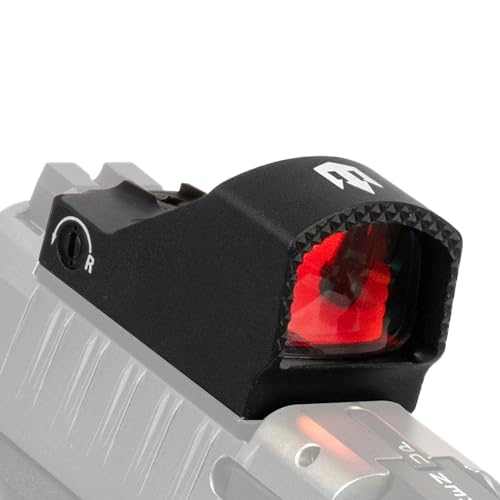
Modern reflex optics and telescopic systems alter this focal dynamic by projecting an aiming point onto a single plane. Shooters transitioning from iron posts to glass reticles can review our guide to selecting a rifle scope to see how optical configurations simplify focus. When looking through an optical system, the eye remains focused directly on the target while the illuminated reticle appears on the same visual plane. Mastering iron sight alignment remains the vital foundation for understanding how reticles orient to bore axes.
Mechanical Dovetail Alignment and Slide Profiles
Visual alignment in the shooter’s eye means very little if the metal sights are physically misaligned on the firearm slide. Most modern semi-automatic handguns utilize dovetail slots machined into the top of the slide to secure rear and front sights. Factory manufacturing tolerances, aftermarket replacements, and accidental impacts can cause a sight to drift out of true mechanical center. When mechanical alignment drifts, a visually perfect sight picture will consistently drive groups away from point of aim.
Adjusting dovetailed rear sights requires lateral movement across the slide profile without damaging delicate finishes or tritium gas lamps. Dedicated tools like the Pridefend Sight Pusher for Glock Square and the SporGain Heavy Duty Sight Pusher Tool for Square are engineered specifically for square slide geometry. These devices clamp the slide securely between contoured jaws, allowing a fine-thread lead screw to push the sight base smoothly. Using mechanical pushers eliminates the sudden impact forces that often shatter night sight vials.
Older adjustment methods involving brass punches and steel hammers carry significant risk for modern handguns. A slipping punch can gouge the slide coating, bend the sight blade, or peen the dovetail channel unevenly. Mechanical screw pushers provide measured leverage and steady lateral pressure, allowing minor adjustments down to fractions of a millimeter. Verifying dovetail centering with digital calipers ensures that physical zero matches visual expectations before live-fire confirmation.
Universal Adjustment Systems and Multi-Slide Maintenance
Handgun owners who maintain multiple firearms often encounter varying slide profiles that standard square pushers cannot accommodate. Angled slides, stepped frames, and varied slide widths demand adaptable clamping surfaces. The klola Universal Pistol Sight Pusher Tool Upgraded addresses these varied dimensions with adjustable side clamps and height blocks. This tool also includes dedicated front sight drivers, which are essential for servicing the small retaining nuts on screw-mounted front posts.
Maintaining front sight stability is just as important as securing the rear dovetail. On many popular striker-fired platforms, the front sight blade attaches through a slide hole via a specialized hex screw rather than a dovetail cut. If this screw loosens under recoil, the front blade twists slightly, destroying both equal light and horizontal bore alignment. Applying appropriate thread locker and verifying front post perpendicularity ensures the sight stays plumb during extensive practice sessions.
Devices such as the SporGain Precision Sight Pusher Tool provide compact aluminum frames suitable for routine bench maintenance. Aluminum construction offers sufficient rigidity for shifting tight-fitting steel sights while remaining lightweight enough for field range bags. Having mechanical adjustment capability at the range allows shooters to verify drift corrections immediately between shot groups. Immediate feedback shortens the time required to establish true mechanical alignment.
Platform-Specific Alignment on Long Guns and Service Rifles
Rifle platforms utilize different mechanical arrangements for aligning iron sights compared to semi-automatic handguns. Many modern sporting rifles and military surplus platforms, particularly 7.62 designs, feature front sight blocks with threaded elevation posts housed inside protective ears. Windage on these platforms is adjusted by drifting a cylindrical front drum laterally rather than moving the rear sight aperture. This mechanical arrangement requires specific leverage tools designed for front block dimensions.
The Front Sight Adjustment Tool provides mechanical elevation and windage adjustment through a dedicated clamping and spanner frame. The circular cutout slips over the front sight housing to press the windage drum left or right without battering the rifle block. Simultaneously, the slotted end of the tool engages the four-prong or two-prong post to rotate it up or down for elevation adjustments. Correcting windage at the front post moves opposite to rear sight corrections, requiring careful mechanical understanding.
Shooters outfitting tactical long guns often pair their primary iron sights with magnified glass or red dots. Those exploring modern optics for carbine platforms can consult our mid-range rifle optics overview to understand how optic heights interact with folding iron sights. When setting up backup iron sights on a rail, verifying both front and rear mechanical alignment ensures the rifle remains functional if the primary optical device fails. Consistent cheek placement on the stock establishes the alignment plane through the backup aperture.
Diagnosing Downrange Shot Groups and Point of Impact
When a shooter encounters consistent misses on target, diagnosing whether the fault lies in visual habits or mechanical zero is essential. The first diagnostic step involves firing several controlled five-shot groups from a solid, supported benchrest. Resting the firearm frame on sandbags minimizes human trembling, flinching, and grip pressure variations. If tight groups consistently form away from point of aim from a steady rest, the firearm requires mechanical sight drift.
Understanding which direction to drift the sights prevents frustrating trial-and-error sessions at the firing line. The universal rule of iron sight adjustment dictates that the rear sight must always move in the direction you want the bullet impact to go. If your shots group to the left, you drift the rear sight to the right. Conversely, if you adjust the front sight post, you must move the front blade in the opposite direction of the desired correction.
When shot groups appear scattered randomly across the paper rather than forming a tight cluster, the issue rarely stems from sight drift. Scattered impacts typically indicate visual inconsistency, such as alternating eye focus or poor head positioning on the stock or comb. Inconsistent cheek welds change the angle at which the eye peers through the rear aperture, generating shifting sight alignments on every shot. Developing a repeatable mounting position stabilizes the visual relationship before any mechanical adjustments are made.
Safe Inspection, Maintenance, and Dry-Fire Verification
Before undertaking any physical sight adjustment, installation, or visual inspection, the firearm must be unloaded and completely cleared. Remove the ammunition source, lock the action open, and visually and physically inspect the chamber and magazine well. Muzzle direction must be strictly controlled toward a safe backstop throughout all maintenance and dry-fire routines. Following proper firearm safety protocols ensures that sight maintenance remains completely accident-free.
Dry-fire practice serves as the premier training method for refining visual sight alignment without the distraction of recoil. By aiming at a plain light-colored wall with an inert firearm, the shooter can observe how the front post sits within the rear notch during trigger travel. If the front post dips, twists, or jumps as the hammer or striker drops, the shooter is applying uneven finger pressure to the trigger shoe. Consistent dry-fire practice trains the neuromuscular pathways to break the shot without disturbing sight geometry.
Ultimately, sight alignment represents the visual geometry that connects the shooter’s perception to the physical trajectory of the firearm. Investing time in understanding equal height, equal light, and the mechanical alignment of dovetail components pays immediate dividends at the range. Whether you are drifting a factory dovetail with a dedicated pusher or practicing front sight focus on the firing line, consistent alignment remains the cornerstone of precision marksmanship.


Write Your Review
No reviews yet. Be the first to share your experience!