


Firearm owners frequently evaluate non-magnified reflex optics to improve rapid target acquisition on handguns, shotguns, and modern rifles. A common point of confusion among new shooters centers on whether are red dot sights legal under federal, state, and local firearm regulations. Passive electronic sights that project an illuminated LED reticle onto a coated lens generally do not alter the mechanical function of a firearm. Sighting equipment rules can still vary across specific applications, including state hunting statutes, concealed carry permitting, and competitive shooting divisions. Shooters researching different setups can review general principles for selecting rifle and handgun optics to understand how non-magnified dots compare to traditional glass reticles.
Federal firearm statutes in the United States treat red dot sights as passive unmagnified aiming attachments rather than restricted firearm components. Optic footprints, slide mounting cuts, and Picatinny rail attachments also dictate how a sight interacts with your specific firearm platform. Compact micro optics designed for concealed carry slides provide different legal and practical considerations than full-sized open reflex sights built for long guns. Verifying regional wildlife management codes, local ordinances, and transport laws ensures full compliance before mounting an optic to any defensive or sporting firearm.
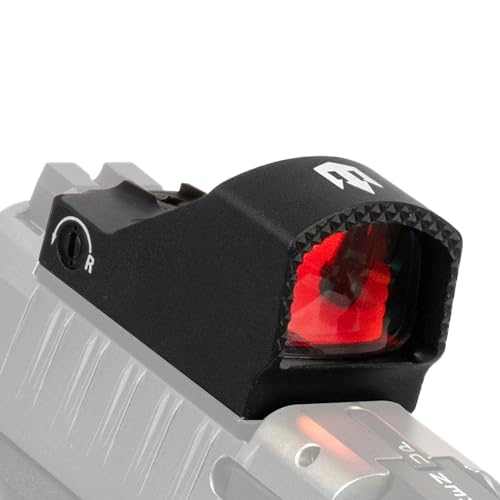
Pros
- Built-in backup iron sights add redundancy without added bulk or cost.
- True RMSc direct mount works with many popular micro-compact pistols.
- Shake-awake technology conserves power and delivers instant-on when needed.
- Rugged 6061-T6 aluminum construction with IP64 rating handles harsh conditions.
- 50,000-hour battery life is excellent for an always-ready defensive optic.
- Affordable price point for a feature-packed micro red dot sight.
Cons
- No included mounting screws or tools may require separate purchase for some slides.
- Limited to 3 MOA dot only, which may be too small for some users preferring a larger reticle.
- Product is new with zero reviews, so long-term reliability data isn't yet available.
The Triton Nautilus2 Micro Red Dot Sight is a purpose-built optic for concealed carry and defensive handgun use. It integrates a 3 MOA red dot into a compact housing that uses the RMSc/407K/507K footprint, making it a direct mount option for many popular micro-compact pistols like the Glock 43X MOS, Sig Sauer P365, and Springfield Hellcat. What sets this sight apart is the built-in rear iron sight, CNC-milled directly into the aluminum housing, giving you a backup sighting system that's always zeroed and ready if the dot fails or washes out. For anyone who carries a firearm for self-defense, that redundancy is a serious advantage.
This optic is best suited for sport shooters who compete in USPSA or IDPA carry optics divisions, home defense owners who want a reliable sighting solution without added bulk, and everyday concealed carriers who demand instant readiness. The shake-awake motion activation powers the dot on the moment you draw from the holster, and it sleeps when holstered to conserve battery life. With a claimed 50,000-hour battery life, you won't be swapping batteries every few months. The 10 brightness settings are adjustable from low-light conditions to bright midday sun, and the daylight-visible maximum keeps the 3 MOA dot crisp against bright backgrounds.
Build quality is a highlight. The housing is CNC-machined from 6061-T6 aircraft-grade aluminum, which offers excellent impact resistance without adding unnecessary weight. The sight weighs just 4.66 ounces, so it won't throw off the balance of your slide or cause fatigue during all-day carry. The IP64 rating means it's protected against dust ingress and water spray, handling rainy range sessions or dusty environments without issue. Every production batch is subjected to a recoil-simulation test before shipping, which gives confidence that the optic will hold zero under heavy recoil.
Ease of setup is straightforward for anyone with a slide already cut for the RMSc footprint. Simply place the optic on the slide, torque the screws to the recommended spec, and you're good to go. The integrated rear sight aligns with your existing front sight, so there's no need to buy and install separate backup irons. Maintenance is minimal: keep the lens clean with lens wipes, check the battery once a year, and the sight should serve you well for thousands of rounds.
It's worth noting that this is a new product with no user reviews yet, so we don't have long-term field data. However, the feature set and construction materials suggest it should hold up well for defensive and competitive use. The 3 MOA dot is fine for precise shots at defensive distances, but some shooters may prefer a larger dot (e.g., 6 MOA) for faster acquisition. Also, the package may not include mounting screws, so you might need to source screws compatible with your specific slide.
Overall, the Triton Nautilus2 offers a compelling package for the price: integrated backup sights, durable aluminum construction, shake-awake convenience, and a long battery life. If you're looking for an affordable micro red dot for your RMSc-cut pistol, this is a solid option worth considering for range shooting, home defense, and everyday carry.
The Nautilus2 is CNC-machined from 6061-T6 aircraft-grade aluminum, a material known for its strength and light weight. The housing feels solid and should withstand the abuse of daily carry and frequent range use. The IP64 rating provides protection against dust and water spray, so it can handle light rain or dusty environments without issue. The integrated rear sight is milled directly into the housing, eliminating any weak points from bolted-on parts. Each unit is batch-tested on a recoil simulation rig before shipping, which indicates a commitment to reliability.
This sight is built with concealed carry and home defense in mind. The shake-awake feature ensures the dot is active the instant you draw, and the integrated backup iron sight gives you immediate fallback if the battery dies or the dot washes out in bright light. The compact size and 4.66-ounce weight keep the pistol easy to handle and carry. The 50,000-hour battery life means you can leave it on shake-awake mode for years without worry. For defensive use, the 3 MOA dot offers a good balance of precision and speed at typical engagement distances.
The Nautilus2 uses a true RMSc/407K/507K footprint, which is one of the most common mounting patterns for micro-compact pistols. It mounts directly to slides cut for these optics without adapter plates. Compatible models include the Glock 43X MOS, Sig Sauer P365 series, Springfield Hellcat, and many others. Always verify your slide's footprint before purchase. The low-profile design ensures a clean, snag-free installation that fits most holsters designed for RMSc-mounted optics.

Pros
Cons
The Monstrum Ares X Pro Open Reflex Dot Sight is a red dot optic for rifles and long guns, not a knife. It's best suited for hunters, campers, survivalists, and tactical shooters who want a fast, open-style sight for close to mid-range targets out to 100+ yards. The large window and open design give you better peripheral vision than enclosed tube red dots, which helps you stay aware of movement around you during a hunt or a range session. The Shake Awake motion sensing technology is a standout feature: the dot automatically shuts off after one hour and reactivates instantly when you move the gun. This gives you tens of thousands of hours of battery life on a single battery, up to 10 times longer than standard LED-powered red dots. You won't have to worry about the battery dying in the field or constantly turning the sight on and off.
The M2 multi-mode reticle offers seven selectable options, including different dot sizes, crosshairs, and combinations. You can pick the one that works best for your shooting style and lighting conditions. The illumination is daylight bright, with multiple intensity levels, so the dot stays visible even in bright sun. The parallax-free design means the dot stays on target no matter where your eye is behind the sight, which helps with fast target acquisition and accuracy. The integrated Picatinny recoil lugs give you a solid, secure mount on any Picatinny rail, and the sight is built to handle the recoil of rifles and long guns. Some users might find the multiple reticle options a bit complex at first, but once you choose your favorite, it's easy to stick with. Overall, this is a durable, battery-friendly open reflex sight that's perfect for hunters, campers, and anyone who needs a fast, reliable red dot for their rifle without breaking the bank.
Since this is a red dot sight, not a cutting tool, the cutting performance section is not applicable. However, for context, the Ares X Pro excels at fast target acquisition and precision aiming. Its large window and open design let you pick up targets quickly, and the parallax-free reticle keeps the dot on target even if your head is slightly off. The Shake Awake feature ensures the sight is always ready when you are, and the multiple reticle options let you tailor the sight picture to your shooting needs. For hunting, this means you can get on target fast for close-range shots on game, and for tactical use, it helps with rapid transitions between multiple targets. The daylight-bright illumination keeps the dot visible in bright conditions, so you don't lose your aiming point in the field.
The Monstrum Ares X Pro is built with a durable aluminum housing and a large, multi-coated lens. The open reflex design keeps weight down and gives you a wide field of view for better situational awareness. The Shake Awake motion sensor is built into the electronics, and it's designed to be energy-efficient, giving you long battery life. The Picatinny recoil lugs are machined into the base for a solid, repeatable mount on any Picatinny rail. The adjustment screws for windage and elevation are capped and protected, and they hold zero well under recoil. The whole sight feels solid and well-made for the price, and the lifetime warranty from Monstrum backs it up. Some users may find the open design more prone to lens fogging or debris in wet or dusty conditions, but a quick wipe with a lens cloth solves that. Overall, it's a well-designed, durable reflex sight that's easy to mount and use on a variety of rifles and long guns.
Pros
- Affordable price point for an open reflex sight with shake-away technology
- Large viewing window enhances situational awareness compared to tube-style red dots
- Multiple reticle options available to suit different shooting preferences
- Lifetime warranty adds value and confidence in the product
Cons
- Open reflex design is more exposed to debris and impacts than enclosed tube sights
- Not compatible with pistols or handguns, limiting versatility for some shooters
- Limited user reviews available, so real-world reliability is not yet widely confirmed
The Monstrum Ares X Pro Open Reflex Dot Sight is a budget-friendly optic designed for rapid target engagement on rifles and long guns. Unlike enclosed tube red dots, this open reflex style offers a wider field of view, allowing shooters to maintain better peripheral vision and situational awareness. It's particularly well-suited for sport shooters, hunters, home defense owners, target shooters, and beginners looking for an affordable way to improve close-range accuracy out to 100+ yards.
In terms of performance, the Ares X Pro delivers a clean, crisp red dot with multiple parallax-free reticle options including the A1, B1, C1, and M2 multi-mode. The illumination is adjustable with several intensity levels, reaching daylight bright for use in sunny conditions. The standout feature is the Shake Awake motion sensing technology, which automatically shuts off the dot after one hour of inactivity and instantly reactivates upon movement. This can extend battery life up to ten times longer than standard LED-powered red dots, making it a practical choice for hunters and home defense users who may leave the sight on for extended periods.
Build quality is solid for the price point. The sight integrates Picatinny recoil lugs for a secure, stable mount on compatible rifles and long guns. The housing is rugged enough for typical range use and hunting trips, though the open reflex design leaves the lens more exposed to dust, mud, and impacts than an enclosed tube sight. Users should be mindful of this when using the sight in harsh environments. The sight is not designed for pistols or handguns, so it's best suited for long guns only.
Setup is straightforward: mount the sight on a Picatinny rail, adjust the windage and elevation, and you're ready to shoot. The controls are simple, and the shake-away feature means you don't have to remember to turn it off. Storage and maintenance are minimal - just keep the lens clean and store in a safe, dry place. The lifetime guarantee from Monstrum adds reassurance for buyers concerned about durability.
One realistic limitation is the lack of user reviews at launch, so long-term reliability is not yet fully proven. However, Monstrum has a track record of producing affordable optics that meet the needs of budget-conscious shooters. The open reflex design may also produce glare in bright sunlight, though the multiple brightness settings help mitigate this. Overall, the Ares X Pro is a practical choice for those seeking a lightweight, fast-acquisition red dot for range shooting, hunting, or home defense without breaking the bank.
Understanding Red Dot Sight Legality, Regulations, and Mounting Standards
Federal and state statutes across the United States permit civilian ownership and use of non-magnified red dot sights without special licensing or registration. These electronic sighting devices mount directly onto handguns, shotguns, and rifles as passive aiming aids that do not alter the receiver, trigger mechanism, or ballistic operation of the firearm. Questions regarding legality typically arise in specific operational environments such as state-regulated game hunting seasons, concealed carry qualification rules, and localized firearm transport laws. Understanding where and how you can lawfully use a red dot requires examining federal statutory classifications, state wildlife agency mandates, and mechanical mounting standards.
Federal Law and the Legal Classification of Non-Magnified Optics
Federal regulations enforced by the Bureau of Alcohol, Tobacco, Firearms and Explosives classify electronic red dot sights as unregulated firearm accessories. Neither the Gun Control Act of 1968 nor the National Firearms Act categorizes unmagnified optical sights as restricted components, destructive devices, or regulated weapon parts. Lawful gun owners can purchase red dot sights through retail stores, online vendors, or private sales without undergoing background checks or submitting transfer forms. Under federal law, mounting a red dot sight to a firearm is treated the same as installing iron sights or an aftermarket buttstock.
Passive reflex red dot sights remain legally distinct from active beam-projecting aiming systems. An electronic red dot utilizes an internal LED that reflects back toward the shooter’s eye without casting an illumination beam downrange. In contrast, visible laser systems project focused light onto the target surface, which triggers separate local and state regulatory restrictions in various settings. Shooters researching handgun targeting and aiming accessories frequently encounter state laws that restrict beam projection, especially during nighttime animal harvesting.
International trade mandates establish firm legal boundaries for firearm optics crossing national boundaries. Federal export statutes, including the International Traffic in Arms Regulations and the Export Administration Regulations, restrict the unauthorized shipping of tactical rifle optics and micro red dots to foreign destinations. While possessing, buying, and utilizing these sights domestically is completely legal within the United States, traveling abroad with firearm optics requires documented export clearance. Civilians should never attempt to transport or ship firearm sights outside American borders without consulting relevant United States Department of State and Department of Commerce guidelines.
State Hunting Regulations and Electronic Sighting Restrictions
State wildlife agencies and conservation departments hold broad regulatory authority over the types of sighting systems allowed during sporting seasons. Centerfire rifle seasons across most states permit hunters to utilize unmagnified red dot sights on sporting rifles, shotguns, and handguns. Restrictions become much more stringent during specialized primitive weapon hunting windows, such as designated archery and traditional muzzleloader seasons. Many wildlife agencies explicitly ban electronic sights, battery-powered aiming devices, and illuminated reticles during primitive seasons to preserve traditional fair chase standards.
Specific western states enforce detailed wildlife codes that prohibit any battery-operated electronic device from being attached to a hunting weapon during big game hunts. In these jurisdictions, utilizing a red dot sight to harvest elk, mule deer, or pronghorn can result in equipment confiscation, fines, and misdemeanor wildlife citations. An illuminated red dot that is completely lawful for home defense or target practice at the range can become unlawful the moment it enters the field during restricted game seasons. Reviewing annual game commission rulebooks before each season ensures hunters remain fully compliant with regional equipment limitations.
Predator, feral hog, and non-game hunting seasons generally provide far greater regulatory leeway for electronic sighting devices. Landowners and sportsmen targeting nuisance predators on private property routinely utilize reflex sights and electronic optics to facilitate rapid shot placement in dense cover. Shotgun hunters pursuing wild turkeys or upland birds also utilize non-magnified reflex sights where regional game codes permit optical enhancements on smoothbore firearms. Checking local county ordinances and specific wildlife management area rules prevents unexpected statutory infractions when hunting public properties.
Concealed Carry Compliance and Holster Compatibility
Concealed carry statutes govern the legal authority to carry a hidden defensive handgun in public spaces rather than the specific sighting equipment attached to the slide. Equipping a compact handgun with a slide-mounted red dot does not alter the firearm’s legal status under state concealed pistol licensing frameworks. A permit holder authorized to carry a concealed firearm can lawfully carry an optic-equipped pistol in any venue where concealed weapons are permitted by law. Certain issuing authorities may ask permit applicants to qualify with the specific optical configuration they intend to carry during official proficiency examinations.
Holster selection represents an important practical and legal consideration for daily concealed carry. Adding an optical sight changes the physical profile of the handgun slide, preventing the weapon from seating correctly inside conventional non-optic holsters. Forcing an optic-equipped pistol into an improperly fitted holster can expose the trigger guard, presenting serious safety hazards during daily carry. Responsible handgun owners select purpose-built, optics-ready holsters made from rigid materials like Kydex to ensure complete trigger enclosure and secure positive retention.
Subcompact and micro-compact defensive handguns demand slim optic footprints that sit flush with narrow factory slides. The Triton Nautilus2 Micro Red Dot Sight for Pistol utilizes an RMSc, 407K, and 507K direct footprint engineered to mount flush to factory-cut slides like the Glock 43X MOS, P365, and Hellcat. Mounting an optic directly to the slide eliminates tall adapter plates that increase overall carry height and create noticeable printing under clothing. A lower mounting profile keeps the firearm compact, reliable, and comfortable during all-day defensive concealed carry.
Open Reflex Sights on Long Guns and Platform Regulations
Long-gun legalities in various states focus on structural firearm components such as detachable magazines, pistol grips, or barrel attachments rather than unmagnified optical sights. Standard Picatinny-mounted red dot sights do not convert a firearm into a restricted assault weapon under state feature-based statutes. A non-magnified reflex optic can be lawfully installed on semi-automatic rifles, manual bolt-action guns, lever-action rifles, and home-defense shotguns. Compliance enforcement monitors the mechanical configuration of the receiver and barrel rather than the presence of an electronic sight.
Selecting an optic for a carbine or sporting rifle depends on expected engagement distances and target identification requirements. Shooters often compare unmagnified reflex sights with variable low-power scopes when configuring long guns for defensive or range applications. Reviewing mid-range rifle optic configurations helps shooters evaluate whether a wide-window reflex sight or a magnified scope best matches their specific sporting goals. Reflex sights excel at rapid two-eyes-open target tracking at close to moderate distances, while magnified optics provide greater visual detail at extended ranges.
Dedicated rifle sights incorporate robust mounting bases that secure directly onto standard MIL-STD-1913 Picatinny rails. The Monstrum Ares X Pro Open Reflex Dot Sight features integrated recoil lugs designed to withstand the violent recoil impulses generated by heavy rifle and shotgun cycling. Sights with integrated Picatinny mounts are engineered exclusively for long guns and cannot be mounted directly to reciprocating pistol slides. Using rifle optics on their intended long-gun platforms ensures mounting security and prevents catastrophic hardware failures during shooting sessions.
Red Dot Reticle Technology and Sighting Characteristics
Red dot sights rely on an interior light-emitting diode positioned inside the housing facing a specially coated curved objective lens. The front glass lens features a specialized dichroic coating that reflects the illuminated red LED wavelength back to the shooter’s eye while allowing incoming ambient light to pass through clearly. Because all projected light remains fully confined inside the optic housing, the device casts zero visible illumination downrange onto the target. This passive reflective engineering is the exact technical reason red dots remain distinct from restricted active beam projectors under the law.
Reticle styles and optical windows vary significantly between compact micro sights and full-sized open reflex models. A standardized 3 MOA red dot provides a versatile aiming reference that balances fast defensive alignment with precise accuracy at intermediate distances. Sights like the Monstrum Ares X Pro offer versatile reticle choices, including multi-mode reticles that provide selectable dot and circle configurations alongside single-point options. Selectable reticle patterns allow shooters to adjust their sight picture for fast speed transitions or fine precision without changing any mechanical components on the weapon.
Perceived reticle clarity can vary depending on an individual’s unique visual characteristics and eye health. Shooters who observe an irregular starburst, comma shape, or cluster of dots instead of a crisp circular point often attribute the issue to a defective optic when it may reflect astigmatism. Lowering the reticle illumination intensity to match ambient room or outdoor lighting frequently minimizes perceived distortion and sharpens the dot’s edges. Checking the optic through a smartphone camera can help distinguish whether a distorted reticle stems from the LED emitter or individual human eye geometry.
Mechanical Redundancy and Backup Sighting Requirements
Defensive firearms demand rigorous mechanical reliability because electronic sighting systems depend on battery power. Sub-zero temperatures, internal electronic disruptions, or depleted coin cells can cause an electronic reticle to shut down unexpectedly during critical moments. Defensive shooting instructors consistently recommend maintaining a secondary physical sighting method on any weapon designated for personal protection. Establishing iron sight redundancy ensures that an unexpected battery failure never leaves the shooter without a usable aiming reference.
Co-witnessing allows factory or aftermarket iron sights to remain visible through the lower third or absolute center of the optic window. The Triton Nautilus2 Micro Red Dot Sight integrates CNC-milled rear iron sights directly into its 6061-T6 aluminum optic housing. This built-in rear notch aligns with standard front sights, removing the requirement to purchase elevated suppressor-height iron sights or auxiliary mounting plates. Having an integrated physical sight picture built into the optic body guarantees immediate backup sighting capability if the red dot washes out or loses power.
Advanced power-management electronics have significantly improved battery endurance across modern red dot optics. Motion-activation technology, frequently marketed as Shake Awake, powers the optical emitter on the instant the host firearm is moved or drawn from a holster. When the firearm sits motionless in a safe or holster, the optic enters a low-draw sleep mode to conserve energy. Combining motion-sensing technology with efficient LEDs yields operating lifespans of fifty thousand hours on a single battery, providing continuous readiness for defensive use.
Mounting Footprints, Slide Machining, and Structural Integrity
Optic footprints establish the exact mechanical interface between the sight housing, locating recoil bosses, and threaded screw holes on a firearm slide. Distinct footprint patterns such as the micro RMSc cut and the standard RMR platform feature different lug dimensions, screw thread sizes, and chassis widths. Attempting to mount an optic onto an incompatible slide cut can strip delicate slide threads and loosen the sight under recoil forces. Gun owners must verify whether their slide features a direct factory cut, requires a dedicated adapter plate, or demands custom gunsmith milling.
Securing an optic safely to a firearm requires proper screw lengths, correct thread engagement, and precise torque application. Fasteners that are excessively long can extend too deep into the slide, binding internal mechanisms such as the extractor depressor plunger on striker-fired handguns. Fasteners that are too short provide insufficient thread contact, leading to sheared screws and flying optics under standard recoil forces. Using medium-strength thread-locking compound and tightening fasteners to the manufacturer-specified inch-pound rating ensures durable, long-term mounting stability.
Recoil forces exert violent linear and torsional g-forces against firearm optics during sustained rapid-fire strings. Sights CNC-machined from aircraft-grade 6061-T6 aluminum resist structural warping and protect delicate internal lenses from shock damage. Stress-testing standards replicating extreme impulse shocks confirm that zero retention holds through heavy defensive pistol ammunition and large-caliber rifle rounds. Choosing an optic engineered with proven recoil resistance prevents zero shifts and maintains dependable downrange accuracy through thousands of rounds.
Practical Guidance for Legal Compliance and Responsible Ownership
Safe firearm handling is mandatory whenever installing, adjusting, zeroing, or maintaining any optical sighting system. Always remove the magazine, clear the chamber, and physically verify that the firearm is completely unloaded before handling tools or mounting hardware. Zeroing should always be conducted at an approved shooting range with an appropriate backstop while observing universal firearm safety rules. Routine maintenance includes regularly verifying screw torque, inspecting battery compartment seals, and cleaning coated lenses with designated optical cloths.
Navigating the legal rules governing red dot sights reveals that these sighting aids are completely legal for civilian ownership and everyday use across the United States. Federal law treats non-magnified reflex sights as unrestricted accessories, while state hunting codes represent the primary legal area where electronic reticles face seasonal equipment restrictions. Selecting the proper optic footprint, ensuring holster compatibility, and maintaining backup iron sights ensures your platform remains mechanically dependable and legally compliant. By confirming regional game regulations and adhering to safe mounting practices, shooters can confidently utilize red dot sights for sporting, competition, and defensive applications.


Write Your Review
No reviews yet. Be the first to share your experience!