


Proper optic alignment forms the foundation of reliable shooting, whether you mount a reflex sight on a defensive handgun or a tactical carbine. Learning how to sight in a red dot requires understanding mechanical zero, bore alignment, and how minute of angle adjustments shift your point of impact downrange. Many shooters rush to the firing line without establishing a firm base, which leads to wasted ammunition and erratic groups. Anyone who is also selecting the right optical sight knows that optic design directly influences how you establish your point of aim.
The zeroing process links your specific ammunition trajectory with the optical axis of your optic housing. Minor mounting errors or loose rail fasteners will immediately ruin your adjustments during live fire. Taking the time to mechanically center your turrets and verify hardware tightness ensures that every windage or elevation click produces predictable movement on paper. Once your reticle aligns with your point of impact at a chosen distance, rapid target acquisition becomes second nature.

Pros
- Addresses common visual hurdles such as astigmatism, aging vision, and cross-eye dominance
- Saves substantial ammunition expenses by emphasizing structured dry-fire practice routines
- Clear 8.5 by 11 inch paperback layout with easy-to-follow diagrams and drill progressions
- Broadly applicable to any brand of pistol-mounted red dot or reflex sight
Cons
- Paperback binding requires a flat surface, book stand, or clip to stay open during drills
- Relies on self-directed discipline rather than real-time instructor feedback
- Does not replace the necessity of live-fire confirmation for recoil tracking and zeroing
Red Dot Mastery published by DryFireTrainingCards.com is a comprehensive instructional manual created to shorten the learning curve associated with slide-mounted pistol optics. While miniature reflex sights have become standard equipment for personal defense handguns, competition rigs, and duty sidearms, many shooters struggle initially with acquiring the floating reticle under speed. This training manual provides a systematic dry-fire blueprint that teaches marksmen how to draw, present, and align red dot optics consistently without hunting for the dot.
The guide is tailored for everyday concealed carry permit holders, home defense owners, competitive USPSA or IDPA competitors, and tactical marksmen who want to get the most out of their optic investment. It is especially beneficial for older shooters and those experiencing vision changes such as astigmatism, blurriness, or shifting eye dominance. Firearms instructors may also find the progressive drill structures useful for designing curriculum for students making their initial jump from traditional three-dot iron sights to electronic reflex sights.
A major focus of this instructional system is eliminating the natural tendency to chase the reticle upon presentation. The drills reinforce natural point of aim, consistent grip mechanics, and true target-focused vision rather than optic-focused staring. By training the brain and muscle memory through deliberate dry practice at home, handgunners can develop repeatable presentation angles that place the dot directly in their line of sight. This builds split-second target acquisition that directly translates to defensive readiness and faster match split times.
Printed in an 8.5 by 11-inch paperback format weighing under a pound, the manual is lightweight, portable, and easy to slide into a range bag or keep on a dedicated dry-fire workbench. The spacious layout accommodates clear instructional text and visual diagrams that can be referenced while maintaining an unloaded firearm in a safe training area. Unlike digital video courses that require screens or mobile devices in your training zone, a physical book avoids electronic distractions during dedicated handling sessions.
Despite the wealth of diagnostic tips and drill frameworks, a training manual inherently relies on disciplined independent study. Shooters must carefully verify firearm safety rules and ensure a completely cleared, inert setup during every dry-fire session. Additionally, while dry-fire builds presentation speed and dot tracking, shooters will still need to visit the outdoor shooting range or indoor facility to verify physical zero, witness recoil recovery, and practice live ammunition dot tracking under recoil.
For anyone who has mounted a miniature reflex sight to their carry pistol or range handgun and felt frustrated by lost dots or blurry reticles, this guide provides practical, methodical solutions. It delivers an economical path toward genuine red dot proficiency, making it a smart companion purchase alongside any new pistol optic, holster setup, or dry-fire training routine.
Dry-fire practice remains one of the most effective methods for developing handgun competence, and pistol-mounted optics benefit tremendously from repetitive presentation drills. This manual outlines specific repetitions that help program muscle memory so the optic window arrives centered between the eye and the target every single time.
By conducting these drills at home with an unloaded firearm, shooters can save substantial money on range fees and centerfire ammunition. Mastering presentation fundamentals off the range ensures that live-fire range trips are spent confirming zero and working on recoil control rather than searching for a lost reticle.
A common obstacle for new optic users is visual confusion caused by astigmatism, eye dominance conflicts, or aging eyes. Red Dot Mastery directly targets these challenges by explaining how the human visual system interacts with projected LED reticles.
The system focuses on target-focused shooting, where both eyes remain open and focused sharply on the threat or target, allowing the brain to superimpose the illuminated dot naturally. This approach eliminates eye fatigue and broadens peripheral awareness during dynamic defensive drills.

Pros
- Crisp, highly visible 2 MOA red dot enhances aiming in various lighting conditions
- Unlimited eye relief provides flexibility for different shooting positions and optics setups
- Compact size and light weight make it easy to carry and mount without adding extra heft
Cons
- No auto-shutoff or motion activation feature could shorten battery life if left on
- Limited to red dot only; no magnification or multiple reticle options
The Vortex Triumph 2 MOA Red Dot Reflex Sight is a compact, lightweight optic designed for fast target acquisition in hunting, tactical, and outdoor applications. It is best suited for hunters, target shooters, and EDC enthusiasts who want a reliable red dot for rifles, shotguns, pistols, or crossbows.
In real-world use, the 2 MOA red dot offers a crisp, precise aiming point that works well at close to medium ranges. The unlimited eye relief allows users to keep both eyes open, improving peripheral awareness and reaction time. The 1 MOA windage and elevation adjustments make zeroing straightforward and repeatable, even in the field.
Build quality reflects Vortex's reputation for durability, with a robust housing that withstands recoil and drops. The CR2032 battery powers the sight reliably, and the compact footprint ensures it fits easily on almost any platform without adding significant weight. Potential drawbacks include the lack of automatic brightness adjustment or power-saving features, so users must remember to turn it off.
Overall, the Vortex Triumph 2 MOA Red Dot is a solid choice for shooters who prioritize speed, simplicity, and dependability. It works well for hunters needing a quick aim on running game, tactical competitors, and anyone who wants a no-fuss optic that performs in the field.
While this is an optic rather than a cutting tool, the Vortex Triumph shines in optical performance. The 2 MOA red dot provides sharp, precise aim similar to a razor-edged knife in terms of accuracy. The reticle clarity is excellent, with minimal glare and a consistent dot size that stays on target.
Acquisition speed is a major advantage: the unlimited eye relief and bright dot allow for rapid sight picture, comparable to the quick deployment of a quality folding knife. The 1 MOA adjustments offer fine-tuned control, enabling precise windage and elevation corrections like a well-honed edge.
Edge retention translates to battery life and durability: the sight holds zero reliably over time, maintaining its performance through hundreds of rounds. The compact design ensures it never gets in the way during carry or use, much like a pocket-friendly EDC blade. Overall, this optic delivers consistent, fast, and accurate aiming for any outdoor or tactical scenario.
The Vortex Triumph 2 MOA Red Dot is built with a rugged, anodized aluminum housing that resists corrosion and impacts. The lens is multi-coated for clarity and scratch resistance. Weighing under 1 ounce, it adds negligible weight to any firearm or crossbow, making it an excellent choice for backcountry hunters and EDC setups.
The compact footprint fits easily on picatinny or weaver rails, and the included mount (if provided) simplifies installation. Ergonomics are straightforward: the brightness and on/off controls are easy to reach, even with gloves. The sight's low profile means it won't snag on gear or clothing during carry.
Durability is a hallmark of this design. The housing is sealed against moisture and fog, ensuring reliable performance in rain or snow. Carry comfort is excellent thanks to its small size and light weight. Storage in a pack or pocket is easy, though a protective cover would be a nice addition. Overall, the build quality matches what you'd expect from Vortex: rugged, reliable, and field-ready.

Pros
- Versatile reticle options suit both precision and close-quarters shooting
- Bright, crisp dot with multiple brightness settings adapts to daylight and low light
- Mounts securely and holds zero on various firearms without loosening
Cons
- Battery life could be longer with constant use on higher brightness settings
- Some users may prefer a larger objective lens for even wider field of view
- Lacks automatic brightness adjustment found on pricier optics
The Feyachi Reflex Sight is a compact, budget-friendly red dot sight designed for shooters who want versatility without breaking the bank. While not a knife, this optic is a popular accessory for hunters, tactical shooters, and plinkers who pair it with rifles, shotguns, or even pistols. The standout feature is the four adjustable reticle styles: a simple dot, a circle/dot, a crosshair/dot, and a full crosshair/circle/dot combination. You can switch between red and green illumination and adjust the brightness across multiple levels, making it usable in bright daylight or low light conditions.
Based on user feedback, the 33mm lens provides a generous field of view, helping you maintain situational awareness while tracking moving targets. The sight is parallax corrected, meaning the dot stays where you aim regardless of your eye position, and the unlimited eye relief makes acquiring the dot fast and instinctive. The included rail mount is reported to be sturdy and holds zero well on a variety of firearms. The sight itself is lightweight, waterproof, and shockproof, so it can handle the bumps of a hunting trip or a day at the range.
That said, some users note that the battery life could be better, especially when running the dot on high brightness settings. Also, the lack of an auto-brightness feature means you'll need to manually adjust if moving between drastically different light environments. For the price, these trade-offs are reasonable. Overall, if you're looking for a reliable, feature-packed reflex sight on a budget, the Feyachi is a solid choice for any shooter wanting to upgrade their aiming setup.
Though not a cutting tool, the Feyachi Reflex Sight excels at 'cutting' through the clutter on the range or in the field. The four reticle styles give you precision aiming options: the simple dot offers a clean point for fast shooting, while the circle/dot and crosshair combinations help with quicker target acquisition and holdover estimation. The 33mm lens provides a wide sight picture, allowing you to keep both eyes open for better peripheral vision. The red and green illumination is crisp and the brightness settings are well spaced, so you can dial in the right intensity for any environment. The parallax correction and unlimited eye relief mean you can get a clear dot instantly, reducing the time between spotting a target and firing. For hunters and shooters, this speed and clarity can be a real advantage when seconds matter.
The Feyachi Reflex Sight is built to withstand field use. Its housing is made from what appears to be a durable polymer and metal combination, keeping weight low while adding strength. The sight is rated as waterproof and shockproof, so it can handle rain, splashes, and the recoil of most firearms. The rail mount is a standard Picatinny-style clamp that grips tightly and doesn't shift during firing. All adjustments for windage and elevation are made via capped turrets that can be dialed with a flathead screwdriver or coin. The brightness and reticle controls are located on the side and easy to reach even with gloves on. The included 3V lithium battery is a common type, easy to replace. At just a few ounces, this sight adds negligible weight to your firearm. The compact design also doesn't block iron sights on many rifles when using a lower mount. Overall, the build quality is good for the price point, offering a reliable optic for recreational shooters and hunters.
Reticle: 4 styles (dot, circle/dot, crosshair/dot, crosshair/circle/dot)
Color: Red and Green
Lens Size: 33mm
Parallax: Corrected
Eye Relief: Unlimited
Waterproof: Yes
Shockproof: Yes
Battery: 3V Lithium (included)
Mount: Picatinny/Weaver rail compatible

Pros
- Affordable price makes it accessible for budget-conscious shooters
- Multiple reticle options add versatility for close-quarters or precision shooting
- Sturdy aluminum construction feels solid despite low cost
- Easy windage and elevation adjustments with locking screws for zero retention
Cons
- Battery life may be shorter than premium optics (uses CR2032 battery, not included)
- Lens coatings may not be as anti-reflective as high-end brands
- Some users report that the mount may require slight fitting on certain rails
The EZshoot Red Green Dot Sight is a budget-friendly reflex optic designed for shooters who want a reliable aiming solution without breaking the bank. This holographic sight features a 22x33mm reflex lens that offers an ultra-wide field of view, making it easier to acquire targets quickly in dynamic shooting scenarios. Hunters and outdoor enthusiasts often use such optics for fast follow-up shots on game or for plinking at the range. The sight provides four selectable reticles: a standard dot, cross, circle-dot, and circle-cross, each offering different aiming points for various situations.
The dual-color red and green illumination with five adjustable brightness levels ensures visibility in both bright daylight and low-light conditions. The ultra-low parallax design helps maintain point of aim even if your eye is slightly off-center, while unlimited eye relief allows you to shoot comfortably from any position. The housing is precision machined from high-grade aluminum with a matte black anodized finish, providing decent durability for the price point. Windage and elevation adjustments are made via Allen head screws with locking screw mechanisms to prevent drift.
One realistic drawback is that the included batteries are not provided, and battery life is average compared to premium optics. Additionally, the lens coatings are basic, so you may notice some glare in bright conditions. The standard Picatinny rail mount works well on most rifles, shotguns, and handguns with a 20mm rail, but some users have reported needing to slightly sand or adjust the mount for a perfect fit on certain rails. Overall, this sight is a great entry-level optic for shooters who want a functional red dot sight for range use, hunting, or casual tactical training without investing heavily.
While this is an optic and not a cutting tool, its performance can be evaluated in terms of aiming accuracy and target acquisition speed. The ultra-wide reflex lens provides a large window that helps you quickly see and align the reticle with your target. The four reticle options offer different patterns for varying shooting disciplines: a single dot for precision, a circle-dot for faster close-range engagement, a cross for precision work, and a circle-cross for versatile use. The red and green illumination with five brightness settings ensures the reticle remains visible against dark or light backgrounds.
The ultra-low parallax design minimizes aiming error when your eye is not perfectly centered behind the lens. Combined with unlimited eye relief, this sight allows for fast, intuitive shooting from any stance. The windage and elevation clicks are positive and have locking screws to hold zero. However, the adjustment range is somewhat limited compared to higher-end optics, but it is sufficient for most common shooting distances under 100 yards. The sight is not designed for extreme long-range precision, but it excels in rapid target acquisition for hunting, action shooting, or tactical drills.
The EZshoot Red Green Dot Sight is built around a high-grade aluminum housing with a matte black anodized finish that resists scratches and corrosion. The overall weight is light enough to not unbalance most rifles or pistols. The 22x33mm lens is made of glass with basic multi-coating to reduce glare. The top turret houses the red/green intensity adjustment and reticle selection switch, which is protected by a rubber cover. The windage and elevation adjustment turrets are recessed and require an Allen key (included) to adjust, with small locking screws to hold the setting.
The included standard Picatinny rail mount is made of aluminum and attaches via two Phillips head screws. The mount has a cross slot that fits 20mm rails securely. Some users have noted that the mount may be slightly tight on some brands of rails, but a quick file adjustment resolves the issue. The sight is not waterproof or fog proof, so it is best suited for dry weather use. However, with careful storage, it can withstand light rain. The battery compartment is located under the rear lens housing and uses a CR2032 battery (not included). Overall, the build quality is decent for an optic at this price point, offering good value for budget-conscious shooters.
Lens Size: 22x33mm
Reticle: 4 patterns (dot, cross, circle-dot, circle-cross)
Illumination: Red / Green, 5 brightness levels
Parallax: Ultra-low
Eye Relief: Unlimited
Housing Material: High-grade aluminum
Finish: Matte black anodized
Mount: Standard 20mm Picatinny rail
Windage/Elevation: Allen head screw type with locking screws
Battery: CR2032 (not included)
Weight: Lightweight (approx. 5.5 oz)
Country of Origin: China
For everyday carry, this sight is best used on a home defense firearm or a range bag. It is not intended for daily pocket carry. However, for hunters or outdoor enthusiasts who carry a firearm in a vehicle or pack, this compact sight takes up little space. The quick-detach feature of the Picatinny mount allows easy installation and removal. Many shooters use such optics on survival rifles or truck guns. The durability is sufficient for normal handling, but it is not rugged enough for hard-use tactical environments. For a budget EDC optic, it serves well as a backup or secondary sight.

Pros
- Wide field of view from the 33mm lens helps with quick target acquisition
- Dual illumination and multiple reticle options offer flexibility in different environments
- Built-in laser with pressure pad adds a convenient aiming option
Cons
- Laser is Class IIIA with less than 5mW power, which may not be visible in bright daylight
- Some users may find the sight bulky for compact firearms
- Limited to 20mm rail compatibility, so it won't fit all firearms without an adapter
The CVLIFE 1X22X33 Reflex Sight is a red dot optic that also includes a built-in laser, making it a versatile aiming solution for shooters. It is best suited for recreational shooters, hunters, and tactical enthusiasts who want an affordable sight for their 20mm rail firearm.
In real-world use, the 33mm lens provides a wide field of view, which helps with quick target acquisition. The dual red and green illumination with four reticle shapes and five brightness settings allows you to adapt to different lighting conditions, from bright sunny days to overcast skies. The built-in laser, with a power of less than 5mW (Class IIIA), can be activated via the pressure pad switch for intuitive aiming without shifting your focus from the target.
Build quality is decent for the price point, with a sturdy mounting base that installs easily on standard 20mm rails. The elevation and windage adjustments are precise and allow for easy zeroing. However, the laser may not be visible in bright daylight, and the sight might feel bulky on compact firearms. Overall, this is a good budget-friendly option for shooters looking for a combination red dot and laser sight.
This product is not a cutting tool; it is an optic sight. Therefore, cutting performance is not applicable. The sight is designed for aiming and target acquisition, not for cutting tasks.
The CVLIFE reflex sight features a 33mm fully multi-coated lens that provides a wide field of view. The housing is made from durable materials, and the mounting base is designed for easy installation on 20mm rails. The sight includes dual illumination (red and green) with four reticle shapes and five brightness settings, controlled by a simple button interface. The built-in laser is integrated into the housing and comes with a pressure pad switch for convenient operation. The elevation and windage adjustments are capped and allow for precise zeroing. While the build quality is adequate for the price, it may not withstand heavy recoil or harsh conditions as well as higher-end optics. The sight is relatively lightweight and portable, making it easy to carry on a firearm.
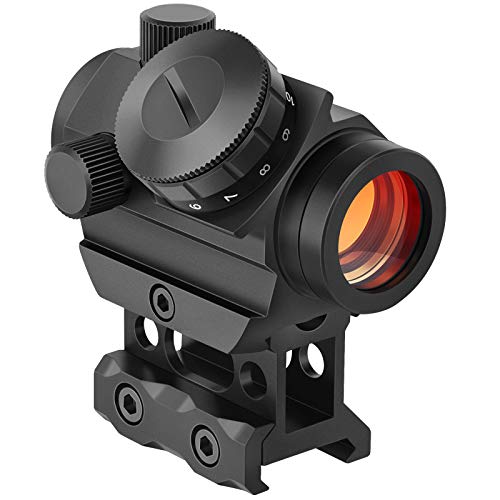
Pros
- Excellent value for a waterproof, fog-proof red dot sight
- Compact and lightweight construction for easy carry
- Brightness settings 1-5 preserve night vision in low light
- Riser mount included for lower 1/3 cowitness with iron sights
Cons
- 2MOA dot may be small for rapid close-range shooting
- Battery life not specified; may require frequent replacement
- Some users may prefer a larger objective lens for faster sight picture
The MidTen 2MOA Red Dot Sight is a small but capable 1x25mm reflex sight designed for hunters, tactical shooters, and outdoor enthusiasts who need a fast, accurate aiming solution without breaking the bank. This updated version shrinks the dot from 3-4MOA down to a crisp 2MOA, giving you better precision for shots at moderate distances. It's ideal for use on rifles, shotguns, or even air rifles where quick target acquisition matters.
Real-world performance hinges on the 11 brightness levels, which let you dial the dot intensity to match ambient light. Settings 1-5 are low enough for dusk or overcast days without washing out your view, while 6-9 handle bright sunlight well. Settings 10-11 are for extreme sunny conditions. The multi-coated lens helps clarity in low light, though the glass isn't premium grade at this price point. The unlimited eye relief is a huge plus: you can shoot with both eyes open and still pick up the dot instantly.
Build quality is solid for the price. The shockproof aluminum housing feels sturdy, and the nitrogen-purged, O-ring sealed design means the sight won't fog up in rain or humidity changes. That's a must for hunters and campers who transition between environments. Downsides include a dot that might feel small for very close up or moving targets, and no mention of battery life in the specs. Some users report the dot has a slight halo, but overall it's a usable optic for the money.
Bottom line: If you need an affordable, reliable red dot for target shooting, plinking, or hunting in fair weather, the MidTen 2MOA is a solid choice. It won't compete with high-end brands on glass clarity or durability, but it gets the job done for casual use or as a backup sight.
For a red dot sight, 'cutting performance' translates to how well it helps you place accurate shots in various conditions. The MidTen 2MOA dot offers a good balance between precision and speed. The smaller dot reduces cover of the target at longer ranges, making it easier to aim at small game or distant steel plates. At closer distances it still works fine, though some shooters may prefer a larger dot for faster picking.
The 11 brightness settings let you 'cut' through changing light: use low settings in twilight to avoid a blinding dot, crank it up for bright noon. The unlimited eye relief means you can get on target fast without worrying about cheek weld or eye position. The multi-coated lens helps a bit with low-light transmission, so you see the target more clearly even when dusk is creeping in.
This sight doesn't have magnification, so for long-range precision you'll need a scope. But for typical hunting ranges (50-150 yards) or close-quarters tactical use, the 2MOA dot gives you the ability to make accurate hits without the bulk of a traditional scope. The brightness adjustment is easy, though the up/down buttons are on the left side and take a little getting used to during use.
The MidTen 2MOA Red Dot Sight is housed in a lightweight aluminum body that feels tough enough for field use. The matte black finish resists scratches and minor bumps. It measures just 2.2 inches long and weighs under 4 ounces, so it won't weigh down your rifle or pack. The housing is sealed with O-rings and purged with nitrogen to keep moisture and fog out, a feature often reserved for more expensive optics.
The sight includes both a low-profile mount and a riser for lower 1/3 co-witness with standard iron sights. The mounts use crossbolts to attach to Picatinny rails, and they grip well without shifting. You can swap between the two heights depending on your firearm and preference. Windage and elevation adjustments are click-type and stay put after zeroing, though the clicks are not as crisp as premium turrets.
The lens is multi-coated to reduce glare, but it's not as clear as high-end glass. You may notice a slight blue tint and some distortion at the edges. The dot itself can have a little extra flare in bright conditions, but it's still usable. Battery is a common CR2032, and the cap is threaded for easy access. Overall, the design is practical and durable for the price, making it a good choice for a budget build or a loaner sight.
Complete Step-by-Step Guide on How to Sight in a Red Dot Optic
Sighting in an optic aligns the visual aiming reticle with the natural ballistic path of your chosen projectile. Achieving an accurate zero requires deliberate preparation, mechanical stability, and a clear understanding of angular measurements. By following a structured sighting sequence, shooters eliminate guesswork, conserve ammunition, and build lasting confidence in their equipment downrange.
Initial Bench Preparation and Firearm Safety Verification
Safe firearm handling remains the mandatory first step before beginning any optical adjustment or mechanical inspection. Always drop the magazine, lock the action open, and visually inspect the chamber to ensure the firearm is completely unloaded. Only point the muzzle in a safe direction downrange while securing the firearm on your workstation. Personal protective equipment, including quality eye and ear protection, must remain on throughout the entire live-fire session.
Bench stability directly dictates whether your downrange bullet impacts reflect true optic alignment or human error. Unsteady shooting positions introduce shooter wobble, which makes it impossible to distinguish between optic tracking errors and trigger control issues. Resting the firearm on dense sandbags, a mechanical shooting sled, or a rigid front bipod isolates natural body tremors. Keep your elbows firmly anchored to the shooting bench while establishing a comfortable, repeatable cheek weld behind the optic housing.
Consistent target placement also simplifies your initial visual reference points. Secure a high-contrast grid target to a rigid backer, ensuring the target stands perfectly plumb with the horizon. Grid squares measuring one inch simplify minute of angle calculations and prevent measurement errors when scoring bullet holes. A dedicated target setup, such as a sturdy backer frame for range practice, provides a flat surface that resists wind buffeting during careful shot evaluation.
Mounting Security, Torque Specifications, and Optic Stability
A loose optical mount will completely prevent a red dot sight from holding a consistent zero under sustained recoil forces. Before firing a single cartridge, verify that the mounting screws securing the optic to the rail or slide plate are tightened according to manufacturer guidelines. Cross-bolts securing a Picatinny clamp must sit flush inside the rail slots without canting or longitudinal movement. Applying a tiny drop of non-permanent blue thread-locking compound to the screw threads prevents vibration-induced loosening over long firing strings.
Slide-mounted reflex sights on handguns endure tremendous acceleration and deceleration forces during the cycling sequence. Ensuring proper screw length is critical, as screws that are too long can bind internal slide components like extractor depressor plungers. Using an inch-pound torque wrench prevents overtightening, which can strip aluminum threads or warp sensitive optical housings. Sights mounted to rifles or carbines require equal vigilance, particularly along the rail clamp interface where uneven clamping pressure causes optic tilt.
Checking mechanical zero on the optic itself provides a neutral starting point for your adjustments. Most red dot turrets feature internal click adjustments for elevation and windage, often set near the optical center at the factory. If you suspect previous adjustments have pushed the internal erector assembly to its mechanical limit, gently count the total clicks from stop to stop. Dividing that count in half and dialing back centers the internal reticle mechanism, maximizing available adjustment travel in every direction.
Understanding Minute of Angle and Reticle Mechanics
Optic adjustments operate on angular measurements rather than linear distances on paper targets. One minute of angle, commonly abbreviated as MOA, represents approximately 1.047 inches of deviation at a distance of 100 yards. When shooting at 50 yards, one MOA subtends roughly half an inch, while at 25 yards, one MOA covers roughly a quarter of an inch. Understanding this geometric relationship allows you to calculate exactly how many clicks your turrets require based on target distance.
Most tactical red dots and compact reflex sights incorporate turrets calibrated for either 0.5 MOA or 1.0 MOA per click. For an optic with 1.0 MOA click adjustments, one click moves your bullet impact one inch at 100 yards, half an inch at 50 yards, and one-quarter inch at 25 yards. If your impact sits two inches low on a target set at 25 yards, moving the strike eight clicks upward is necessary to correct the error. Confirming the specific click value stamped on your optic turret prevents frustrating overcorrections during live fire.
Reticle dot size also influences how precisely you hold your point of aim against the target face. A crisp 2 MOA red dot covers two inches of a target at 100 yards, which allows for fine aiming points on precision targets. Larger dots or circular reticle patterns, like those measuring 3 MOA or combining circles with crosshairs, prioritize rapid acquisition over tiny group sizes. Unlike magnified crosshairs found on mid-range rifle optics, a reflex dot remains non-magnified, making consistent target centering vital for accurate zeroing.
Pre-Zeroing with Bore Sighting Techniques
Bore sighting aligns the bore axis with the optical reticle before firing live rounds, saving considerable range time and ammunition. On bolt-action rifles or AR-platform carbines where the bolt carrier can be removed, mechanical bore sighting is straightforward. Rest the firearm securely on sandbags, remove the bolt or upper receiver assembly, and look directly through the bore from the rear. Center a target bullseye within the bore circle, then adjust the optic turrets until the illuminated dot aligns with that same distant reference.
Handguns and closed-action firearms benefit from laser bore sighting cartridges or arbor-mounted laser devices inserted directly into the chamber or muzzle. Projecting a laser dot onto an indoor target at 10 to 15 yards gives an immediate point of reference. Dial your red dot reticle until it sits directly on top of the projected laser dot while maintaining a steady rest. While a laser cannot replicate dynamic ballistic drop, it reliably places your initial live rounds onto a standard paper target backer.
Shooters should always conduct their initial bore sighting checks at relatively close distances. Starting at 10 or 15 yards ensures that even significant mounting misalignments still register on the paper target. Once your initial shots strike within a couple of inches of the bullseye at close range, moving back to your desired zero distance becomes predictable. Skipping this intermediate step often leads to unfocused searching for phantom bullet holes that miss the paper backer entirely.
Selecting the Ideal Zero Distance for Your Platform
Zero distance directly dictates the trajectory profile of your ammunition across various downrange engagements. Handgun users typically select a 15-yard or 25-yard zero depending on whether the weapon serves concealed carry or practical competition purposes. A 15-yard zero provides an exceptionally flat trajectory for typical defensive pistol encounters while keeping bullet rise minimal across close distances. Handgun shooters who cross-train with handgun laser sights often appreciate having their visual dot coincide cleanly with mechanical sights at standard defensive ranges.
Rifle and carbine platforms chambered in standard intermediate cartridges benefit greatly from a 50-yard or 100-yard zero distance. A popular 50-yard zero allows a 5.56 NATO round to strike within a two-inch vertical window from point-blank range out to 250 yards. The bullet crosses the line of sight on its upward trajectory around 50 yards and crosses again on its downward arc around 200 yards. This flat trajectory simplifies field shooting because holdover corrections remain minimal across typical practical distances.
A 100-yard rifle zero eliminates trajectory rise above your optical sight line entirely, making all downrange holds positive holdovers. Precision shooters often favor this approach because every target past 100 yards requires holding slightly high without worrying about mid-range bullet crests. Shotgun platforms deploying red dots for slug hunting or home defense generally perform best with a 50-yard zero due to steeper slug drop curves. Identifying your intended application before dialing clicks ensures your chosen zero matches realistic shooting conditions.
Live-Fire Zeroing Sequence and Group Analysis
Live-fire zeroing begins by establishing a baseline point of impact through disciplined, controlled shot execution. Load three cartridges into the magazine and assume a comfortable, fully supported benchrest position. Align the illuminated dot precisely on the center point of the bullseye, taking careful care to avoid shifting your focus away from the target plane. Press the trigger smoothly to the rear, allowing the shot to break cleanly without anticipating recoil or flinching.
Never make optical adjustments after firing a single cartridge because individual shots can be influenced by slight trigger pulls or wind gusts. A three-shot or five-shot grouping reveals the true mechanical center of your firearm and ammunition combination. Once all shots are fired, safely clear the firearm, make the firing line safe, and inspect the target downrange. Locate the geometric center of the group, which serves as your point of impact for calculating necessary turret corrections.
Adjust elevation first by turning the top turret in the direction indicated by the engraved arrows. If your group center lands low on the target, rotate the turret toward the mark indicating UP. Address windage next by turning the side turret to move the impact LEFT or RIGHT as needed. After dialing the required number of clicks, fire another three-shot confirmation group to verify that your adjustments successfully shifted the point of impact directly onto your point of aim.
Correcting Wandering Reticles and Visual Artifacts
When bullet groups fail to converge or drift unpredictably across the target, hardware checks should always take priority. Loose rail fasteners, an improperly seated battery cap, or a damaged adapter plate can cause the reticle to wander under recoil. Inspect the mounting screws for signs of movement and verify that the optic body does not wiggle within its mount. Retightening hardware to proper torque specifications resolves the vast majority of zero retention issues experienced on the firing line.
Visual distortion of the illuminated dot often confuses shooters who suspect their optic mechanism is defective. If an illuminated dot appears starburst-shaped, oblong, or looks like a cluster of grapes, uncorrected astigmatism in the eye is often responsible. You can confirm whether distortion stems from the optic or your vision by looking at the dot through a mobile phone camera or a rear iron sight aperture. A camera sensor renders the dot as a crisp geometric circle, whereas optical defects inside the emitter will appear distorted on camera screens as well.
Parallax error can also cause perceived shifts in your aiming point if your eye moves substantially off-axis behind the sight window. Most quality red dots feature factory parallax compensation set for practical distances, rendering minor head movements negligible. However, keeping the reticle centered within the optical window during zeroing eliminates edge-distortion variables. Setting the illumination intensity to the lowest level that remains cleanly visible against the target further sharpens the dot profile, preventing excess bloom from obscuring your exact aiming mark.
Post-Zero Verification and Long-Term Field Maintenance
Completing your zero requires verifying mechanical settings and protecting adjustment turrets before packing up your gear. Secure all protective turret caps firmly over the adjustment dials to keep out moisture, dust, and inadvertent bumps during transport. Applying a distinct witness mark with an oil-based paint pen across screw heads and mounting brackets provides a visual tell for future inspections. If a screw begins to back out during range trips or duty use, the broken paint line immediately signals the need for maintenance.
Field handling inevitably subjects optics to vibration, temperature swings, and occasional impact bumps in transit or storage cases. Periodically firing a three-shot confirmation string at your established zero distance ensures that optical alignment has remained constant over time. Documenting your ammunition brand, bullet weight, and zero distance in a shooting logbook helps diagnose any unexpected trajectory changes. Switching between different bullet weights or muzzle velocities will inherently alter downrange point of impact, requiring minor re-zeroing adjustments.
Preserving optical clarity extends the functional life and dependability of your red dot sight through years of hard shooting. Clean coated glass lenses only with specialized optical brushes and lens cleaning solution to prevent scratching delicate antireflective layers. Inspect battery compartments regularly for corrosion, replacing power cells before they degrade and cause intermittent illumination failures. A properly maintained and precisely zeroed optical sight ensures that your point of aim reliably matches your point of impact whenever you raise the firearm to your eye.


Write Your Review
No reviews yet. Be the first to share your experience!