


Shooting enthusiasts often examine advertised velocity ratings and wonder %what is the most powerful air rifle% on the market today. Advertised speeds reaching well over one thousand feet per second look impressive on packaging, yet true shooting force relies on projectile mass and muzzle energy rather than velocity alone. Exploring our big bore PCP air rifles guide reveals that specialized hunting platforms push heavy lead slugs with hundreds of foot-pounds of energy. Understanding how different powerplants generate pressure helps separate lightweight plinking options from serious sporting tools.
Airgun powerplants range from multi-pump pneumatics and carbon dioxide systems to heavy break-barrels and high-pressure pre-charged pneumatics. Many budget-conscious shooters evaluate our guide to value PCP air rifles to determine how compressed air reservoirs compare to mechanical springs. Each mechanism offers distinct advantages in shot consistency, cocking effort, and downstream impact force. Examining real specifications ensures you select an air rifle that matches your target shooting, plinking, or field requirements safely and effectively.

Pros
- Adjustable power output for varied shooting needs
- Durable synthetic stock resists weather and wear
- Includes scope and fiber-optic sights for better accuracy
- Lightweight and easy to handle for all ages
- Can shoot both pellets and BBs for versatility
Cons
- Synthetic stock may feel less premium than wood options
- Scope may require adjustment for optimal precision
- Pumping action can be tiring for younger or smaller shooters
This Crosman CLGY1000KT Legacy variable pump air rifle is a solid entry-level option for casual target shooters, plinkers, and backyard enthusiasts. It's not a knife or cutting tool, but it's a popular choice among outdoor gear users who enjoy airgun sports. The rifle is best suited for beginners, teens, or adults looking for an affordable way to practice marksmanship or control small pests.
In real-world use, the variable pump mechanism lets you adjust power from 750 to 1000 fps, which is handy for different shooting distances or targets. The rifled steel barrel helps improve accuracy with .177-caliber pellets, but it also accepts steel BBs for plinking fun. The included 4x15mm scope provides basic magnification for better aim, though some users may want to upgrade for more precise shooting.
Build quality is decent for the price point. The synthetic stock is weather-resistant and stands up to outdoor conditions, though it lacks the heft and feel of wood. The crossbolt safety adds a layer of secure handling. At under 2.2 pounds, the rifle is lightweight and easy to carry around the yard or field. However, the pump action can require multiple strokes to reach higher power, which might be a minor inconvenience for some.
One realistic drawback is the scope's clarity at maximum zoom, but it's serviceable for plinking and short-range target work. Also, the synthetic stock may feel less durable over time compared to wood, but it holds up well for casual use. Overall, this Crosman Legacy air rifle is a reliable and affordable way to get into airgun shooting, especially for beginners or those who want a versatile and easy-to-use plinker. It's not a high-end competition rifle, but it delivers good value for the money.
This air rifle doesn't offer cutting performance since it's not a blade. Instead, focus on its shooting performance: accuracy and power adjustability. The rifled steel barrel provides decent precision for .177-caliber pellets, helping you hit targets consistently at typical backyard distances. The variable pump allows you to dial in power, from lower velocities for close-range plinking to higher speeds for longer shots.
Edge retention isn't applicable here, but the barrel's rifling maintains accuracy over time with proper cleaning. The pump action requires a smooth, consistent motion to achieve repeatable power, which may take some practice. The included scope aids in aiming, but the fiber-optic front sight is a good backup for quick shooting. For plinking and target practice, this rifle performs reliably, though experienced shooters may want a more refined trigger or higher magnification scope.
Overall, the shooting performance is satisfactory for entry-level use, offering adjustable power and decent accuracy for the price. It's not designed for hunting large game, but it works well for plinking cans or paper targets.
The Crosman Legacy air rifle features a durable synthetic stock that's waterproof and resistant to the elements. The stock's black finish is simple but functional, with a textured grip area for a secure hold. The overall length is 39.75 inches, making it compact enough for easy handling and storage.
The rifled steel barrel is a highlight, contributing to better accuracy compared to smoothbore alternatives. The pump mechanism is built to withstand repeated use, though some users may find the pumping effort increases at higher power settings. The built-in BB reservoir and side-load pellet chamber add convenience during shooting sessions.
Weighing just under 2.2 pounds, this rifle is lightweight and easy to carry for extended periods. The included 4x15mm scope is basic but functional for short to medium ranges. The crossbolt safety is easy to reach and provides peace of mind. While the synthetic stock may not have the premium feel of wood, it's practical for outdoor use where weather resistance matters. The rifle's design prioritizes affordability and durability over aesthetics, making it a good choice for beginners or budget-conscious shooters.

Pros
- High penetration capability for small game
- Consistent weight and shape for accuracy
- Generous 200 count per tin
Cons
- Lead pellets may require proper ventilation during indoor use
- Pointed design may not expand as much as hollow points for hunting
The Harpex Aquiles .22 caliber airgun pellets are designed for shooters who need reliable penetration and accuracy. These pellets feature a pointed arrow head shape that helps them cut through the air and maintain a flat trajectory. With a weight of 20.1 grains, they offer a good balance between speed and energy retention, making them suitable for both target practice and small game hunting.
These pellets are best suited for airgun enthusiasts, target shooters, and hunters who use .22 caliber air rifles. The pointed design helps with penetration, which is useful for taking down small game like squirrels or rabbits. For target shooting, the consistent weight and shape contribute to tighter groups at typical airgun ranges.
In real-world use, the Harpex Aquiles pellets deliver dependable accuracy. The lead construction ensures they engage rifling well, which helps with spin stabilization. The pointed tip reduces wind drift compared to some domed pellets, though it may not be as effective for close-range hunting where expansion is desired. Ergonomics aren't a factor here, but the tin is easy to open and store.
Build quality is solid for the price point. Each pellet is uniformly cast with minimal flashing, which reduces the need for sorting. The 200 count tin provides good value for regular shooters. One realistic drawback is that lead pellets can leave residue in the barrel, so occasional cleaning is recommended. Also, the pointed design may not be legal for hunting in all areas, so check local regulations.
Overall, the Harpex Aquiles .22 caliber pellets are a solid choice for shooters who want a balance of accuracy and penetration. They work well for target practice and small game hunting when used within legal limits. Many buyers appreciate the consistent performance and affordable price.
Edge sharpness is not applicable to pellets, but the pointed arrow head design enhances penetration by concentrating force on a small impact area. This helps the pellet cut through fur and hide more effectively than round-nose designs.
Cutting efficiency refers to how well the pellet transfers energy to the target. The 20.1 grain weight and lead construction allow for deep penetration, which is useful for clean kills on small game. The pointed tip reduces drag, maintaining velocity downrange.
Edge retention is not a factor, but the pellet's shape stays consistent during flight. The lead material is soft enough to engage rifling but hard enough to resist deformation until impact.
Blade geometry is replaced by pellet design. The arrow head shape has a sharp point and tapered body, which helps it slice through air and tissue. This design may also reduce ricochet risk compared to flat-nosed pellets.
Deployment speed is about how quickly the pellet exits the barrel. The pointed shape and weight allow for efficient energy transfer from the airgun, resulting in consistent muzzle velocities.
Lock reliability is not applicable. Control during use depends on the shooter's technique and the airgun's accuracy. The pellets are designed to group well when the shooter does their part.
Precision cutting capability is about accuracy. The Harpex Aquiles pellets are known for tight groupings at typical airgun distances, making them suitable for target shooting and small game hunting.
Outdoor task suitability is high. These pellets work well for pest control, plinking, and small game hunting. They are less ideal for close-range hunting where expansion is preferred.
Food preparation practicality is not relevant. Wood processing capability is not applicable.
Blade steel quality is not applicable, but the lead used in these pellets is of consistent density and purity. This helps with accuracy and energy transfer.
Handle material quality is not applicable. The pellets are bare lead with no coating. The tin is made of metal with a secure lid to prevent spillage.
Weight and portability are excellent. The 200 count tin is compact and easy to carry in a shooting bag or pocket. Each pellet weighs 20.1 grains, so the total weight is manageable.
Pocket clip design is not applicable. Sheath quality is not applicable. Ergonomics and grip security are not factors, but the tin is easy to open with a simple twist.
Durability is good for a lead pellet. They can be stored for years without degradation if kept dry. The pointed tip may bend if dropped on hard surfaces, but this is rare.
Corrosion resistance is not a concern for lead. Carry comfort is not applicable. Storage and transport practicality are high due to the compact tin.

Pros
- Accurate out of the box with included scope and fiber optic sights for versatile aiming options.
- Solid build quality with durable wood stock and metal trigger blade for reliable field use.
- Good power for .22 caliber spring piston air rifles, effective for small game at moderate distances.
- Easy to maintain and operate with break barrel mechanism and single-shot loading.
Cons
- Cocking effort required may be stiff for some shooters, especially younger or smaller users.
- Scope and rings included are functional but may need replacement for serious precision shooters.
- Spring piston design produces recoil and vibration that can affect shot consistency without proper hold technique.
The Hatsan 1000X Spring Striker Combo Air Rifle in .22 caliber is a break barrel, spring piston airgun designed for hunters, campers, survivalists, and outdoor enthusiasts who need a reliable tool for small game and pest control. This rifle combines classic wood stock aesthetics with modern shooting features, making it a practical choice for field use.
Real-world performance centers on the 1000 FPS velocity with lead-free pellets and 800 FPS with standard lead pellets, delivering around 21 foot-pounds of muzzle energy. This is enough to ethically take rabbits, squirrels, and similar game at typical hunting ranges of 20 to 40 yards. The rifled German steel barrel provides consistent accuracy, and the included 2-9x32 Optima scope helps shooters get on target quickly. For close-range or low-light situations, the micro adjustable rear fiber optic sight and fixed red front sight are handy backups.
Build quality is solid for the price point. The wood stock offers a comfortable grip and good weight distribution, though the rifle tips the scales at 6.4 pounds, which is manageable for carrying during a day hunt. The metal trigger blade and scope stop add to durability. A realistic drawback is the cocking effort required for the powerful spring piston; some shooters may find it strenuous after many shots. Additionally, the included scope is adequate but may not hold zero as well as higher-end optics under repeated recoil.
Overall, this air rifle suits the buyer who wants an affordable, accurate, and powerful .22 caliber springer for hunting and plinking. It is not a match-grade target gun but is a trustworthy companion for outdoor adventures. Many owners appreciate the simplicity and reliability of the break barrel design, making it a good entry-level or backup hunting tool.
While this is an air rifle rather than a cutting tool, its 'cutting performance' refers to terminal ballistics and precision. The .22 caliber pellet, traveling at up to 800 FPS with lead pellets, delivers enough energy to cleanly take small game. The rifled barrel ensures tight shot groups at typical hunting distances, giving the shooter confidence in shot placement.
Accuracy is dependent on pellet choice and shooter technique. Many users report good results with domed or hollow point pellets for hunting. The two-stage trigger (metal blade) allows for a crisp release, aiding precision. The break barrel action cocks consistently, though spring vibration can affect follow-up shots if the rifle is not held firmly.
The included 2-9x32 scope helps with aiming at longer ranges, while the fiber optic sights are useful for quick snap shots. For pest control or hunting, the combination of velocity and muzzle energy makes this rifle effective on pests like groundhogs, rats, or invasive birds. Velocity varies with temperature and elevation, so shooters should verify point of impact in field conditions.
The Hatsan 1000X features a traditional wood stock that provides a classic look and comfortable handling. The stock is checkered on the grip and forearm to improve hold security. The barrel is made of rifled German steel, which is known for durability and accuracy. The metal trigger blade and scope stop add to the overall robustness of the design.
Weighing 6.4 pounds, the rifle is portable enough to carry on hikes or hunting trips but not excessively heavy. The break barrel mechanism operates smoothly if maintained with proper lubrication. The scope and rings are pre-mounted, which saves setup time, but some users may want to upgrade to a better scope for improved clarity and zero retention.
The fiber optic sights are adjustable for windage and elevation, making them reliable without batteries. The wood stock is finished with a protective coating, though care should be taken to avoid moisture damage in wet conditions. Overall, the build is solid for the price, and the rifle is designed to withstand regular field use with simple maintenance.

Pros
- Full-auto mode provides thrilling rapid-fire experience
- Blowback adds realism for training or fun
- Adjustable stock and multiple rails allow customization
- Magazine design simplifies reloading mid-session
Cons
- CO2 cartridges can be expensive for extended shooting sessions
- Full-auto mode drains CO2 quickly, limiting sustained use
- Not suitable for hunting or pest control due to low power and BB ammo
The Crosman CFAR1B Full Auto R1 is a CO2-powered BB air rifle designed for shooters who want a realistic, fast-firing replica experience. Unlike a firearm, it uses compressed CO2 cartridges to propel steel BBs, making it ideal for backyard plinking, target practice, and introducing new shooters to rifle handling.
This air rifle is best suited for casual plinkers, shooters training for firearm handling, and anyone looking for an affordable full-auto experience. The heavy feel and blowback action mimic a real rifle, helping users build familiarity with recoil and follow-up shots.
In real-world use, the R1 excels at rapid-fire fun. Flipping the lever to full auto lets you dump 25 rounds in about a second, which can be a blast for reactive targets. The 6-position stock and four-sided rails allow you to attach red dot sights, flashlights, or grips to match your preferences. The magazine drops out for quick reloads, keeping both BBs and CO2 cartridges together for balance.
Build quality is solid for the price point, though the polymer stock won't feel as premium as real wood. The CO2 system is standard and easy to load. Realistic drawbacks include limited power for anything beyond plinking, and the full-auto mode drains CO2 quickly, meaning you'll go through cartridges fast during extended sessions.
Overall, the Crosman R1 is a fun, training-oriented air rifle that delivers on its full-auto promise. If you want a realistic feel without firearm noise and enjoy rapid-fire plinking, this is a great choice.
While the Crosman R1 is not a cutting tool, its shooting performance deserves evaluation. The CO2 system provides consistent velocity for BBs, allowing for accurate shots at typical backyard ranges of 30-50 feet. The blowback action introduces a mild recoil that helps simulate real firearm handling, aiding in practice.
The full-auto mode delivers a high rate of fire that is impressive for an air rifle, though accuracy suffers during rapid bursts due to recoil and the nature of smoothbore BB barrels. Single-shot mode offers better precision for target practice.
Magazine capacity of 25 rounds allows for sustained shooting before reloads. The drop-out magazine is quick to swap, minimizing downtime. Velocity is moderate, typical for CO2 BB guns, so it is not suitable for hunting or serious pest control. Control during use is helped by the adjustable stock and overall weight, which keeps the rifle steady.
Precision shooting is possible with a red dot sight mounted on the rails. The 4-sided rail system also allows for a bipod for stability. For plinking cans, spinners, and paper targets, the R1 performs admirably. For food preparation or wood processing, it is not intended.
This air rifle is best for recreational shooting and training, not for outdoor tasks requiring cutting.
The Crosman R1 features a black polymer stock with a metal barrel assembly, giving it a weight of 6 pounds that feels substantial. The 6-position adjustable stock allows for length-of-pull customization, accommodating different shooter sizes. The four-sided Picatinny rails on the barrel shroud provide ample mounting options for accessories like red dot sights, flashlights, or foregrips, enhancing versatility.
Ergonomics are decent with a comfortable pistol grip and a cheek rest that works well for cheek weld. The blowback mechanism adds mechanical complexity but delivers satisfying tactile feedback. Durability is typical for Crosman air rifles; the plastic stock may show wear over time but the internal components are standard and replaceable.
Portability is moderate. At 6 pounds, it's not too heavy to carry around the backyard or to a range. The design includes a sling mount (not included) for easier transport. Corrosion resistance is adequate since the barrel is steel and the receiver is mostly polymer. Carry comfort is fine for short sessions, and storage is easy as it fits in a standard gun case or closet.
The drop-out magazine is a highlight, keeping BBs and CO2 cartridges united for rapid reloads. Overall, the build is functional and oriented toward realism and customization rather than premium materials.

Pros
- Multi-shot magazine speeds up shooting when targeting squirrels, rabbits, or paper
- IGT gas piston eliminates spring fatigue and stays consistent below freezing
- Quiet operation helps avoid startling neighbors or game in suburban settings
- Complete optics package saves on separate scope purchase
Cons
- Break-barrel action requires moderate cocking effort that may tire some shooters after many shots
- .22 caliber pellets are heavier and slower than .177, which may be a trade-off for trajectory at longer ranges
- Plastic stock parts may feel less premium compared to wood alternatives
The Gamo Swarm Whisper in .22 caliber is a break-barrel air rifle designed for hunters, pest controllers, and target shooters who value speed and quiet operation. As a 10-shot repeater, it uses a rotary magazine that automatically indexes each time you break the barrel, eliminating the need to fumble with individual pellets between shots. This makes it particularly useful for small game hunting where multiple rapid follow-ups can make the difference between a clean harvest and a lost rabbit.
Best suited for the hunter or outdoorsman who wants a reliable, all-in-one air rifle package, the Swarm Whisper includes a 4x32 shockproof scope and mounts right in the box. The IGT (Inert Gas Technology) piston replaces traditional metal springs, delivering higher muzzle velocities with less vibration and smoother cocking effort. It also maintains consistent performance in cold weather, a real plus for early morning or late season hunts.
Realistically, the break-barrel design demands a certain amount of physical effort to cock each shot. While the IGT system reduces the effort compared to spring-piston guns, shooters with weaker upper body strength may find it tiring after 50+ rounds. The included scope is serviceable for typical airgun ranges (up to 40 yards) but won't compete with high-end optics. The synthetic stock is durable and weather-resistant, but some users miss the feel of wood.
Overall, the Gamo Swarm Whisper .22 is a solid choice for the budget-minded hunter or backyard plinker who wants multi-shot convenience without moving to a separate air tank or CO2 system. It's not for competitive target shooters seeking match-grade accuracy, but for real-world field use it performs well.
While an air rifle doesn't cut in the traditional knife sense, its 'cutting performance' refers to its ability to deliver energy to a target effectively. The Swarm Whisper fires .22 caliber pellets at velocities up to 975 fps (with PBA Platinum pellets), which provides ample power for small game like squirrels, rabbits, and pest birds at typical airgun ranges of 30 to 50 yards.
The break-barrel action cocks the piston and indexes the rotary magazine. Consistent cocking technique helps maintain shot-to-shot accuracy. The IGT gas piston reduces vibration and spring torque, which contributes to a more stable sight picture and tighter groups. The integrated Whisper sound dampener cuts muzzle noise by up to 52% compared to unsuppressed models, making it easier to shoot without scaring off nearby game or drawing unwanted attention.
The trigger is two-stage adjustable, allowing shooters to set a crisp let-off for precision. The 4x32 scope provides a clear sight picture with duplex reticle, adequate for most hunting scenarios. However, the break-barrel action can cause slight POI shift if the barrel is not consistently closed. Overall, this rifle delivers sufficient energy transfer for clean kills on small game when paired with proper shot placement.
The Gamo Swarm Whisper .22 is built around a synthetic (plastic) stock with a raised cheek piece and textured grip surfaces. The overall length is 48 inches, weight 5.43 pounds, making it relatively compact and easy to carry through brush or in a case. The stock is black and weather-resistant, suitable for damp or rainy conditions.
The barrel is fixed inside a shrouded assembly that contains the Whisper sound dampener. The integrated noise reduction is a real-world benefit for backyard shooting or hunting in residential areas. The rail is 11mm dovetail, compatible with most airgun scope rings. The included scope mounts attach securely without tools.
The IGT gas piston is housed in a machined receiver. The cocking linkage feels solid, and the rotary magazine indexes reliably after each barrel break. The rubber recoil pad at the stock rear absorbs shock and protects the scope. The trigger guard is generous enough for gloved fingers.
Durability wise, the synthetic stock will not warp like wood, but it can flex slightly under heavy loading. The barrel shroud holds up well under normal use. The rotary magazine is a plastic part and must be handled carefully during loading to avoid broken tabs. The overall build is functional and rugged for an entry-to-mid-level air rifle, ideal for the hunter who puts their gear through real field conditions.
Caliber: .22 (5.5 mm)
Action: Break-barrel, multi-shot repeater (10-round rotary magazine)
Powerplant: IGT (Inert Gas Technology) gas piston
Velocity: Up to 975 fps with PBA Platinum pellets, up to 800 fps with standard lead
Noise reduction: Whisper sound dampener (max 52% noise reduction)
Scope: 4x32 shockproof, includes mounts
Stock: Synthetic black with raised cheek piece and rubber recoil pad
Rail: 11mm dovetail
Trigger: Two-stage adjustable
Overall length: 48 inches
Weight: 5.43 pounds
Safety: Manual, automatic cocking safety
Manufacturer: Gamo (founded 1889, Europe's largest airgun maker)
Understanding True Air Rifle Power and Performance
Determining %what is the most powerful air rifle% requires looking beyond marketing velocity figures and examining actual kinetic energy delivered at the muzzle. In the broader shooting landscape, the most powerful airguns in existence belong to the big-bore pre-charged pneumatic category, where large air reservoirs launch heavy cast bullets with several hundred foot-pounds of energy. In standard off-the-shelf sporting airguns, high-powered break-barrel spring and gas-piston rifles represent the upper limit of standalone mechanical power, producing around twenty to thirty foot-pounds. Compact multi-pump rifles and carbon dioxide models occupy a different operational tier, delivering modest energy tailored for plinking, marksmanship training, and light backyard recreation.
The True Definition of Airgun Power: Foot-Pounds of Energy Versus Velocity
Muzzle velocity stated in feet per second is the specification most frequently featured on retail packaging. Manufacturers often achieve four-figure velocity ratings by testing rifles with ultra-light alloy pellets that leave the barrel at remarkable speed. However, speed alone does not equate to impact force because an extremely light projectile sheds momentum almost immediately after leaving the muzzle. Calculating kinetic energy requires measuring foot-pounds of energy, which incorporates both the projectile velocity and the weight of the projectile in grains.
Physics dictates that doubling projectile mass doubles the delivered kinetic energy, whereas doubling speed quadruples it mathematically. When an airgun shoots a featherweight pellet past the speed of sound, the projectile often destabilizes as it breaks the sound barrier and wobbles violently. Transonic turbulence severely degrades downrange accuracy, turning an apparently high-powered shot into an erratic flyer. True practical power balances sufficient velocity with adequate projectile weight to maintain stability and deliver clean downrange energy transfer.
Power Output Across Common Airgun Powerplants
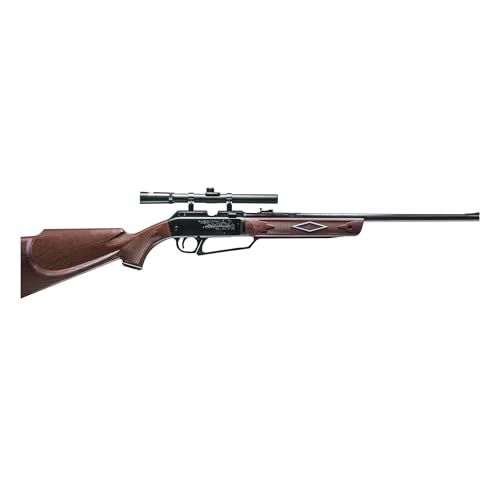
Airgun powerplants utilize distinctly different mechanical methods to compress air and propel ammunition. Variable-pump pneumatic air rifles, such as the Crosman Legacy variable pump, rely on manual forearm strokes to compress air inside an internal storage cylinder. A shooter can alter the velocity from moderate target speeds up to approximately one thousand feet per second depending on how many pumps are completed. While exceptionally versatile for casual backyard practice, multi-pump systems rarely exceed single-digit foot-pounds of energy and require repeated manual pumping between every shot.
Carbon dioxide powered airguns provide effortless multi-shot shooting by harnessing pressurized liquid gas stored in standard twelve-gram or eighty-eight-gram cartridges. Rifles like the Crosman CFAR1B full auto R1 utilize dual CO2 cartridges to cycle a blowback action and fire steel BBs at rapid rates of fire reaching fourteen hundred rounds per minute. Despite the intense rate of fire and realistic handling, standard CO2 platforms generate low muzzle energy, generally staying below five foot-pounds. Furthermore, carbon dioxide is sensitive to ambient temperature and cools rapidly during sustained firing, which temporarily reduces muzzle velocity.
Break-barrel platforms driven by coiled steel springs or sealed gas pistons produce substantial mechanical power without requiring external air sources or gas cartridges. Rifles in this category, such as the Hatsan 1000X Spring Striker combo, compress a heavy internal spring when the user swings the barrel downward. Releasing the trigger allows the piston to slam forward, rapidly compressing air in the chamber to generate up to twenty-one foot-pounds of muzzle energy in twenty-two caliber. This self-contained design delivers dependable power for target practice and field use with just a single cocking stroke.
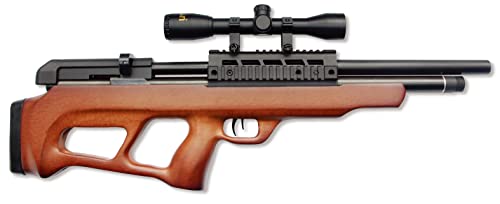
Pre-charged pneumatic systems sit at the pinnacle of modern airgun energy output. These rifles utilize high-pressure onboard air reservoirs filled to between two thousand and four thousand five hundred pounds per square inch using dedicated hand pumps or scuba tanks. Because the rifle does not rely on human muscle during the cocking stroke to compress the shot air, PCP platforms can fire large calibers with immense force. Dedicated big-bore hunting rifles in this category generate several hundred foot-pounds of energy, placing them in an entirely separate performance class from traditional backyard airguns.
Comparing Spring-Piston and Gas-Piston Power Delivery
Break-barrel airguns primarily rely on two distinct internal mechanisms: traditional coiled metal springs or sealed gas rams. Traditional spring-piston rifles employ a heavy tempered steel coil that compresses when the barrel is hinged open. The Hatsan 1000X utilizes this proven design paired with a rifled steel barrel and an integrated metal trigger blade to achieve sturdy, predictable power delivery. Coiled springs have powered airguns reliably for generations, although they do generate mechanical vibration and a characteristic rotational twang during the shot cycle.
Gas-piston technology replaces the mechanical metal coil with a sealed cylinder containing pressurized inert gas, often branded as Inert Gas Technology. The Gamo Swarm Whisper incorporates this gas ram system to produce smoother cocking strokes, reduced internal vibration, and consistent pellet acceleration. Because there is no metal spring to fatigue under tension, a shooter can leave a gas-piston rifle cocked while waiting for a shot without damaging internal parts. Gas struts also function much more reliably in freezing winter conditions where traditional spring grease can thicken and reduce velocity.
Shooting either style of break-barrel requires mastering a unique physical phenomenon known as bidirectional or reverse recoil. When the trigger is pressed, the piston rushes forward to compress air, pulling the rifle backward into the shoulder. As the piston strikes the front of the compression cylinder, the rifle violently jerks forward before the pellet even exits the muzzle. Shooters exploring break barrel air rifles quickly discover that holding the forearm loosely allows the gun to recoil naturally without throwing off projectile alignment.
Projectile Weight, Caliber Selection, and Downrange Energy Retention
Matching the correct projectile caliber to an airgun powerplant directly dictates how effectively muzzle energy translates into downrange performance. A seventeen-seven caliber pellet leaves the muzzle with impressive speed, making it suitable for paper targets and flat trajectory shooting at modest distances. However, twenty-two caliber pellets carry significantly more physical mass, allowing them to absorb more energy from the expanding air column. This extra weight helps larger pellets retain velocity through air resistance and deliver greater terminal impact against reactive targets.
Pellet geometry and construction material heavily influence how an airgun performs at different distances. Heavy options such as Harpex Aquiles twenty-two caliber airgun pellets feature a twenty-point-one grain mass and a pointed arrow-head shape engineered for deep penetration. Standard lightweight pellets may achieve higher chronograph numbers, but heavy pointed lead designs maintain their flight stability and resist wind drift far more effectively. Selecting ammunition matched to your barrel twist rate ensures that high muzzle energy translates into tight groupings rather than scattered impacts.
Steel BBs behave very differently from lead pellets and represent an entirely different shooting category. The Crosman Legacy handles both seventeen-seven pellets and traditional steel BBs, while dedicated blowback guns like the Crosman R1 fire BBs exclusively. Round steel BBs lack the rifling engagement and aerodynamic skirt of diabolo pellets, causing them to lose stability quickly beyond short plinking distances. Furthermore, steel shot does not deform on hard surfaces, creating a notable ricochet hazard that demands careful backstop selection and constant eye protection.
Multi-Shot Convenience Versus Mechanical Simplicity
Traditional high-powered spring and gas-piston rifles have historically functioned as single-shot platforms requiring manual pellet seating between cocking strokes. Rifles like the Hatsan 1000X adhere to this straightforward layout, allowing the shooter to inspect and seat each pellet directly into the rifled breech. This direct single-shot feeding completely prevents magazine jams, accommodates longer or non-standard pellet shapes, and ensures uncompromised alignment. For shooters focused on deliberate benchrest practice or controlled target work, the simplicity of a single-shot breech offers unbeatable mechanical durability.
Modern engineering has introduced repeating magazine systems to traditional break-barrel actions to speed up the shooting process. The Gamo Swarm Whisper integrates a ten-shot rotary magazine that automatically loads a fresh pellet into the chamber each time the barrel is broken open. This mechanism eliminates the need to fumble with tiny pellets in cold weather while keeping your eyes focused downrange on the target area. While multi-shot autoloading adds immense convenience, shooters must ensure the magazine components remain clean and free of grit to maintain smooth cycling.
Shooters who desire multi-shot capability alongside fixed-barrel rigidity often consider underlever platforms. Our detailed examination of underlever multi-shot air rifles highlights how separating the cocking arm from the barrel preserves pinpoint barrel alignment over thousands of rounds. Underlever designs utilize a secondary cocking lever beneath a rigid, non-moving barrel, offering superior baseline mechanical consistency compared to hinged actions. However, underlever rifles generally carry extra forward weight and feature more complex loading gates than standard break-barrels.
Sighting Systems, Scope Selection, and Managing Recoil Forces
Harnessing the power of a high-energy air rifle requires a sighting system capable of withstanding severe mechanical forces. The bidirectional shock generated by spring and gas-piston rifles is notoriously harsh on optical equipment, often destroying internal glass reticles rated only for standard firearms. Air rifles like the Hatsan 1000X include a mounted metal scope stop and an Optima optic designed specifically to survive airgun recoil impulses. Utilizing a dedicated recoil arrestor pin prevents the scope rings from slowly sliding rearward along the receiver dovetail under heavy spring action.
Open sights provide an indispensable backup option for rugged field conditions and rapid target acquisition. Both the Crosman Legacy and the Hatsan Striker combo feature micro-adjustable fiber-optic sights that gather ambient light for crisp contrast against dark targets. Fiber-optic pins allow for fast shooting without the added bulk, weight, or delicate glass elements associated with magnifying scopes. For casual plinking or pest management at close distances, high-visibility open sights offer dependable accuracy that remains unaffected by rough handling.
Practical Operating Limitations, Safety, and Safe Maintenance Practices
High-powered air rifles demand strict adherence to basic mechanical operating rules to prevent catastrophic internal damage. The most critical operational rule for any spring-piston or gas-ram airgun is to never dry-fire the rifle without a pellet loaded in the breech. Without the resistance of a seated projectile, the rushing air cannot form a protective cushion inside the cylinder. The piston slams directly against the front receiver wall at full speed, frequently cracking the piston seal, breaking the internal mainspring, or damaging the chamber.
Routine maintenance must strictly follow manufacturer guidance regarding approved lubricants and cleaning procedures. You must never place petroleum-based oils, motor lubricants, or flammable aerosol sprays inside the air compression chamber of any air rifle. The rapid, high-pressure compression of air creates extreme heat that can instantly ignite petroleum vapors in a hazardous phenomenon called dieseling. Dieseling causes unpredictable velocity spikes, scorches internal synthetic seals, and can permanently warp the mechanical components of the rifle.
Safe barrel handling during the cocking stroke is essential to protect both the equipment and the shooter. When bending a break-barrel rifle to compress the spring, always maintain a firm, positive grip on the barrel until the action clicks into full engagement. If your hand slips off an unlatched barrel, the powerful internal spring can violently snap the barrel closed. This accidental closure can severely bend the steel barrel upward, shatter the wooden or synthetic stock, and cause severe personal injury to fingers caught near the breech.
Matching Energy Output to Your Shooting Application
Selecting the ideal air rifle balance requires honestly evaluating your intended shooting activities and personal performance priorities. Enthusiasts looking for backyard target games or fast-action tactical plinking will find platforms like the Crosman R1 or multi-pump rifles ideal due to their low cocking effort and mild firing dynamics. Casual plinking rarely demands immense muzzle energy, making easy cocking, rapid fire, and affordable projectile costs far more enjoyable over long shooting sessions. High energy output is unnecessary when punching paper targets or ringing reactive metal spinners at twenty yards.
When the shooting task expands into dispatching garden pests or taking small game humanely where permitted by law, twenty-two caliber break-barrels provide the necessary terminal impact. Rifles producing between fifteen and twenty-one foot-pounds of energy deliver sufficient shock to handle small pests reliably within realistic sporting distances. Paired with accurate shooting form and quality pointed pellets like the Harpex Aquiles series, a solid break-barrel offers dependable field utility without the logistics of high-pressure air pumps.
Understanding the real metrics behind airgun power prevents common purchasing regrets and ensures you acquire the right shooting tool. While massive big-bore PCP systems hold the absolute power crown, everyday shooting needs are often best served by self-contained spring, gas-piston, or pneumatic models. Evaluating true foot-pounds of energy, projectile weight, cocking effort, and sight durability allows you to pick an air rifle that performs safely, accurately, and consistently for years to come.






Write Your Review
No reviews yet. Be the first to share your experience!