


Shooters exploring high-output airguns often wonder what is the most powerful 22 air rifle available for pest control, hunting, or long-range target practice. While advertised velocities frequently promise supersonic speeds, raw power in airguns actually depends on the kinetic energy delivered downrange. Traditional spring-piston designs, modern gas rams, and advanced pneumatic systems all produce vastly different performance levels in the popular twenty-two caliber. Understanding how cylinder volume, cocking resistance, and projectile mass interact helps buyers look past flashy speed numbers to find genuine knockdown force.
Many entry-level models prioritize easy cocking for casual backyard plinking, but magnum options demand substantial physical effort to compress their heavy internal mechanisms. Anyone shopping for affordable break-barrel air rifles quickly discovers that extra energy introduces violent mechanical recoil and increased noise. Heavy lead pellets absorb magnum powerplant force far better than featherweight alloy options that often tumble unpredictably. Examining realistic muzzle energy measurements allows airgunners to select a dependable twenty-two rifle that balances raw power with repeatable accuracy.

Pros
- Expansion on impact helps ensure clean, humane kills on small game
- Consistent weight and diameter promote tight groups at typical airgun ranges
- Good value for the quantity and performance level
Cons
- Requires a powerful airgun (12+ ft. lbs) to achieve proper expansion
- Lead pellets may be restricted in some areas for hunting
- Not ideal for low-power plinking airguns due to heavier weight
The H&N Sport Terminator Hollowpoint Airgun Pellets in .22 caliber are a purpose-built projectile for hunters and pest controllers who demand reliable expansion on impact. Weighing 16.36 grains, these pellets are designed for air rifles and pistols that produce at least 12 ft. lbs of muzzle energy. According to user feedback and product specifications, the hollowpoint cavity opens up upon hitting soft tissue, creating a larger wound channel for quick, ethical takedowns of small game like squirrels, rabbits, and birds.
These pellets are best suited for hunters, pest control operators, and target shooters who already own a powerful airgun. Casual plinkers with lower-powered guns may find the heavy weight causes a noticeable drop in velocity and trajectory. The 200-count tin is practical for both extended shooting sessions and stocking up for hunting trips. Build quality is consistent with H&N Sport's reputation; each pellet is uniform in size and skirt thickness, which helps maintain accuracy.
Real-world performance includes stable flight out to typical airgun ranges (30-50 yards) and reliable expansion when the pellet hits at appropriate velocities. Some users note that the hollowpoint can sometimes plug with fur or clothing, but overall expansion is good for the price point. The lead construction is soft enough to engage rifling without excessive fouling, yet hard enough to resist deformation during loading.
Carry and storage are straightforward; the tin is compact and fits easily in a range bag or hunting pack. No special maintenance is needed beyond keeping the pellets dry and avoiding crushing. A realistic drawback is that these pellets may not cycle well in some semi-automatic airguns due to the hollowpoint shape, and they are heavier than standard field pellets, so trajectory compensation is necessary.
Overall, the H&N Sport Terminator Hollowpoint pellets are a reliable option for hunters who need stopping power from their airgun. They offer a good balance of accuracy and terminal performance, making them a practical addition to any small game hunter's gear.
While not a cutting tool, the 'cutting' ability of these pellets refers to their terminal performance on target. The hollowpoint design creates a controlled expansion that effectively 'cuts' through tissue, increasing the wound cavity. Edge sharpness is not applicable, but the pellet's nose geometry is designed to initiate expansion upon impact. Efficiency depends on impact velocity; at 800-900 fps, the hollowpoint opens reliably. Edge retention is irrelevant, but the pellet maintains its shape until impact, ensuring consistent flight.
Blade geometry is replaced by pellet design: the hollowpoint cavity depth and rim thickness influence expansion. Deployment speed is the time from loading to firing, which is fast with a break-barrel or PCP airgun. Lock reliability is not a factor, but the pellet must seat snugly in the breech. Control during use refers to the shooter's ability to place the pellet accurately; these pellets group well in many airguns. Precision cutting capability translates to the ability to hit a small target like a squirrel's head at 30 yards. Outdoor task suitability is excellent for pest control and small game hunting. Food preparation practicality is not relevant, but ethical hunting results in clean meat. Wood processing capability does not apply.
The H&N Sport Terminator pellets are made from soft lead, which allows for good engagement with rifling and consistent spin stabilization. The handle material analogy is the pellet's lead alloy; it is soft enough to expand but firm enough to resist deformation during acceleration. Weight and portability are excellent; a 200-count tin weighs about half a pound, easy to carry in a pocket or pack. There is no pocket clip, but the tin has a secure lid that prevents spillage. Sheath quality is not applicable, but the tin is durable enough for field use.
Ergonomics and grip security refer to handling the pellets; they are easy to pick up and load individually. Durability is not a concern as they are consumables. Corrosion resistance is not an issue with lead. Carry comfort is high due to the small size of the tin. Storage and transport practicality are good; the tin fits in most airgun cases or shooting vests. Overall, the design is functional and reliable for the intended use.

Pros
- Reliable spring-piston action with no CO2 or pump required
- Youth-friendly size and weight promote proper shooting form
- Good velocity for .177 caliber target and pest shooting
Cons
- Single-shot only, which limits rapid follow-up shots
- Cocking effort may still be challenging for very young shooters
- Limited to 495 fps, less powerful than some adult air rifles
The Umarex Ruger Explorer Youth Break Barrel Air Rifle is a spring-piston .177 caliber pellet gun built for beginner shooters, plinking, and light pest control. Unlike many youth rifles, this model uses a traditional break barrel design that requires the shooter to pivot the barrel downward to compress the spring, then load a single pellet into the breech. This single-shot action teaches patience, safety, and accuracy. With a velocity of 495 feet per second, it delivers enough power for tin can plinking, paper targets, and small pest birds or rodents at close range. The rifle comes with adjustable rear and front bead sights, and the barrel is rifled for consistent shot placement. It weighs about 5.3 pounds and measures 38.4 inches overall, making it manageable for young shooters aged 10 and up. Build quality is solid, with a synthetic stock that resists weather and rough handling. Some adult shooters may find the length of pull a bit short, but that is by design for youth ergonomics. Overall, the Ruger Explorer is a safe, reliable, and affordable entry point into the world of air guns for children or adults new to scoped shooting.
Since this is an air rifle, its 'cutting performance' refers to penetration and accuracy rather than blade edge. The .177 caliber pellet fired at 495 fps can penetrate thin cardboard, soda cans, and small pest animals at distances under 20 yards. The rifled barrel helps maintain a tight group for target shooting. The spring-piston mechanism provides consistent muzzle velocity, which is crucial for shot-to-shot precision. Because it is a single-shot, each shot requires deliberate loading, allowing the shooter to focus on breathing and trigger squeeze. The adjustable rear sight can be zeroed for different distances, and the front bead sight aligns easily for quick target acquisition. While not a high-velocity powerhouse, this rifle is accurate enough for backyard plinking and introductory marksmanship. For pest control, a well-placed shot can dispatch small rodents, but always follow local regulations.
The Umarex Ruger Explorer features a synthetic stock that is lightweight, durable, and resistant to moisture and impact. The barrel is steel with a rifled bore, and the break joint is reinforced for longevity. The spring-piston assembly is housed in a metal receiver, and the trigger mechanism is designed for a reasonable pull weight appropriate for youth shooters. The overall length of 38.4 inches and weight of 5.3 pounds make it easy to carry in the field or to the range. The rifle includes a manual safety located near the trigger guard, which automatically engages when the barrel is broken open. The stock has a raised cheek piece for proper sight alignment. One potential drawback is that the synthetic stock may feel hollow to some users, but it keeps costs down. The 1-year limited warranty covers manufacturing defects. In terms of portability, it fits easily in a standard gun case or can be stored without taking much space. The break barrel design also makes it simple to store with the barrel uncocked to preserve spring life.

Pros
- Accurate out of the box with included scope and fiber optic sights for versatile aiming options.
- Solid build quality with durable wood stock and metal trigger blade for reliable field use.
- Good power for .22 caliber spring piston air rifles, effective for small game at moderate distances.
- Easy to maintain and operate with break barrel mechanism and single-shot loading.
Cons
- Cocking effort required may be stiff for some shooters, especially younger or smaller users.
- Scope and rings included are functional but may need replacement for serious precision shooters.
- Spring piston design produces recoil and vibration that can affect shot consistency without proper hold technique.
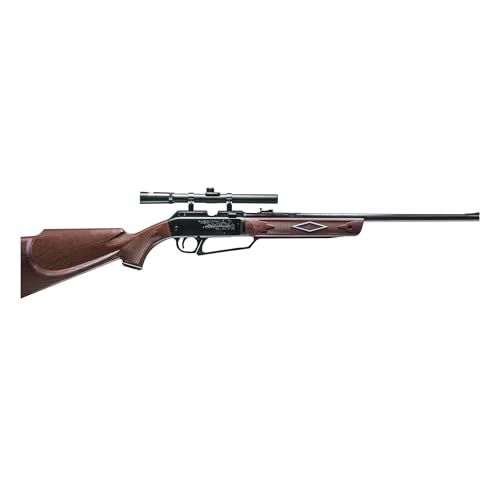
The Hatsan 1000X Spring Striker Combo Air Rifle in .22 caliber is a break barrel, spring piston airgun designed for hunters, campers, survivalists, and outdoor enthusiasts who need a reliable tool for small game and pest control. This rifle combines classic wood stock aesthetics with modern shooting features, making it a practical choice for field use.
Real-world performance centers on the 1000 FPS velocity with lead-free pellets and 800 FPS with standard lead pellets, delivering around 21 foot-pounds of muzzle energy. This is enough to ethically take rabbits, squirrels, and similar game at typical hunting ranges of 20 to 40 yards. The rifled German steel barrel provides consistent accuracy, and the included 2-9x32 Optima scope helps shooters get on target quickly. For close-range or low-light situations, the micro adjustable rear fiber optic sight and fixed red front sight are handy backups.
Build quality is solid for the price point. The wood stock offers a comfortable grip and good weight distribution, though the rifle tips the scales at 6.4 pounds, which is manageable for carrying during a day hunt. The metal trigger blade and scope stop add to durability. A realistic drawback is the cocking effort required for the powerful spring piston; some shooters may find it strenuous after many shots. Additionally, the included scope is adequate but may not hold zero as well as higher-end optics under repeated recoil.
Overall, this air rifle suits the buyer who wants an affordable, accurate, and powerful .22 caliber springer for hunting and plinking. It is not a match-grade target gun but is a trustworthy companion for outdoor adventures. Many owners appreciate the simplicity and reliability of the break barrel design, making it a good entry-level or backup hunting tool.
While this is an air rifle rather than a cutting tool, its 'cutting performance' refers to terminal ballistics and precision. The .22 caliber pellet, traveling at up to 800 FPS with lead pellets, delivers enough energy to cleanly take small game. The rifled barrel ensures tight shot groups at typical hunting distances, giving the shooter confidence in shot placement.
Accuracy is dependent on pellet choice and shooter technique. Many users report good results with domed or hollow point pellets for hunting. The two-stage trigger (metal blade) allows for a crisp release, aiding precision. The break barrel action cocks consistently, though spring vibration can affect follow-up shots if the rifle is not held firmly.
The included 2-9x32 scope helps with aiming at longer ranges, while the fiber optic sights are useful for quick snap shots. For pest control or hunting, the combination of velocity and muzzle energy makes this rifle effective on pests like groundhogs, rats, or invasive birds. Velocity varies with temperature and elevation, so shooters should verify point of impact in field conditions.
The Hatsan 1000X features a traditional wood stock that provides a classic look and comfortable handling. The stock is checkered on the grip and forearm to improve hold security. The barrel is made of rifled German steel, which is known for durability and accuracy. The metal trigger blade and scope stop add to the overall robustness of the design.
Weighing 6.4 pounds, the rifle is portable enough to carry on hikes or hunting trips but not excessively heavy. The break barrel mechanism operates smoothly if maintained with proper lubrication. The scope and rings are pre-mounted, which saves setup time, but some users may want to upgrade to a better scope for improved clarity and zero retention.
The fiber optic sights are adjustable for windage and elevation, making them reliable without batteries. The wood stock is finished with a protective coating, though care should be taken to avoid moisture damage in wet conditions. Overall, the build is solid for the price, and the rifle is designed to withstand regular field use with simple maintenance.

Pros
- Multi-shot capability saves time during hunting or target practice.
- High velocity and flat trajectory downrange.
- Quiet operation suitable for backyard or field use.
- Scope rail stays true with recoil reduction built in.
- Gas piston holds power better than spring piston designs.
Cons
- Break barrel requires moderate effort to cock, which may be tiring for some users.
- Scope not included, so you need to budget for an additional sight.
- Weight of 6.88 pounds can be heavy for long carry sessions.
The Gamo Swarm Magnum 10X GEN3i is a break barrel air rifle chambered in .22 caliber, designed for hunters, pest control shooters, and target enthusiasts. Its standout feature is the GEN3i inertia-fed magazine that uses the rifle's recoil to load the next pellet, allowing up to 10 shots without manually cocking between each one. This makes it ideal for situations where quick follow-up shots matter, such as hunting small game or dealing with multiple pests.
Real-world performance centers on the IGT Mach 1 gas piston, which provides a powerful 1300 fps velocity with lightweight pellets. The gas piston is more consistent than traditional spring piston designs, as it is less affected by temperature changes and offers a smoother cocking cycle. The built-in Whisper Fusion suppression system features a dual-chamber noise dampener that reduces report significantly, making the rifle suitable for backyard use or areas where noise is a concern.
The 11mm dovetail rail incorporates recoil-reducing polymer supports to protect your scope from jarring vibration, which helps maintain zero over extended shooting sessions. The stock is made from synthetic material, offering durability in wet conditions and keeping weight manageable. However, at 6.88 pounds, it is on the heavier side for a break barrel, which may be noticeable during long walks in the field. Cocking effort is moderate to high, depending on the user's upper body strength, so it may not be ideal for younger or smaller shooters.
Overall, the Gamo Swarm Magnum 10X GEN3i is a well-thought-out air rifle that combines rapid fire capability with high power. It is best suited for intermediate to advanced shooters who want a reliable, multi-shot break barrel without the complexity of a PCP system. The absence of a scope in the box is a minor drawback, but the accuracy potential with a good optic is impressive. If you need a repeating air rifle for hunting or plinking that offers good power and quiet operation, this model is a strong contender.
While this is an air rifle rather than a cutting tool, its shooting performance is critical for hunters and target shooters. The IGT Mach 1 gas piston consistently pushes .22 caliber pellets at high speeds, providing a flat trajectory that helps with accuracy at typical air gun ranges. The 10-shot magazine feeds smoothly once the rifle is properly broken in, with the inertia system using the recoil to advance the next pellet.
The break barrel action requires a full, smooth cocking stroke to reach its full power. After the shot, the magazine index rotates and the next pellet falls into position. This allows for rapid follow-up shots, which is beneficial when engaging moving targets or multiple pests. The two-stage trigger offers a crisp release after a little take-up, aiding in precision shooting.
Accuracy can be excellent with quality pellets, such as domed or hollow points, which are recommended for hunting. The Whisper Fusion system does not affect velocity or accuracy, but it does reduce noise that might spook targets. For target shooting, the recoil reduction rail helps keep scopes from shifting, so your zero stays reliable. Overall, this rifle delivers consistent, hard-hitting shots suitable for small game hunting up to moderate ranges.
The Gamo Swarm Magnum 10X GEN3i is built with a synthetic stock that withstands weather and rough handling without warping or cracking. The stock features a checkered grip area for a secure hold, even with wet or gloved hands. The barrel is a precision rifled steel barrel, standard for break barrel rifles at this price point.
The IGT Mach 1 gas piston is housed in a 33mm cylinder, which is larger than many competitors and contributes to the higher energy output. The breech seal is designed for long life, and the break barrel linkage feels solid. The integrated Whisper Fusion suppressor is a permanent part of the barrel shroud, not a removable add-on, so it remains compliant with local laws.
The 11mm dovetail rail runs along the top of the compression tube and is equipped with recoil-absorbing polymer inserts. This rail accepts most standard air gun scope mounts. The magazine is a standout design element; it sits low on the breech and does not interfere with scope mounting or cheek weld. Loading the magazine requires inserting pellets individually into the rotating chamber, which is straightforward once you get the hang of it.
Weighing 6.88 pounds, the rifle is balanced but a bit front-heavy due to the large gas piston. Carrying it for long periods may fatigue the supporting arm, but it is manageable. The trigger blade is plastic but has a decent feel. Overall, the build quality is good for the price, with attention to features like the recoil reduction and quiet operation that improve the shooting experience.
Pros
- Heavy 18.1-grain mass maximizes kinetic energy transfer and resists wind drift better than standard-weight pellets
- Substantial 500-count volume offers great value for frequent target shooters and field practitioners
- Precise manufacturing quality control claim translates to uniform pellet shapes and reliable seating
- Aerodynamic profile maintains stable flight dynamics at longer airgun shooting distances
Cons
- Heavy 18.1-grain weight can cause noticeable velocity drops in low-powered CO2 or entry-level youth airguns
- Manufacturer listing features conflicting descriptions, noting both hollow point and round nose geometry
- Longer pellet profile may require checking clearance in certain repeating rotary magazine systems
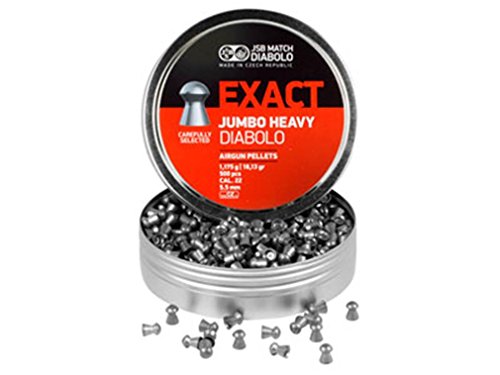
The JSB Jumbo Exact Heavy .22 Caliber Airgun Pellets (model 546287-500) represent a specialized ammunition option engineered for air rifle owners seeking heavier projectile mass and stable downrange flight. Supplied in a 500-count metal tin with a total listed shipping weight of approximately 0.95 pounds, these pellets feature an 18.1-grain configuration calibrated precisely for .22 caliber barrels. JSB has formulated this ammunition to balance aerodynamic efficiency, flight stability, and energy delivery, making it a prominent benchmark choice among airgun enthusiasts who demand consistent performance from their equipment.
This ammunition is best suited for recreational target shooters, long-range bench plinkers, and lawful small-game hunters using medium- to high-power air rifles. Because 18.1 grains is significantly heavier than the standard 14-grain range typical of basic .22 caliber ammunition, these projectiles pair best with pre-charged pneumatic (PCP) systems, high-output gas-piston guns, and magnum spring-piston rifles. Owners of these powerplants can take full advantage of the heavy weight to resist wind deflection and maintain stable trajectories across open outdoor ranges.
From an aerodynamic standpoint, the manufacturer emphasizes a high ballistic coefficient intended to lower drag and retain kinetic energy downrange. The listing highlights hand-picked quality control standards and precise manufacturing, both of which are critical for minimizing weight deviations between individual rounds. While the raw listing details contain a slight contradiction by mentioning both a hollow point design and a round nose profile, the Exact Heavy design is traditionally recognized for its rounded, domed geometry that provides a predictable drag curve and reliable barrel engagement.
Practical ownership requires confirming rifle powerplant suitability and magazine dimensions prior to purchasing. Firing heavy 18.1-grain pellets through low-powered springers or standard CO2 plinking pistols will often result in sluggish muzzle velocity and pronounced projectile drop. Furthermore, because heavier pellets typically exhibit longer overall body lengths, users operating magazine-fed repeating airguns should check their rotary clip or magazine clearance to ensure the pellet does not protrude or cause cycling resistance at the breech.
Handling and storage are uncomplicated thanks to the compact tin design, which measures roughly 2 x 1 x 1 inches according to supplied package specifications. Storing the container in a moisture-free area safeguards the lead alloy from premature oxidation and prevents skirt deformation that could compromise breech seals. For adult airgun shooters operating capable .22 caliber air rifles, the JSB Jumbo Exact Heavy 500-count pack provides a well-constructed, energy-retaining projectile choice for serious target work and lawful field use.
These JSB pellets are manufactured strictly for .22 caliber airguns and cannot be used in .177, .20, or .25 caliber barrels. Caliber compatibility alone, however, does not guarantee ideal performance across all airgun powerplants. With an 18.1-grain specification, these are classified as heavy pellets that perform best in rifles capable of generating sufficient pressure to launch heavy lead efficiently.
Buyers utilizing magazine-fed repeating air rifles must also verify that the depth of their rotary clips or magazines accommodates an 18.1-grain domed pellet. While single-shot loading trays readily accept longer pellets, some compact rotary magazines may require shorter projectile profiles to avoid cycling jams.
Proper storage is essential to preserve the uniform skirt dimensions and aerodynamic consistency of airgun pellets. The JSB 500-count tin should be stored in a dry, temperature-regulated environment to minimize atmospheric moisture exposure, which can cause oxidation on lead surfaces over time.
When transporting pellets to the range or field, keeping the tin secured inside a padded case or dedicated ammo pouch helps prevent rough handling that could deform the delicate hollow skirts. Inspecting individual pellets during loading ensures that only undamaged rounds are seated into the rifle chamber.
Pros
- Quiet operation makes it easier to shoot without disturbing neighbors or game
- High velocity suitable for small game hunting and target shooting at moderate ranges
- Includes scope and bipod so you can start shooting right away without additional purchases
- Comfortable stock design with a grippy texture for secure hold in various conditions
Cons
- Weighs nearly 13 pounds which can be tiring to carry on long hikes or stalk hunts
- Break barrel action requires some effort to cock, may be challenging for younger or smaller shooters
- The first several shots may be louder during the break-in period as mentioned by the manufacturer
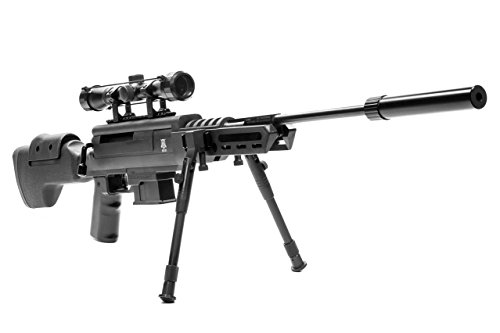
The Black Ops Airgun Sniper Rifle S is a break barrel .22 caliber pellet gun designed for shooters who want a tactical-style air rifle with serious power. It fires pellets up to 1250 feet per second, which puts it in the high-powered category for small game hunting and long-range target shooting. This rifle is best suited for hunters, plinkers, and outdoorsmen who appreciate a gas piston system for smoother cocking and more consistent velocity compared to traditional spring-piston designs.
Real-world performance hinges on the quiet shot cycle and the accuracy potential from the bundled 4x32 scope and bipod. The gas piston reduces vibration and noise, making follow-up shots less disruptive. The trigger pull is described as smooth, which helps with precision. However, at nearly 13 pounds, this is not a lightweight rifle. You will feel the weight during extended carry sessions or when shooting offhand without a support. The break barrel action can also be stiff for some users, especially when new.
Build quality is solid: the barrel and action use blued steel, while the stock is a tough polymer with a comfortable grip. The included scope and bipod add value, but aftermarket upgrades may be needed if you demand exceptional glass. The first 5-50 shots may be louder as the rifle breaks in, according to the product description.
Overall, the Black Ops S is a good option for stationary target practice or hunting from a blind where weight is less of an issue. It offers a lot of features for the price, especially if you want a quiet, high-powered air rifle with a tactical look.
Since this is an air rifle, the term cutting performance refers to its accuracy, power delivery, and consistency on target. The .22 caliber barrel launches pellets at up to 1250 FPS, which provides enough energy for small game like squirrels and rabbits at moderate ranges. The gas piston system helps maintain shot-to-shot consistency because it is less affected by temperature and holds the piston in a neutral position when uncocked.
Accuracy is aided by the 4x32 scope included in the box. The scope gives a clear sight picture for precise shots out to 40-50 yards. The bipod adds stability when shooting from a bench or prone position, which is crucial for precision. The smooth trigger pull reduces the chance of jerking the shot off target.
Control during use is decent thanks to the comfortable grip and the weight of the rifle, which soaks up movement. However, the heavy weight can make offhand shooting less steady. For outdoor tasks like hunting, the quiet operation is a major advantage it won't spook other game in the area. The rifle is not designed for food preparation or wood processing, so those are not applicable here.
The Black Ops S features a blued steel barrel and action, giving it a rugged, corrosion-resistant core that can handle outdoor conditions. The stock is made from a quality polymer with a textured pistol grip and forearm, providing a secure hold even in wet or gloved hands. The overall length is 48 inches, which is typical for a full-size air rifle.
Weight is the main trade-off at 12.94 pounds. This heft makes the rifle stable when shooting from a rest but less portable for hiking. There is no pocket clip or sheath, of course, but the rifle does include an adjustable bipod and a sling mount for carrying. The included scope is a 4x32 unit with covers, which is adequate for general use but not high-end.
Ergonomics are well thought out with a comfortable cheek rest and a reachable trigger. The picatinny rail on the bottom allows you to attach a bipod (included) or other accessories. The integrated suppressor is fixed and reduces muzzle blast significantly. Durability should be good for regular target shooting and hunting, though as with any air rifle, proper maintenance like occasional lubrication and cleaning will extend its life. Overall build quality is solid for the price point.
Evaluating Power, Velocity, and Energy in .22 Caliber Air Rifles
Determining what is the most powerful 22 air rifle requires looking beyond advertised velocity ratings. Muzzle velocity alone does not tell the whole story because light pellets produce high speeds with very little retained energy. True striking power is calculated in foot-pounds of energy, combining projectile speed with pellet mass. Comparing spring-piston, gas-ram, and pre-charged pneumatic systems reveals dramatic differences in performance.
The Direct Answer: Identifying Top-Tier Power Across Platforms
In the category of break-barrel rifles, magnum gas-piston models like the Gamo Swarm Magnum 10X GEN3i sit near the top. With its thirty-three millimeter Mach 1 cylinder, manufacturer specifications state it can achieve velocities up to 1,300 feet per second with lightweight alloy pellets. Heavy-duty spring rifles such as the Hatsan 1000X Striker also deliver substantial force, generating around twenty-one foot-pounds of muzzle energy with lead pellets. Tactical gas piston rifles like the Black Ops Sniper Rifle S advertise speeds reaching 1,250 feet per second, placing them among the hardest-hitting break barrels available.
Shooters stepping beyond self-contained spring or gas-piston guns find an entirely different performance tier in pre-charged pneumatic systems. While magnum break barrels peak between twenty-five and thirty-five foot-pounds of energy, specialized high-pressure air rifles easily generate forty to sixty foot-pounds or more in twenty-two caliber. However, self-contained break barrels remain the preferred choice for shooters wanting high power without dealing with external air tanks or pumps. Deciding which model represents the most powerful option depends on whether external air equipment is part of your shooting plan.
Foot-Pounds of Energy Versus Advertised Feet Per Second
Retail packaging heavily emphasizes feet per second because large speed numbers attract attention from prospective buyers. Advertised figures exceeding 1,200 or 1,300 feet per second are almost universally recorded using featherweight alloy pellets rather than standard lead. When an ultra-light projectile exits the muzzle at supersonic speeds, it produces a loud crack and quickly loses stability as it transitions through the transonic zone. In contrast, measuring foot-pounds of energy provides an accurate picture of work capacity and terminal impact downrange.
Calculating foot-pounds of energy involves multiplying pellet weight in grains by the square of the velocity, then dividing by 450,436. When a rifle shoots an eighteen-grain lead pellet at 900 feet per second, it produces over thirty-two foot-pounds of energy while maintaining excellent stability. Energy retention at fifty yards is drastically higher with heavier pellets because dense projectiles retain momentum against air resistance. High-energy impacts rely on dense lead penetrating deeply into target vitals without shedding kinetic force prematurely.
Large-Chamber Gas Piston Technology and Output
Gas-piston powerplants replace traditional coiled steel mainsprings with a sealed cylinder filled with pressurized inert gas. Because there is no wire spring to twist or vibrate during firing, gas pistons deliver a distinct recoil impulse and snappy shot cycle. Increasing cylinder volume, such as expanding internal diameter to thirty-three millimeters in magnum configurations, allows the piston to compress a larger volume of air behind the pellet. This increased displacement is the primary reason modern gas rams generate higher velocities than standard small-bore springers.
Another mechanical advantage of gas-ram technology is its ability to remain cocked for reasonable intervals without spring fatigue. Traditional metal springs can lose tensile strength if kept under tension for extended periods while waiting for pests to appear. Furthermore, multi-shot systems like Gamo’s inertia-fed ten-round rotary magazine chamber a new pellet every time the barrel is broken. Combining rapid follow-up capability with a magnum-class piston cylinder makes modern gas-ram platforms highly effective for field work.
Mechanical Spring-Piston Actions and Power Ceilings
Spring-piston rifles rely on a tightly coiled steel wire spring that is manually compressed when the user breaks open the barrel. The Hatsan 1000X Striker exemplifies this design, pairing a German steel rifled barrel with a robust mechanical piston that achieves twenty-one foot-pounds of muzzle energy. When released by the trigger sear, the heavy spring drives the piston forward, compressing air violently against the breech transfer port. Spring systems have proven reliable for generations because they contain simple mechanical parts that do not rely on high-pressure gas seals.
Mechanical springs face a distinct physical power ceiling determined by human cocking strength and chamber length. To produce more foot-pounds of energy, an airgun must incorporate a thicker spring or lengthen the compression stroke. Longer compression tubes make the rifle front-heavy, while stiffer springs dramatically increase cocking resistance past forty or fifty pounds. Furthermore, powerful metal springs create torsional twist during expansion, requiring shooters to master consistent hold techniques to maintain repeatable accuracy downrange.
Pre-Charged Pneumatics and the Upper Limits of .22 Output
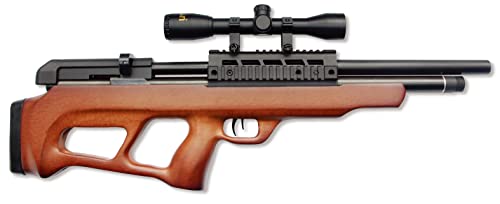
When airgunners ask about absolute maximum power in twenty-two caliber without break-barrel constraints, pre-charged pneumatics dominate every category. High-pressure air reservoirs holding up to 3,000 or 4,350 pounds per square inch release metered bursts of air directly behind the projectile. Instead of generating pressure through a moving piston during the shot, a PCP rifle utilizes stored pneumatic energy that accelerates heavy pellets smoothly down the barrel. Exploring value-focused PCP air rifles reveals that air-reservoir guns regularly surpass break barrels in raw kinetic output.
Pneumatic platforms can push twenty-two caliber pellets well above fifty foot-pounds because their power is not limited by human cocking strength. These rifles can easily shoot dense twenty-five to thirty-grain cast lead projectiles or specialized hunting slugs at stable hunting velocities. In fact, shooters who need massive knockdown energy often transition from twenty-two caliber directly to big-bore PCP air rifles designed for larger game. While pneumatic rifles generate superior energy curves, they require dedicated high-pressure hand pumps, scuba cylinders, or specialized electric compressors to recharge their reservoirs.
Pellet Selection and Kinetic Energy Retention
A powerful airgun produces disappointing results downrange if paired with improper ammunition. Lightweight pellets may show impressive numbers on a chronograph screen, but they shed energy rapidly and drift off target in moderate breezes. High-power twenty-two caliber rifles require intermediate to heavy lead pellets to absorb the expansive energy of the power plant efficiently. Firing an overly light pellet in a magnum break barrel can even damage the piston seal because inadequate backpressure causes the piston to slam hard into the compression head.
Pellets like the JSB Jumbo Exact Heavy weigh eighteen point one grains, providing the sectional density needed to stabilize at high velocities. Their rounded dome design offers an excellent ballistic coefficient, slicing through wind and preserving kinetic energy out to fifty yards. For close-range pest dispatch where maximum tissue disruption is desired, specialized designs like the H&N Terminator Hollowpoint weigh sixteen point three six grains and feature expanding notches. Manufacturer guidance for the Terminator pellet specifically recommends pairing it with airguns generating at least twelve foot-pounds of energy to guarantee proper terminal expansion.
Recoil Management, Sight Selection, and Optical Longevity
Magnum spring-piston and gas-ram airguns subject telescopic sights to a unique physical stress known as bidirectional recoil. When the trigger releases the piston, the initial spring release shoves the rifle backward into the shooter’s shoulder. Milliseconds later, the heavy piston collides with the front of the compression tube, stopping instantly and violently jolting the rifle forward. This harsh forward-and-backward whipping motion can shatter internal glass lenses and shake reticles loose inside scopes designed strictly for standard powder-burning firearms.
Airgun manufacturers frequently include bundled scopes, such as the two-to-nine power Optima scope provided with the Hatsan 1000X or the four-by-thirty-two optic paired with the Black Ops tactical rifle. While bundled optics provide a functional starting point for casual backyard plinking, magnum powerplants often warrant upgrading to reinforced, airgun-rated glass. Scopes designated as spring-gun rated feature etched-glass reticles and heavy-duty internal erector springs built to withstand repetitive forward shock. Utilizing a mounted scope stop or a recoil-absorbing scope rail further prevents the mounting rings from sliding backward along the receiver dovetail.
Cocking Effort and Handling Realities in Magnum Airguns
The physical reality of cocking a magnum-class break barrel is an important consideration that marketing brochures often downplay. Generating twenty to thirty foot-pounds of energy from a single stroke requires compressing a massive spring or high-pressure gas cylinder using barrel leverage. Cocking effort on top-tier magnum airguns regularly ranges from thirty-five to more than forty-five pounds of manual force. For younger shooters or individuals with shoulder fatigue, cycling a high-power break barrel dozens of times during an afternoon session can become exhausting.
The Umarex Ruger Explorer youth rifle provides an instructive contrast in airgun design and intended application. Operating at a modest 495 feet per second in seventeen-seven caliber, the Explorer utilizes a compact spring-piston mechanism tailored for easy cocking and approachable handling. That youth-oriented design exists precisely because high-output magnum twenty-two rifles are heavy, long, and physically demanding tools intended strictly for adult shooters. Attempting to use a full-sized magnum rifle for introductory marksmanship training often leads to poor shooting form and rapid physical fatigue.
Practical Application: Matching Power to Pest Control and Target Shooting
High muzzle energy is particularly valuable when dispatching garden pests, invasive rodents, and small game cleanly and humanely. A standard-velocity twenty-two airgun may carry sufficient energy for close-range pests, but animals like raccoons or woodchucks at extended distances demand substantial kinetic punch. Magnum rifles delivering twenty or more foot-pounds ensure that expanding pellets like hollowpoints deliver rapid terminal shock upon impact. Precise head and vital organ shots remain paramount, but extra foot-pounds provide an essential safety margin when hunting in windy field conditions.
For pure target shooting and backyard plinking, excessive power can actually work against the shooter’s enjoyment. Magnum break barrels produce loud mechanical clatter, strong muzzle discharge noise, and heavy vibrations that disrupt precision target work. Pellet traps must be heavily reinforced with thick steel backstops to safely stop eighteen-grain lead pellets traveling with magnum energy. Integrated noise dampeners, such as Gamo’s Whisper Fusion dual-chamber sound suppression, help muffle the expanding air blast, but choosing heavy lead pellets is essential to keep velocities comfortably subsonic and quiet.
Summary of Core Considerations Before Choosing a Magnum Setup
Selecting the most powerful twenty-two caliber air rifle requires balancing raw kinetic force against physical handling requirements and mechanical recoil. While advertised speeds of 1,300 feet per second highlight maximum velocity potential, genuine hunting and pest control power depends on projectile mass and foot-pounds of energy. Gas-ram platforms like the Gamo Swarm Magnum offer multi-shot convenience and robust output, while heavy springers like the Hatsan Striker provide dependable mechanical simplicity. If your shooting requirements demand extreme energy levels beyond thirty foot-pounds, transitioning to a pre-charged pneumatic platform remains the ultimate solution.
Before investing in any high-powered air rifle, verify that your planned shooting space accommodates the substantial range and penetration of magnum twenty-two pellets. Always confirm that your chosen optic is explicitly rated for the violent reverse recoil of high-output spring and gas-piston actions. Pair your rifle with quality heavy lead ammunition to maximize stability, accuracy, and humane terminal effectiveness in the field. By aligning your power expectations with the physical realities of airgun operation, you can choose a reliable twenty-two rifle that performs flawlessly on target.




Write Your Review
No reviews yet. Be the first to share your experience!