


Maintaining crisp accuracy in an airgun barrel requires a very different approach than servicing a traditional firearm. Because air rifle barrels feature shallow rifling pressed into softer steel, aggressive steel brushes and harsh chemical solvents can cause permanent bore degradation. Felt pellets offer a lightweight, non-abrasive alternative designed to sweep away loose lead dust and manufacturing oils without harming internal components. Knowing how to use air rifle cleaning pellets correctly ensures that you preserve muzzle velocity while keeping your barrel free of disruptive debris.
Different airgun powerplants handle bore maintenance differently, meaning a technique suitable for pre-charged pneumatics could severely damage a mechanical spring rifle. Many enthusiasts who shoot break barrel air rifles discover that chambering an unweighted felt pellet can lead to internal mechanical shock. Understanding the exact mechanical requirements of your specific airgun platform is the key to safe maintenance. This guide outlines the safe loading, shooting, and rod-assisted methods necessary to keep your air rifle performing consistently.

Pros
- Complete set covers both common airgun calibers
- Flexible rod reduces risk of damaging barrel rifling
- Integrated screwdriver adds unexpected utility
Cons
- Plastic handle may feel less durable than all-metal alternatives
- Cleaning pellets are single-use and run out quickly
- Rod flexibility might not suit every barrel profile
The Umarex Air Gun Cleaning Kit is a dedicated maintenance solution for .177 and .22 caliber air rifles and pistols. While not a knife or cutting tool, it serves a critical role for shooters who rely on their airguns for hunting, pest control, plinking, or target practice. This kit is best suited for airgun enthusiasts, hunters, and outdoor shooters who want a simple, portable way to keep barrels clean and accurate.
Based on the product features, the kit includes a 33-inch flexible cleaning rod that can navigate the barrel without scratching or bending. The handle doubles as a screwdriver with six bits (two flat, two Phillips, two hex heads) — a smart touch for field adjustments. You also get nylon brushes and mops in both calibers, plus 15 cleaning pellets each for pushing out loose debris. A retaining grommet and thread adapter help organize the rod when not in use.
The build quality is functional but leans on plastic components, which keeps weight low but may not match the durability of all-metal kits. The flexible rod is a standout feature, as rigid rods can damage airgun barrels. Drawbacks include the limited supply of cleaning pellets and the plastic handle that might not withstand heavy torque. For most airgun owners, this kit provides everything needed for routine cleaning in a compact package. It's a practical purchase for anyone serious about maintaining their airgun's performance.
Since this is a cleaning kit rather than a cutting tool, we evaluate its cleaning effectiveness. The flexible rod and nylon brushes work together to scrub fouling from the barrel without damaging the rifling. The brushes are caliber-specific, ensuring a snug fit for efficient debris removal. Mops help remove leftover oil or solvents, while cleaning pellets push out loose particles in one pass.
The multi-functional handle adds convenience but does not affect cleaning speed. The rod flexibility allows the brush to follow the barrel's curve, which helps maintain consistent contact. For precision airguns, this gentle approach can preserve accuracy over time. While not a knife's edge retention, the kit's components hold up well under regular use if properly maintained. Some users may find the plastic bristles less aggressive than brass, but they are safer for softer airgun barrels. Overall, this kit delivers satisfactory cleaning performance for routine maintenance.
The kit's design focuses on portability and convenience. The 33-inch rod is segmented and fits into the handle when not in use, making storage easy. The handle itself is made of plastic with a textured grip and houses six bits in the base. The bits are standard sizes, covering common screw heads on airgun stocks and scopes.
Weight is minimal at just over half a pound, and the package dimensions (1.75 x 4.5 x 8.75 inches) slip into most range bags or backpacks. The nylon brushes and mops have brass cores to prevent corrosion. The cleaning pellets are simply lead discs that push through the barrel — they work but are single-use. The retaining grommet and thread adapter keep the rod secure during transport.
While the plastic construction may raise durability concerns, it suits the kit's intended purpose for field or range use. The handle screwdriver is a thoughtful addition, though the bits are small and could be misplaced. For airgun owners, this kit offers a practical balance of features, portability, and affordability. It is not designed for extreme environments, but for typical shooting activities, it gets the job done.
Pros
- Copper brushes are gentle on barrel steel while lifting fouling
- Compact size fits easily in a range bag or gun case
- Works for both rifles and pistols in the two most common airgun calibers
Cons
- May not include enough brushes for frequent shooters who clean after every session
- Only covers .177 and .22 calibers, so not suitable for other airgun sizes
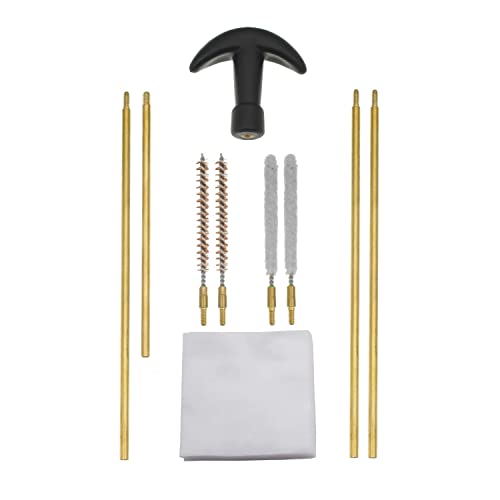
The Motanar Cleaning Kit is a barrel maintenance solution for .177 and .22 caliber air rifles and pistols. While it's not a knife or EDC tool, this kit is a practical accessory for airgun owners who hunt pests, target shoot, or plink in the backyard. Based on the product description, the copper brushes are designed to remove fouling and dirt without scratching the bore, which is a common concern for precision shooters.
This kit is best suited for airgun enthusiasts who want a simple, portable way to keep their barrels clean. The lightweight build makes it easy to toss into a range bag or backpack. According to the specs, the weight is just 0.11 kilograms and the dimensions are compact enough for transport.
Real-world use likely involves running the brush through the barrel a few times after a shooting session. The high-quality copper material should hold up well over time, though frequent users may need to replace brushes eventually. The absence of solvent or patches in the description means you'll need to supply your own cleaning solution.
One realistic drawback is that the kit only covers two calibers, so owners of .25 or larger airguns will need a different set. Also, there are no user reviews yet, so first-hand experience is limited. Overall, if you own a .177 or .22 airgun and want a budget-friendly way to maintain accuracy, this kit is worth considering.
Although this is a cleaning kit rather than a cutting tool, its performance relates to how effectively it removes barrel fouling. The copper bristles are designed to cut through carbon buildup and lead residue without marring the steel. Based on the product features, the brushes can clean up dirt without scratching the surface, which is critical for maintaining consistent accuracy.
The cleaning efficiency depends on how thoroughly the brush contacts the rifling. The kit is specifically sized for 4.5mm and 5.5mm bores (0.177 and 0.22 inches), so it should fit snugly. Edge retention doesn't apply here, but the durability of the brush bristles is key. High-quality copper should resist deformation over multiple uses.
Deployment speed isn't relevant, but the kit is easy to use: just push the brush through the barrel. Control during cleaning is straightforward, and the lightweight design helps you feel the resistance. For precision shooting, a clean barrel can make a noticeable difference in shot consistency. This kit is a practical choice for maintaining your airgun's accuracy.
The Motanar cleaning kit features a simple, no-frills design centered around copper brushes. The bristles are made from high-quality copper, which is softer than steel and less likely to cause wear. The brushes are attached to a flexible rod or handle (though not fully described), making them easy to push through the barrel.
Weighing only 0.11 kilograms, the kit is highly portable. The dimensions of about 8.86 x 4.72 x 0.59 inches suggest a compact package that can slip into a pouch or small pocket. The color is silver, likely from the metal components.
Durability is a focus: the description emphasizes high-quality copper material that is durable and convenient. For airgun cleaning, the kit should hold up to regular use. Corrosion resistance is inherent to copper, though it may tarnish over time. Carry comfort isn't a factor, but storage and transport are easy due to the light weight. Overall, this is a solidly built cleaning set for its intended purpose.

Pros
- Includes both a rigid 29.4-inch brass rod assembly and a 33-inch coated flexible pull-cable for versatile cleaning approaches.
- Precision-sized brushes in both bronze and nylon allow users to tailor aggressiveness according to fouling levels and barrel types.
- Compact 6.7-inch by 4.5-inch zippered storage case organizes all 20-plus tools neatly for easy range bag transport.
- Compatible with popular small-bore platforms including .177 airguns, .22 caliber pellet rifles, .17 HMR, and .22 LR rimfires.
Cons
- Limited strictly to .177 and .22 bore diameters, requiring separate kits for standard centerfire rifle or handgun calibers.
- Small-diameter brass cleaning rods require careful alignment during pushing strokes to avoid bending under heavy pressure.
- Included patch supply is modest and will require additional bulk patches for routine, high-volume barrel cleaning.
The Magsaddle .177 and .22 Caliber Cleaning Kit is a dedicated small-bore maintenance package designed for pellet guns, BB guns, air rifles, and rimfire firearms chambered in .22 LR and .17 HMR. Bore maintenance on small-caliber rifles requires specialized tooling because narrow barrel diameters leave little room for oversized attachments. This kit organizes essential brushes, mops, jags, and pull cables into a compact footprint tailored for recreational plinkers, small-game hunters, target shooters, and firearm owners seeking to maintain bore cleanliness without carrying oversized universal kits.
A critical factor in rifle accuracy is protecting the barrel crown and rifling from mechanical damage during cleaning. The Magsaddle kit addresses this through a 33-inch nylon-coated flexible cable that facilitates breech-to-muzzle cleaning. Pulling from the chamber end out through the muzzle ensures debris moves in the direction of bullet travel, keeping carbon and lead buildup away from the action. Furthermore, the thick protective coating prevents metal-on-metal friction against the delicate crown, directly supporting long-term shot consistency for precision airguns and rimfire rifles.
Component construction relies on solid brass rather than soft plastics or brittle alloys. The kit includes six connectable brass rod segments that assemble to a maximum length of 29.4 inches, making it long enough to service full-length air rifle barrels and standard rimfire sporter barrels. Threaded brass jags and slotted patch holders mate securely with the rods. For bore scrubbing, Magsaddle includes both bronze and nylon brushes in .177 and .22 sizes, paired with soft cotton mops for solvent application and bore drying. The brass components are softer than barrel steel, minimizing the risk of scratching bore walls during routine maintenance.
Portability is a strong asset for shooters who need field-ready equipment. All 20-plus components nest into custom internal slots within a zippered black case measuring approximately 6.7 inches by 4.5 inches. This compact profile easily slips into a range bag side pocket, hunting pack, or vehicle compartment. Field maintenance remains straightforward, as the threaded components fit together quickly without requiring specialized assembly tools. As with all firearm maintenance, users should always ensure firearms are completely unloaded and the chamber is clear before introducing cleaning rods or cables.
Realistic limitations center on caliber coverage and rod diameter. Because this system focuses strictly on .177 (4.5mm) and .22 (5.5mm) bores, it cannot service popular centerfire calibers such as 9mm, .308 Winchester, or .223/5.56 if standard larger accessories are desired. Additionally, narrow-diameter brass rods inherently have less lateral rigidity than heavy centerfire rods, meaning users must push straight along the bore axis to prevent bending. For air rifle enthusiasts, target shooters, and rimfire owners seeking a dedicated, cost-effective maintenance kit that safeguards bore accuracy, this Magsaddle system provides practical value and reliable organization.
Routine care for the Magsaddle cleaning kit ensures prolonged service life and prevents cross-contamination between cleaning sessions. After clearing lead and carbon from a rifle bore, rinse bronze and nylon brushes with a mild degreaser or warm soapy water to remove solvent residues and trapped grime. Allow all brushes and cotton mops to air-dry completely before placing them back into the zippered case to avoid corrosion or fabric mildew.
When threading the brass rod sections together, hand-tighten each connection firmly to keep the joints straight and stable during use. Avoid using pliers or excessive torque, which can strip the fine threads. Periodic inspection of the 33-inch flex cable coating is also recommended to verify the protective nylon barrier remains intact and free of embedded metal shavings.
The Magsaddle kit includes more than 20 organized maintenance components inside a compact zippered storage case measuring roughly 6.7 by 4.5 inches. Core hardware consists of six connectable brass rods providing an assembled working length of up to 29.4 inches, along with a 33-inch nylon-coated flexible pull cable.
Bore tools feature dual-caliber coverage for .177 (4.5mm) and .22 (5.5mm) barrels. This includes two bronze bore brushes, two nylon bore brushes, two soft cotton mops, caliber-matched brass jags, slotted patch tips, a thread adapter, and an initial supply of cleaning patches.

Pros
- Quick and straightforward method for clearing barrel debris at the range or in the field
- Gentle cotton material protects delicate air rifle rifling and crown edges
- Generous 100-count package provides dependable value for routine upkeep
- Compact dimensions make it effortless to store in any shooting kit or range bag
Cons
- Not intended to completely replace dedicated cleaning rods and brushes for heavy fouling
- Engineered exclusively for .22 caliber barrels and cannot be used in .177 or .25 calibers
- Spring-piston air rifle users must observe proper resistance guidelines to avoid dry-fire stress
The Gamo .22 Caliber Air Rifle Cotton Cleaning Pellets are specialized firearm maintenance accessories developed specifically for airgun enthusiasts seeking an efficient way to care for their barrels. Engineered for sport shooters, pest-control hunters, backyard plinkers, and competitive air rifle marksmen, this 100-count supply provides a quick method for swabbing out the bore. Maintaining clean rifling inside an air rifle barrel is critical for velocity stability and group consistency, and having a portable cleaning option allows shooters to service their equipment right at the firing line or out in the field.
In terms of cleaning performance, the manufacturer highlights these cotton pellets as an expedient way to strip away loose dirt, dust, and accumulated lead particles from the bore lining. While centerfire and rimfire rifles demand heavy chemical solvents and bronze brushes to tackle high-heat copper and powder fouling, air rifle barrels primarily collect light lead buildup and environmental particulate. These pre-formed cotton pellets compress slightly as they traverse the barrel, sweeping away loose particulate before it impacts pellet seating or rifling engagement.
The physical design of the product emphasizes practicality and portability. Packaged in a compact container measuring approximately 5.5 inches by 3.5 inches by 1.25 inches, the pellets occupy minimal space in a range pack, shooting vest, or gun safe organizer. Each pellet is composed of compressed cotton fibers tailored specifically to .22 caliber barrel diameters. This non-abrasive construction ensures that delicate crown geometry and internal lands remain entirely safe from the gouging or scratching that rigid metallic rods might risk if misaligned.
Application and handling are straightforward, though safe operation requires awareness of air rifle mechanics. The pellets can be utilized during regular pull-through cleaning setups or propelled through pneumatic and pre-charged pneumatic (PCP) systems to blow out debris. Shooters utilizing spring-piston or gas-ram air rifles should be mindful of dry-fire safety, as unweighted cotton pellets provide minimal backpressure; pairing them with an appropriate lead pellet or using a pull cord is a recognized method to protect internal seals. Keeping the container stored in a dry environment preserves the cotton fibers from ambient moisture before use.
Shooters should recognize the practical limits of this maintenance accessory. As noted in the manufacturer documentation, these cotton pellets are engineered to help maintain performance but are not intended to replace comprehensive cleaning with a dedicated rod, brush, and patch system. Stubborn lead deposits or heavy grease migration from the action will still require occasional mechanical cleaning. Additionally, these pellets are caliber-specific, designed strictly for .22 caliber barrels and unsuitable for smaller .177 or larger bore configurations.
For air rifle owners looking to extend intervals between detailed teardowns, the Gamo .22 Caliber Cotton Cleaning Pellets serve as a practical, low-cost maintenance solution. They offer reliable convenience for field bags and range kits, making them an excellent choice for shooters who value bore hygiene, consistent grouping, and simple barrel care during high-volume shooting sessions.
Integrating Gamo .22 Caliber Cotton Cleaning Pellets into a scheduled cleaning routine helps maintain bore hygiene without subjecting delicate barrel steel to unnecessary friction. Unlike conventional firearms, air rifles do not produce hot carbon or corrosive primer residues, meaning soft mechanical swabbing is often sufficient to maintain consistent pellet velocities.
To ensure optimal results, store the pellet container in a cool, dry range bag compartment away from excess humidity and gun oils. Utilizing these pellets periodically after dusty field trips or extensive target sessions keeps buildup minimal and prolongs the time needed between intensive rod-and-brush cleanings.

Pros
- Thicker brass rods improve durability during heavy use
- Compact case makes storage and transport easy
- All necessary accessories included for complete cleaning
- Versatile caliber compatibility for multiple firearms
Cons
- Nylon brushes may wear faster than bronze alternatives
- Case size limits storage of extra patches or solvents
- Flex cable can be difficult to thread on tight barrels
The CVLIFE .177 .22 Caliber Gun Cleaning Kit is not a knife but an essential maintenance tool for any shooter or hunter who owns firearms in .22 cal, .177 cal, 17hmr, .223, or 5.56mm. This kit is best suited for range enthusiasts, hunters, and outdoor sportsmen who need a reliable, portable cleaning solution. Its design focuses on practicality: 6 brass rods (24 percent thicker than standard) resist bending, and the included nylon bore brushes effectively scrub lead and carbon deposits without damaging the rifling. The compact case (6.7 x 4.53 inches) slips easily into a backpack or pocket, making it ideal for trips to the range or hunting camp.
In real-world use, the rod system allows for flexible length up to 30 inches, accommodating longer barrels with ease. The brass jags and slotted tip work well with the 50 included patches for thorough cleaning. However, some users may find the flex cable tricky to feed through tight chambers, and the nylon brushes are less aggressive than bronze versions. Overall, this kit offers good value for its price and is a practical choice for anyone needing a basic, on-the-go cleaning set for small-caliber firearms.
Buyers should note that the kit lacks a solvent or lubricant, so those must be purchased separately. For the price, it delivers reliable performance for routine maintenance. If you are a hunter or shooter who values portability and ease of use, this CVLIFE kit is a solid recommendation.
While this is a gun cleaning kit, its effectiveness can be evaluated through its cleaning performance. The nylon bore brushes feature stiff, densely packed bristles that efficiently cut through lead and carbon buildup. The 24 percent thicker brass rods provide stable leverage, allowing you to apply consistent pressure through the barrel. The 6-rod system enables a 30-inch reach, which is adequate for most .22 and .177 caliber rifles.
The included flex cable helps navigate tighter bends in some pistol barrels, though it may not always feed smoothly. The brass jags and slotted tip hold patches securely for precision cleaning of the bore. The 50 patches are of standard quality and work well for general use. Overall, the kit delivers reliable cleaning performance for routine maintenance, but for heavy carbon removal, you may need additional solvent or a bronze brush upgrade.
The CVLIFE Gun Cleaning Kit is built around durability and portability. The brass rods feature 24 percent thicker tube walls compared to standard kits, reducing the risk of bending during use. The threads are deeply engraved for a secure connection between sections. The nylon bore brushes are made with stiff bristles that hold up well against carbon and lead buildup.
The compact hard case measures 6.7 x 4.53 inches and includes a foam insert that keeps all components organized. It fits easily into a range bag, backpack, or even a large pocket. The case is lightweight and durable enough for travel. The kit includes a flex cable, which is more flexible than a solid rod but may kink if mishandled. Overall, the build quality is good for the price point, with attention to ease of transport and storage. There is no provision for storing extra patches or solvents, so you will need to carry those separately.
Pros
- Non-abrasive felt design gently wipes away debris and loose lead fouling
- Convenient 80-count quantity provides plenty of swabbing pellets for routine range upkeep
- Extremely compact 0.02-pound packaging stores easily in range bags or gun cases
- Helps preserve barrel cleanliness without requiring immediate chemical solvent applications
Cons
- Too lightweight to fire through spring-piston air guns safely, requiring manual push-through with a rod
- Intended for routine dry swabbing and debris removal rather than heavy copper or deep-fouling solvent scrubbing
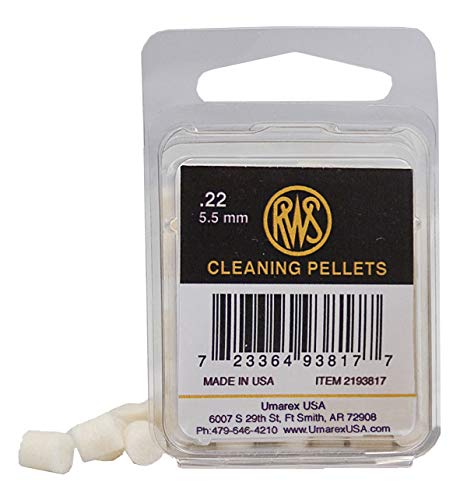
The RWS .22 Quick Cleaning Pellets by Umarex are dedicated airgun maintenance accessories designed specifically for .22 caliber barrels. Manufactured from compressed felt, these pellets are engineered to fit snugly into the bore to wipe away dirt, dust, and accumulated lead particles. For target shooters, backyard plinkers, competitive air rifle marksmen, and small-game hunters, regular barrel hygiene is a key element in preserving uniform rifling engagement and repeatable downrange consistency.
In practical airgun ownership, lead pellets leave slight residue and lubricant inside the rifling over hundreds of shots. Unlike firearms that burn powder, air rifles do not require aggressive copper-dissolving solvents for routine maintenance. These felt cleaning pellets act as quick dry swabs, sliding along the rifling lands and grooves to sweep out loose particles. This soft-contact approach helps maintain bore cleanliness without introducing metal-on-metal friction that can occasionally occur with stiff wire brushes.
The package provides 80 individual cleaning pellets in an ultra-compact footprint measuring 0.75 by 1.87 by 2.75 inches, with a total weight of just 0.02 pounds. The felt material is uniform and dense enough to maintain radial pressure against the bore walls during transit. Because the container is so compact, it slips easily into pocket organizers, field gear packs, or bench-rest range boxes without adding noticeable bulk or weight.
A critical operational factor noted in the manufacturer specifications relates to action type compatibility. Cleaning pellets are significantly lighter than standard lead pellets, meaning they do not generate sufficient backpressure when loaded into spring-piston air rifles. Firing an unweighted felt pellet in a spring gun can cause the piston to slam forward violently, similar to dry firing, which risks damaging internal seals. For spring-piston rifles, the manufacturer specifies using a cleaning rod to push the felt pellet through the bore rather than discharging it with air pressure.
For owners of compatible .22 caliber air rifles seeking an uncomplicated way to clean their bores after a day at the range or out in the field, this 80-count pack offers practical utility. It serves as an accessible, non-abrasive maintenance tool that handles routine lead clearing effectively, provided spring-action rifle shooters follow the directed push-rod method during barrel servicing.
Routine barrel maintenance with RWS .22 Quick Cleaning Pellets requires minimal gear and can be performed quickly at a shooting bench or workshop table. For pneumatic or pre-charged airguns where firing a felt pellet is permissible, loading and discharging the pellet pushes accumulated dust and light lead flakes out the muzzle. Always ensure the airgun is pointed in a safe direction into a suitable pellet trap or backstop to capture the expelled felt wad.
For spring-piston air rifles, safe maintenance requires using a coated or brass cleaning rod to manually push the felt pellet from breech to muzzle. This manual push-through provides the cleaning contact required to swab the rifling while completely eliminating the mechanical strain associated with firing an ultra-light projectile. Storing the container in a dry environment prevents moisture from degrading the clean felt plugs prior to bore use.

Pros
- Easy to use - no rods or brushes required, just shoot them through the barrel
- Gentle on barrel rifling due to soft wool felt construction
- Comes with a storage box to keep pellets clean and organized
- Portable and convenient for range trips or field maintenance
Cons
- Not a replacement for deep cleaning with rods and solvents for heavy fouling
- May not be as effective on heavy lead buildup compared to traditional cleaning methods
- Limited to .177 caliber only, not compatible with other airgun calibers
The uolent .177 Caliber Cleaning Cotton Wool Felt Pellets are a specialized maintenance accessory designed for airgun owners who want a quick and convenient way to keep their barrels clean. Unlike traditional cleaning rods and patches, these wool felt pellets are loaded directly into the breech and fired out, pushing fouling and debris ahead of them. This makes them a practical choice for sport shooters, hunters, target shooters, and beginners who want to maintain their air rifles or air pistols between more thorough cleanings.
For sport shooters and hunters who spend time at the range or in the field, maintaining barrel cleanliness is essential for consistent accuracy and reliable performance. According to user feedback and product specifications, these cleaning pellets work by being shot through the barrel like a standard .177 pellet. The soft wool felt material is designed to pick up light fouling, dust, and debris without damaging the delicate rifling inside the barrel. This can help preserve accuracy over time, especially for shooters who put many rounds through their airguns during practice sessions or hunting trips.
Build quality appears adequate for the intended job. The wool felt is soft yet dense enough to engage the rifling and scrub the bore lightly. The included storage box keeps the pellets clean and organized, which is a nice touch for shooters who like to keep their gear tidy. These pellets are specifically designed for .177 caliber airguns, so they won't fit other calibers. They work best as a light maintenance tool rather than a heavy-duty cleaning solution for lead buildup or stubborn fouling. Many users report that using a few pellets after each shooting session helps keep the barrel in good shape with minimal effort.
Ease of use is a major selling point. Shooters simply load a cleaning pellet into the breech, close the action, point the airgun in a safe direction, and fire. The pellet travels down the barrel, collecting debris, and exits safely. Repeating this a few times can help remove loose particles. This method is especially appealing for outdoor enthusiasts who want a quick field cleaning solution without carrying rods, solvents, and patches. It's also beginner-friendly since it doesn't require any special technique or tools.
One realistic limitation is that these pellets are not a substitute for a thorough cleaning with rods, brushes, and solvents when heavy fouling or lead buildup is present. They are best used as a maintenance tool between deep cleanings. Additionally, since they are made of felt, they may leave small fibers behind if not used properly, though most shooters find this minimal. Some users also note that while convenient, the cleaning action is not as aggressive as traditional methods, so shooters who push their airguns hard may still need a full cleaning routine regularly.
Overall, the uolent .177 cleaning wool pellets are a practical and affordable maintenance accessory for airgun owners who value convenience and ease of use. They are well-suited for sport shooters, target shooters, hunters, and beginners who want to keep their .177 caliber air rifles and pistols shooting accurately with minimal hassle. While not a replacement for deep cleaning, they offer a quick and gentle way to maintain barrel cleanliness between range trips or hunting expeditions. For anyone looking for a simple maintenance solution, these pellets are worth considering as part of a regular care routine.
Safe and Effective Techniques for Airgun Bore Maintenance
Air rifle barrels require thoughtful maintenance to maintain shot-to-shot precision, but aggressive scrubbing often does more harm than good. Soft lead pellets naturally deposit a microscopic lubricant layer inside the rifling, which stabilizes subsequent projectiles during transit. Felt cleaning pellets offer a gentle alternative by wiping away loose particulate, excess grease, and lead flakes without scouring the bore. Applying the right procedure ensures that you clear the barrel safely without risking mechanical damage to your air rifle.
Understanding Felt Cleaning Pellets and How They Work
Felt cleaning pellets are cylindrical plugs manufactured from dense, compressed wool fibers or cotton felt. Brands such as Gamo, RWS, and uolent calibrate these plugs to specific bore diameters, primarily .177 caliber and .22 caliber. When propelled through the barrel, the felt expands outward against the rifling grooves. This expansion forces the fibers into the rifling to capture dust, loose lead particles, and accumulated moisture.
Unlike standard lead ammunition, felt pellets carry minimal weight and generate very little bore friction. A typical lead pellet in .177 caliber weighs between seven and ten grains, while a felt plug weighs a fraction of a grain. This vast difference in projectile mass fundamentally alters how air pressure builds behind the plug. Understanding how that reduced resistance interacts with different powerplants is vital before loading one into your breech.
The soft texture of natural wool ensures that delicate rifling lands and crown edges remain unmarred during service. Bronze or steel bore brushes designed for powder-burning firearms can easily scratch soft airgun barrel steel. In contrast, felt plugs compress smoothly through barrel chokes without introducing abrasive wear. This makes felt pellets a practical option for quick maintenance between target shooting sessions or field trips.
The Spring-Piston Dry-Fire Risk and Powerplant Differences
The most serious mistake when learning how to use air rifle cleaning pellets involves shooting an unweighted felt plug through a spring-piston or gas-ram air rifle. In spring-piston airguns, a heavy steel spring or pressurized gas strut drives a piston forward to compress air. That moving piston relies on the air resistance of a heavy lead pellet to cushion its forward momentum. Firing a featherweight felt plug provides virtually no backpressure, allowing the piston to slam violently into the cylinder wall.
This violent piston impact produces the same mechanical strain as dry firing and can crack synthetic piston seals or shatter springs. The manufacturer note for RWS Quick Cleaning Pellets explicitly warns that cleaning pellets are too light to be shot through spring guns alone. To use felt pellets safely in a springer, you must push them through with a cleaning rod or seat a standard lead pellet directly behind the felt. The trailing lead pellet provides essential air resistance, protecting internal parts while the felt cleans the bore ahead.
Pneumatic platforms operate on entirely different mechanical principles that do not suffer from mechanical piston slam. In multi-pump pneumatics, CO2 platforms, and budget-friendly PCP air rifles, firing occurs via a valve release from a pressurized reservoir. Because these rifles lack a reciprocating piston, discharging a dry or lightly lubricated felt pellet does not endanger internal valve mechanics. However, the lack of resistance causes the lightweight felt plug to exit at high speed, creating a surprisingly loud muzzle pop.
Step-by-Step Method: Shooting Cleaning Pellets in PCP and CO2 Rifles
Before beginning maintenance, point your air rifle in a safe direction and ensure any detachable magazine is removed. Even though felt plugs are lightweight, treat the rifle as loaded because an exiting plug travels at high velocity and can injure eyes. Check your air cylinder or CO2 supply to verify adequate operating pressure to propel the plug completely through the bore. Attempting to fire a cleaning pellet with a depleted air reservoir risks lodging the felt plug inside the barrel.
Insert a single clean felt pellet directly into the breech chamber using your fingers or a blunt seating tool. Ensure the felt plug sits squarely in the rifling leade rather than tilted sideways. Close the cocking lever or bolt firmly to engage the breech seal around the loading port. If your rifle uses a rotary magazine, load pellets manually instead, as soft wool fibers can hang up inside narrow rotary indexers.
Aim the muzzle toward a safe pellet trap or a cardboard box packed with rags to catch the expelled felt. Disengage the safety catch and pull the trigger smoothly to release the air burst. The felt pellet will discharge with a sharp crack, carrying out loose particles as it leaves the muzzle. Inspect the captured felt plug to assess bore condition; a dark grey ring indicates lead dust, while yellow staining indicates old lubricant residue.
Push-Rod and Pull-Through Methods for Springers and Choked Bores
When servicing spring-piston guns, gas-ram models, or fixed-barrel underlever air rifles, manual rod or pull-through methods provide the safest cleaning approach. Kits such as the Umarex Air Gun Cleaning Kit provide flexible 33-inch rods, brass adapters, and caliber-specific pellets tailored for this process. Alternatively, multi-piece brass systems like those from Magsaddle or CVLIFE offer rigid connectable sections that maintain strict alignment during the stroke. Pushing the felt pellet through manually eliminates piston damage while offering complete tactile control over bore resistance.
Always insert cleaning tools from the breech toward the muzzle whenever your rifle action allows access. Breech-to-muzzle insertion ensures that dislodged debris travels outward away from internal transfer ports and trigger assemblies. Furthermore, passing tools out through the muzzle prevents accidental scraping against the delicate rifling crown at the muzzle tip. If your rifle features a fixed barrel or receiver that blocks breech access, use a nylon-coated flex cable or a brass muzzle guide to shield the crown.
Place a felt cleaning pellet onto a flat brass jag or insert it into the breech ahead of a flexible pull cord. Push or draw the tool steadily through the barrel until the felt emerges from the muzzle. Take note of any tight spots along the bore, particularly near the muzzle where barrel chokes are commonly swaged. Discard the soiled felt plug immediately after it clears the barrel, and never pull a dirty pellet backward through the rifling.
Selecting Safe Cleaners and Avoiding Violent Dieseling
Using incorrect cleaning fluids inside an air rifle barrel can cause immediate and lasting equipment damage. Traditional firearm bore solvents, such as standard nitro solvents and petroleum degreasers, are formulated for powder fouling and should never touch an airgun. Petroleum products rapidly degrade polyurethane and nitrile O-rings inside airgun breeches, transfer ports, and valve bodies. Once these elastomeric seals crack or swell, the rifle will suffer severe velocity loss, erratic shot strings, and persistent leaks.
In spring-piston airguns, introducing petroleum solvents or standard machine oils creates a dangerous combustion phenomenon known as dieseling. When the piston compresses air rapidly inside the chamber, the resulting heat can ignite volatile petroleum vapors. This explosive combustion generates intense pressure spikes that can melt piston seals, fracture springs, and damage the receiver tube. For this reason, keep all petroleum solvents and flammable oils far away from your air rifle maintenance bench.
When dampening a felt pellet for stubborn grime, use only manufacturer-approved, non-petroleum lubricants like pure silicone oil or specialized air chamber oil. Apply only one or two small drops to the felt plug, allowing the wool fibers to absorb the fluid evenly. A treated pellet should feel slightly conditioned rather than dripping wet with excess liquid. Always follow a lubricated pellet with two or three dry felt plugs to ensure the bore remains clean and dry before live shooting.
Sound Moderators, Barrel Shrouds, and Muzzle Choke Precautions
Many modern air rifles incorporate sound moderators, muzzle brakes, or full barrel shrouds to reduce muzzle report. Shooting a cleaning pellet through a moderated barrel presents a distinct risk that shooters must consider. Because felt pellets expand upon exiting the rifling, they can open up inside the empty expansion chambers of a sound moderator. If the expanded felt strikes an internal baffle, it can cause baffle damage or remain lodged inside the sound suppressor.
To avoid internal obstructions, always unscrew removable sound moderators and muzzle attachments before firing cleaning pellets through the bore. Removing the moderator exposes the bare muzzle crown, allowing the felt plug to exit cleanly into your pellet trap. If your air rifle features an integrated, non-removable barrel shroud, avoid the shoot-through method altogether. Instead, use a flexible pull-through cord or a coated rod to guide the felt pellet through the rifling without releasing it inside the shroud.
Muzzle chokes also require care when running wool or cotton cleaning pellets down the barrel. Precision target barrels often feature a subtle constriction at the muzzle to stabilize pellets before release. When a felt pellet enters this tight zone, resistance increases, which can cause a loosely pushed plug to stall if driving force drops. Applying steady rod pressure or maintaining adequate pneumatic fill pressure ensures pellets pass cleanly through choked barrel sections.
Determining Cleaning Frequency and Preserving Bore Seasoning
Unlike centerfire firearms that require cleaning after every session, airguns perform best with minimal bore intervention. Lead airgun ammunition does not leave corrosive powder residues or copper deposits, meaning barrels often fire hundreds of rounds with consistent accuracy. In fact, a microscopic layer of lead along the rifling helps smooth out minute tooling marks left from manufacturing. Cleaning the bore too often strips away this beneficial seasoning, causing subsequent shots to wander on paper until the barrel re-leads.
Reserve felt cleaning pellets for specific maintenance situations rather than using them after every shooting session. The clearest indication for a cleaning routine is an unexplained increase in group size using a proven pellet brand. Cleaning is also helpful when switching between different pellet alloys, such as moving from hard antimony lead to soft pure lead or tin. Different pellet compositions leave varying lubricants and residues that may conflict until the bore surface is cleared.
Felt pellets also work well when cleaning a brand new airgun fresh from the factory box. Manufacturers frequently coat new barrel interiors with heavy anti-corrosion grease to prevent oxidation during storage and transit. Firing lead pellets through sticky factory grease creates sludge inside the rifling that disrupts accuracy. Pushing several dry felt plugs through a new barrel sweeps away transit grease and creates a clean starting point for barrel break-in.
Post-Cleaning Verification and Regaining Group Consistency
After completing your cleaning routine, visually verify that the barrel is completely free of loose fibers and debris. Use a small bore light or shine a flashlight into the breech while examining the bore from the muzzle end. Check the rifling grooves to confirm that no detached wool tufts remain clinging to the lands. Lingering felt fibers can catch the skirt of incoming lead pellets, creating unexpected flyers on your target paper.
Do not expect your rifle to shoot its tightest groups immediately after running felt pellets through the bore. Stripping the thin lead layer means the barrel needs a short re-leading phase before settling back into consistent accuracy. Most quality air rifles require between ten and twenty shots with standard lead pellets before groups tighten to normal size. If you have a chronograph, monitor these shots to confirm that muzzle velocity settles into a stable spread.
Once velocity numbers stabilize and shot groups cluster reliably, record the round count in a personal shooting log. Tracking your shot intervals helps identify the exact cleaning cycle your barrel prefers before accuracy begins to slip. Every barrel features slightly different internal finish characteristics, meaning optimal maintenance intervals vary between individual guns. Keeping notes removes guesswork and ensures you service the bore only when maintenance genuinely improves shot consistency.
Mastering the use of felt cleaning pellets allows you to maintain airgun accuracy without risking barrel wear or mechanical damage. Always tailor your cleaning technique to your rifle’s powerplant, using rod assistance or pellet backing for springers while shooting safely into traps with pneumatics. By keeping harsh solvents away from sensitive seals and preserving beneficial barrel seasoning, you ensure dependable performance for years of target shooting and field use.


Write Your Review
No reviews yet. Be the first to share your experience!