


Many airgun owners encounter sudden drops in velocity, inconsistent accuracy, or cocking resistance over years of regular shooting. Learning how to repair air rifle allows shooters to solve minor mechanical faults without sending an airgun away for routine maintenance. Whether dealing with a spring-piston rifle, a gas-piston unit, or a modern pre-charged pneumatic design, systematic inspection isolates the issue quickly. Routine inspection also helps identify worn breech seals and dirty rifling before serious barrel damage occurs. Shooters working on popular platforms, such as standard break-barrel air rifles, often find that simple seal maintenance restores expected muzzle performance.
Proper troubleshooting begins by diagnosing whether a failure stems from pressure retention, mechanical binding, or bore contamination. Safe practices remain paramount whenever disassembling or servicing any airgun mechanism. Using manufacturer-approved lubricants, such as dedicated silicone chamber oil, protects internal synthetic parts from irreversible heat degradation. Specialized maintenance kits also eliminate the risk of damaging delicate muzzle crowns during bore maintenance. Understanding the mechanical boundaries of DIY repair ensures reliable operation while keeping high-pressure air systems and compressed mainsprings completely safe.

Pros
- Includes both a rigid 29.4-inch brass rod assembly and a 33-inch coated flexible pull-cable for versatile cleaning approaches.
- Precision-sized brushes in both bronze and nylon allow users to tailor aggressiveness according to fouling levels and barrel types.
- Compact 6.7-inch by 4.5-inch zippered storage case organizes all 20-plus tools neatly for easy range bag transport.
- Compatible with popular small-bore platforms including .177 airguns, .22 caliber pellet rifles, .17 HMR, and .22 LR rimfires.
Cons
- Limited strictly to .177 and .22 bore diameters, requiring separate kits for standard centerfire rifle or handgun calibers.
- Small-diameter brass cleaning rods require careful alignment during pushing strokes to avoid bending under heavy pressure.
- Included patch supply is modest and will require additional bulk patches for routine, high-volume barrel cleaning.
The Magsaddle .177 and .22 Caliber Cleaning Kit is a dedicated small-bore maintenance package designed for pellet guns, BB guns, air rifles, and rimfire firearms chambered in .22 LR and .17 HMR. Bore maintenance on small-caliber rifles requires specialized tooling because narrow barrel diameters leave little room for oversized attachments. This kit organizes essential brushes, mops, jags, and pull cables into a compact footprint tailored for recreational plinkers, small-game hunters, target shooters, and firearm owners seeking to maintain bore cleanliness without carrying oversized universal kits.
A critical factor in rifle accuracy is protecting the barrel crown and rifling from mechanical damage during cleaning. The Magsaddle kit addresses this through a 33-inch nylon-coated flexible cable that facilitates breech-to-muzzle cleaning. Pulling from the chamber end out through the muzzle ensures debris moves in the direction of bullet travel, keeping carbon and lead buildup away from the action. Furthermore, the thick protective coating prevents metal-on-metal friction against the delicate crown, directly supporting long-term shot consistency for precision airguns and rimfire rifles.
Component construction relies on solid brass rather than soft plastics or brittle alloys. The kit includes six connectable brass rod segments that assemble to a maximum length of 29.4 inches, making it long enough to service full-length air rifle barrels and standard rimfire sporter barrels. Threaded brass jags and slotted patch holders mate securely with the rods. For bore scrubbing, Magsaddle includes both bronze and nylon brushes in .177 and .22 sizes, paired with soft cotton mops for solvent application and bore drying. The brass components are softer than barrel steel, minimizing the risk of scratching bore walls during routine maintenance.
Portability is a strong asset for shooters who need field-ready equipment. All 20-plus components nest into custom internal slots within a zippered black case measuring approximately 6.7 inches by 4.5 inches. This compact profile easily slips into a range bag side pocket, hunting pack, or vehicle compartment. Field maintenance remains straightforward, as the threaded components fit together quickly without requiring specialized assembly tools. As with all firearm maintenance, users should always ensure firearms are completely unloaded and the chamber is clear before introducing cleaning rods or cables.
Realistic limitations center on caliber coverage and rod diameter. Because this system focuses strictly on .177 (4.5mm) and .22 (5.5mm) bores, it cannot service popular centerfire calibers such as 9mm, .308 Winchester, or .223/5.56 if standard larger accessories are desired. Additionally, narrow-diameter brass rods inherently have less lateral rigidity than heavy centerfire rods, meaning users must push straight along the bore axis to prevent bending. For air rifle enthusiasts, target shooters, and rimfire owners seeking a dedicated, cost-effective maintenance kit that safeguards bore accuracy, this Magsaddle system provides practical value and reliable organization.
Routine care for the Magsaddle cleaning kit ensures prolonged service life and prevents cross-contamination between cleaning sessions. After clearing lead and carbon from a rifle bore, rinse bronze and nylon brushes with a mild degreaser or warm soapy water to remove solvent residues and trapped grime. Allow all brushes and cotton mops to air-dry completely before placing them back into the zippered case to avoid corrosion or fabric mildew.
When threading the brass rod sections together, hand-tighten each connection firmly to keep the joints straight and stable during use. Avoid using pliers or excessive torque, which can strip the fine threads. Periodic inspection of the 33-inch flex cable coating is also recommended to verify the protective nylon barrier remains intact and free of embedded metal shavings.
The Magsaddle kit includes more than 20 organized maintenance components inside a compact zippered storage case measuring roughly 6.7 by 4.5 inches. Core hardware consists of six connectable brass rods providing an assembled working length of up to 29.4 inches, along with a 33-inch nylon-coated flexible pull cable.
Bore tools feature dual-caliber coverage for .177 (4.5mm) and .22 (5.5mm) barrels. This includes two bronze bore brushes, two nylon bore brushes, two soft cotton mops, caliber-matched brass jags, slotted patch tips, a thread adapter, and an initial supply of cleaning patches.
Pros
- Precise applicator for targeted lubrication
- Safe on a wide range of materials including plastic and rubber
- Compact and portable size for field carry
Cons
- Small bottle may not last long for heavy users
- Not specifically formulated for knife pivots; may attract dust if over-applied
- Silicone oil can be slippery if accidentally applied to handle surfaces
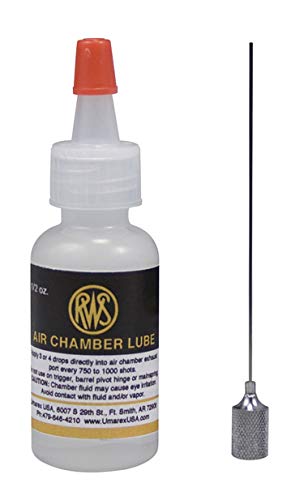
The Umarex RWS Air Gun Chamber Lube is a silicone-based lubricant designed primarily for air gun maintenance, but its versatility makes it a useful addition to any EDC enthusiast's kit. Many knife owners appreciate having a reliable lubricant for folding knife pivots, and this product's included applicator needle allows for precise application in tight spaces like pivot bearings or liner locks.
This lube is best suited for air gun owners who also carry a folding knife and want a single lubricant for both. It works well for reducing friction on knife pivots, helping blades deploy more smoothly. The silicone formula is safe on most materials, so you don't have to worry about damaging plastic handles or rubber inserts.
Real-world performance is solid for light to moderate use. Users report that it keeps air guns functioning reliably, and knife enthusiasts find it effective for pivot lubrication. The bottle is small at 0.5 ounces, but that's plenty for occasional maintenance. Build quality is typical for a small lubricant bottle, with a sturdy cap and a long needle applicator that stores inside the cap.
A realistic drawback is the small size; if you maintain multiple knives or air guns frequently, you may need to buy more often. Also, silicone oil can attract dust and dirt if over-applied, so use sparingly. Overall, this is a practical option for those who want a compact, multi-purpose lubricant for their air guns and EDC knives. It's not a dedicated knife oil, but it gets the job done.
While this product is not a cutting tool itself, it directly affects cutting performance by maintaining smooth pivot action in folding knives. A well-lubricated pivot reduces friction, allowing the blade to deploy quickly and lock securely. This lube's silicone formula helps keep the blade action consistent, which is important for precise cutting tasks.
Edge retention is not directly impacted, but a smooth pivot reduces wear on the blade tang and lock face over time. The lubricant's anti-corrosion properties help protect the blade steel from rust, preserving edge quality. For outdoor tasks like food preparation or wood processing, a clean pivot ensures the knife behaves predictably.
When used on a folding knife, the lube can improve deployment speed and lock reliability. It does not affect blade geometry or sharpness, but it helps the knife perform as designed. For fixed blades, it can be used on sheath retention mechanisms or folding saws. Overall, this lube supports cutting performance by keeping the knife's mechanical parts in top shape.
The Umarex RWS Chamber Lube comes in a small 0.5 ounce bottle with a built-in applicator needle. The bottle is made of durable plastic with a child-resistant cap that also houses the needle when not in use. The needle is long and thin, allowing precise application into tight spaces like air gun chambers or knife pivot bearings.
Weight is minimal at about 0.03 pounds, making it easy to carry in a pocket, backpack, or gear pouch. The design prioritizes portability and ease of use. The silicone oil itself is clear and has a low viscosity, so it flows easily through the needle. It does not gum up or evaporate quickly.
Ergonomics are straightforward: the bottle is easy to grip and squeeze. The applicator needle is flexible enough to reach awkward angles. Durability is good for a small lubricant bottle, though the needle could bend if handled roughly. Corrosion resistance is inherent to the silicone oil, which protects metal surfaces. For storage, the bottle seals tightly, preventing leaks. Overall, the design is practical for field use and maintenance tasks.

Pros
- Protects delicate .177 muzzle crowns from rigid rod damage
- Highly portable and lightweight design fits neatly inside any shooting range bag
- Fast pull-through design simplifies routine maintenance between shooting sessions
- Dedicated .177 caliber sizing matches standard air rifle bore dimensions
Cons
- Dedicated to .177 caliber bores and not intended for larger rifle calibers without separate adapters
- Flexible pull-through cable cannot apply heavy mechanical scrubbing leverage like a rigid rod for severe lead buildup
- Requires compatible patches sized appropriately for .177 airgun bores
The Air Venturi PatchWorm .177-Cal Gun-Cleaning Kit is a specialized pull-through bore cleaning system created specifically for .177 caliber (4.5mm) barrels. Unlike traditional centerfire firearms that generate heavy powder fouling and high-heat carbon buildup, air rifles primarily accumulate lead residue, environmental dust, and excess cylinder lubricants. This maintenance tool addresses bore cleanliness by pulling cleaning patches directly from the breech toward the muzzle, safeguarding delicate rifling and barrel crowns from unnecessary tool contact.
This kit is best suited for airgun target shooters, 10-meter precision competitors, small game hunters, recreational plinkers, and marksmanship coaches who shoot .177 caliber pellet rifles. Air rifle barrels typically feature relatively soft barrel steel and shallow rifling that can be easily scratched by stiff steel or aluminum cleaning rods. Target shooters and marksmen seeking consistent pellet flight paths benefit from a pull-through design that protects barrel concentricity and rifling consistency over years of ownership.
In real-world shooting environments such as outdoor target ranges, field target courses, or backyard practice setups, ease of bore maintenance makes a noticeable difference. The PatchWorm design utilizes a flexible line that feeds through the breech end, ensuring that fouling and dislodged debris are pulled forward and away from internal seals and trigger mechanisms. While it does not deliver the heavy mechanical scraping power needed for extreme copper fouling in centerfire rifles, it excels at removing loose lead dust and oil deposits in airgun bores without harsh chemical stripping.
The build quality emphasizes practical portability and safe handling. The lightweight flexible pull-through construction coils easily for compact storage, slipping into match cases, range backpacks, or pocket kits without occupying significant volume. Because airguns rely heavily on precision-machined choke points at the muzzle for pellet stabilization, avoiding hard metal-on-metal contact maintains factory barrel profiles. The kit provides a clean, uncomplicated workflow requiring no specialized tools, bench vises, or complex accessories.
A realistic limitation of this kit is its strict caliber orientation. Because it is calibrated for .177 caliber airguns, it does not support larger bore diameters like .22 or .25 caliber rifles without purchasing additional caliber heads. Furthermore, shooters dealing with neglected, severely lead-caked barrels may occasionally require specialized solvent treatments or brass brushes, as flexible pull cables are primarily meant for regular swabbing and routine maintenance rather than heavy mechanical scraping.
For air rifle owners looking to maintain barrel accuracy and consistency without risking crown wear, the Air Venturi PatchWorm .177-Cal Gun-Cleaning Kit represents a reliable, cost-conscious maintenance accessory. It functions smoothly for routine range cleaning, pre-match barrel conditioning, and post-session storage prep, making it a dependable addition to any dedicated airgun shooter's gear kit.
Using a pull-through cleaning system correctly requires pulling the cable straight along the bore axis rather than at an angle against the muzzle crown. Feeding the line from the breech to the muzzle mimics standard pellet travel and prevents lead dust from being pushed back into the transfer port, bolt assembly, or internal valve seals.
Routine air rifle cleaning generally demands less aggressive solvent use than traditional powder-burning firearms. Using standard dry patches or patches lightly moistened with airgun-safe oils helps preserve internal synthetic seals while effectively clearing out residual lead buildup. Storing the PatchWorm loosely coiled in a clean zip-top bag or protective case prevents dirt and grit from adhering to the cable between range sessions.
Essential Air Rifle Repair and Troubleshooting Guide
Repairing an air rifle successfully requires identifying the underlying malfunction before removing screws or disassembling components. Most common airgun problems involve velocity drops, leaking compressed air, inconsistent pellet grouping, or stiff cocking sequences. Because different powerplants rely on distinct mechanical principles, diagnosis must match the specific system. Spring-piston guns face distinct mechanical stresses compared to pre-charged pneumatic systems. Approaching each task methodically protects both the shooter and the mechanical integrity of the rifle.
Diagnosing Common Air Rifle Power and Accuracy Symptoms
A sudden decline in muzzle energy often points to compromised pneumatic seals rather than mechanical component breakage. When a break-barrel or underlever rifle loses velocity, air escaping around the breech face during firing is the primary suspect. Placing a lightweight tissue over the closed breech joint while firing can visually confirm whether air escapes externally. If the tissue flutters vigorously upon discharge, the breech seal has flattened, hardened, or cracked. For shooters maintaining modern platforms, including value PCP air rifles, velocity loss typically correlates with degraded internal transfer port seals or valve stem O-rings.
Inconsistent pellet grouping frequently arises from barrel leading, crown damage, or loose stock bedding screws. Lead pellets deposit microscopic residue inside the rifling grooves over hundreds of shots, gradually degrading the spin stabilization needed for precise flight. In addition, loose stock hardware allows the action to shift within the stock during the recoil cycle. Spring-piston rifles produce a bidirectional recoil pulse that quickly loosens mounting screws if they lack threadlocker. Checking stock screw tension with an appropriate screwdriver prevents unnecessary internal disassembly when accuracy suddenly wanders.
Powerplant Safety Protocols for Springers, Gas Rams, and PCPs
Safe handling is the non-negotiable first phase of any airgun maintenance or disassembly project. Before loosening any fasteners, visually inspect the chamber and breech to ensure no projectile remains loaded in the barrel. Following recognized safety guidelines, such as essential firearm and airgun safety rules, ensures accidental discharge risks remain zero throughout bench work. Never point an airgun at living targets, even when the rifle is presumed unloaded or disabled. Treating every air rifle as a live system preserves personal safety during mechanical diagnosis.
Spring-piston and gas-ram air rifles contain immense stored mechanical energy even when uncocked due to spring pre-load. Attempting to remove the end cap or trigger block without a dedicated spring compressor can cause severe bodily injury. The internal mainspring remains under significant tension against the rear retaining pins inside the receiver tube. A sturdy mechanical compressor must securely restrain the end plug before driving out retention pins. Never rely on hand pressure alone to control an air rifle spring during rear block removal.
Pre-charged pneumatic rifles store air at pressures often exceeding two thousand to three thousand pounds per square inch. Opening a pressurized air tube or loosening gauge fittings while air remains in the reservoir presents catastrophic puncture and blast hazards. Always degas the PCP reservoir completely using the manufacturer-specified degassing tool or bleed screw before loosening any threaded connections. Verify that the onboard pressure gauge reads zero before applying wrenches to the air cylinder. Replacing O-rings on high-pressure tubes demands strict adherence to clean, lint-free assembly practices.
Inspecting and Replacing Worn Breech Seals and O-Rings
The breech seal provides an airtight barrier between the compression tube and the barrel breech during firing. Over thousands of cocking cycles, rubber and polyurethane seals compress, deform, or develop microscopic fissures that permit pressure loss. To examine the seal, open the barrel or breech assembly fully and inspect the elastomeric ring under good lighting. A healthy seal stands proud of the breech metal face by a fraction of a millimeter to ensure positive compression upon lockup. If the seal surface sits flush with or below the metal rim, replacement is required to restore velocity.
Extracting an old breech seal requires non-marring tools to avoid scratching the precision-machined seal recess. A wooden toothpick, brass pick, or rounded plastic probe lifts the old O-ring out without gouging surrounding metal. Clean the recess groove with a lint-free cloth to remove residual grit, degraded rubber, or dried lubricant. Press the replacement seal into the groove evenly using smooth thumb pressure until it seats flat without twisting. After seating, lightly dress the exposed elastomeric surface with a tiny smear of pure silicone oil to maintain suppleness and prevent premature drying.
Clearing Barrel Obstructions and Restoring Rifling Accuracy
Firing an air rifle with an obstructed bore can permanently damage seals, distort linkages, or crack compression pistons. A stuck pellet typically occurs when an underpowered shot fails to exit or when multiple pellets are inadvertently loaded into the breech. Never attempt to dislodge a stuck pellet by firing a second pellet or dry-firing the airgun. Instead, insert a brass rod or rigid nylon-coated rod from the muzzle end with the action safely open and uncocked. Gently tap the rod with a lightweight mallet to drive the lead pellet backward toward the open breech.
Maintaining barrel accuracy requires delicate cleaning methods that preserve the rifling lands and muzzle crown. Aggressive steel cleaning rods can nick the rifled crown, causing uneven air dispersion that destabilizes pellets as they exit. Utilizing a specialized pull-through system, such as a flexible cable kit or a dedicated patch-pulling tool, pulls cleaning patches from breech to muzzle. Soft brass jags and nylon brushes remove stubborn lead deposits without abrading the softer steel barrels common in precision air rifles. Clean patches moistened with airgun-safe solvent dissolve fouling effectively while keeping synthetic seals safe from harsh petroleum distillates.
Unlike conventional firearms that accumulate powder residue and corrosive salts, air rifles require relatively infrequent deep bore scrubbing. Over-cleaning an airgun barrel can actually diminish shot consistency by stripping away the micro-layer of lead that smooths bore imperfections. A bore typically requires cleaning only when accuracy noticeably deteriorates or after firing several hundred rounds of softer lead projectiles. Running a few dry patches through the bore using a flexible cable often suffices for routine care. Maintaining a clean bore without over-brushing preserves both rifling longevity and tight downrange shot groups.
Safe Lubrication Practices and Avoiding the Danger of Dieseling
Dieseling represents one of the most destructive phenomena that can occur inside a spring-piston or gas-ram air rifle. When petroleum-based oils or aerosol penetrating sprays enter the compression chamber, the rapid adiabatic air compression ignites the vaporized hydrocarbons like a diesel engine. This violent detonation generates extreme pressures and temperatures far exceeding manufacturer design limits. The explosion can melt synthetic piston seals, fracture mainsprings, strip transfer port threads, and cause dangerous muzzle flash. Never introduce household petroleum lubricants, penetrating oils, or firearm bore solvents into an airgun compression chamber.
Proper chamber maintenance relies strictly on pure silicone-based lubricants formulated specifically for airgun compression seals. High-viscosity silicone fluid withstands intense compression heat without combusting, providing necessary lubricity between the synthetic piston seal and the cylinder wall. A specialized lubricant, like dedicated airgun chamber lube applied via a fine needle applicator, allows precise droplet placement into the transfer port. One or two drops every thousand shots generally provide adequate lubrication without overloading the compression area. Spreading lubricant evenly across sliding contact points prevents friction without risking violent ignition cycles.
External pivot pins, cocking arms, and barrel hinges require different lubrication than the internal compression chamber. Heavy-duty synthetic grease or moly paste containing molybdenum disulfide works best on metal-to-metal pivot surfaces. Apply a small amount of moly grease to the cocking shoe groove, barrel pivot shims, and detent ball using a cotton swab. This paste stays firmly in place during repetitive cocking strokes and prevents galling between steel surfaces. Wiping away excess grease prevents dust, sand, and outdoor debris from collecting on exposed moving components.
Servicing Cocking Linkages, Pivot Pins, and Trigger Assemblies
Cocking issues often originate from loose barrel pivot screws, bent cocking arms, or dry cocking shoes. If a break-barrel rifle feels gritty or resists smooth downward articulation, inspect the pivot bolt and side locking screws immediately. Pivot tension should allow the unlatched barrel to drop slowly under its own weight without showing any lateral play. If the barrel wobbles side to side, tighten the pivot bolt incrementally until free play disappears while smooth travel remains. Check the cocking shoe inside the receiver slot to ensure it travels freely without gouging the cylinder tube.
Airgun trigger assemblies contain precision-ground sears, adjustment screws, and fine return springs that dictate release weight and creep. Dirt accumulation, hardened grease, or misadjusted engagement screws can cause unexpected misfires or failure to cock. Cleaning a sticky trigger unit typically involves flushing out old particulate matter using an electrical contact cleaner that leaves zero residue. Re-lubricate the sear engagement surfaces with a pinpoint drop of synthetic oil or a micro-smear of moly grease. Avoid extreme adjustments that minimize sear engagement beyond safe mechanical limits, as this creates dangerous drop-fire hazards.
PCP Leak Detection and Valve Troubleshooting
Locating an air leak in a pre-charged pneumatic rifle requires patient diagnostic isolation across known pressure boundaries. Apply a mild, soapy water solution or commercial leak detection bubble fluid sparingly around fill nipples, pressure gauges, and the muzzle. If bubbles form around the quick-disconnect fill port, the internal check valve O-ring or sealing foster fitting has collected dust or failed. Bubbles escaping down the bore indicate that the main exhaust valve poppet is failing to seal against its valve seat. Air leaking from the pressure gauge threads suggests a deteriorated sealing washer beneath the gauge housing.
Servicing high-pressure valve components requires complete depressurization before attempting any component removal. Once the reservoir reads zero pressure, unscrew the fill cap assembly or valve block using properly fitted wrenches that will not mar the alloy surfaces. Inspect internal O-rings for flat spots, micro-tears, or contamination from dirty pump output air. Replace compromised seals with nitrile or polyurethane O-rings of the exact durometer and dimension specified by the airgun manufacturer. Apply a micro-coating of pure silicone grease to the replacement O-rings to ensure smooth sealing without pinching during reassembly.
Essential Verification Steps After Completing Repairs
After completing mechanical repairs, reassemble the air rifle methodically while confirming that all fasteners are torqued correctly. Loose stock screws or misaligned receiver bolts can alter mechanical tolerances and induce dangerous operational bind. Ensure that safety mechanisms, anti-beartrap catches, and automatic trigger safeties engage crisply as intended before loading any projectile. Cycle the uncocked or unloaded action through several dry strokes to confirm that linkages move smoothly without scraping. Taking time to verify mechanical fit prevents immediate component failure during the initial test-firing sequence.
Testing repaired air rifles on a safe range with a ballistic chronograph provides objective proof that pneumatic seals are functioning properly. Fire a series of ten identical pellets across the chronograph screens to calculate average velocity and standard deviation. A tight velocity spread confirms consistent pressure delivery from the compression piston or PCP regulator system. Inspect fired targets at known distances to verify that pellet grouping meets expected mechanical benchmarks. If velocity remains erratic or accuracy fails to return, recheck the breech seal seating and barrel cleanliness before suspecting internal valve failure.
Mastering air rifle repair empowers shooters to diagnose and resolve everyday wear issues with confidence and precision. By applying safe disassembly habits, using correct non-petroleum lubricants, and protecting delicate bore rifling, you can extend the service life of any airgun significantly. Recognizing when a problem requires dedicated professional tooling also prevents costly damage to complex regulators or spring housings. Methodical bench maintenance ensures that your air rifle remains powerful, safe, and accurate across thousands of future shots.




Write Your Review
No reviews yet. Be the first to share your experience!