


A sling should match the rifle’s attachment points, not just its strap width
Carrying a rifle hands-free is more comfortable when the sling is secure, adjusted to your body, and compatible with the rifle’s actual attachment points. This guide explains how to attach a sling to a rifle, including what to check before connecting clips, swivels, or hooks. The listed products include both sling straps and separate attachment hardware, so they aren’t all interchangeable or complete in the same way. Treat product descriptions as manufacturer-provided information, then verify fit against your rifle’s manual and the hardware instructions.
Start with the rifle made safe according to its manufacturer’s instructions, and work in a controlled area where it cannot be pointed at anyone. Identify the attachment points before buying or installing anything: a rifle may have integral sling fittings, threaded studs, a compatible rail mount, or no suitable fitting at all. An adapter can help only if it is specifically compatible with the rifle and sling. Owners of air rifles can also consult our air rifle cleaning guidance for a separate manufacturer-consistent care topic.
Product Shortcode


Pros
- Quick adjust buckle allows for fast length changes without fumbling
- Padded shoulder strap adds comfort for extended carry sessions
- Includes both QD swivels and HK hooks for flexible mounting options
Cons
- Some users may prefer a wider pad for heavier loads
- HK hooks may not fit all sling attachment points without adapters
The WarBull 2 Point Rifle Sling is a tactical sling designed for hunters, shooters, and outdoor enthusiasts who need a reliable way to carry a rifle, shotgun, or crossbow hands-free. This sling is best suited for hunters, tactical shooters, and anyone who spends long hours in the field and needs quick access to their firearm.
Based on product specifications and user feedback, the sling's standout feature is its quick-adjust buckle, which allows for lightning-fast length changes. This is especially useful when transitioning between standing, kneeling, or prone positions, or when moving in and out of vehicles. The 2-inch EVA padded shoulder pad helps distribute weight and reduce fatigue during long carries, and it stays in place without sliding up or down.
The sling includes two QD swivels and two HK hooks, giving you flexible mounting options. The QD swivels allow for easy attachment and detachment, while the HK hooks provide a secure connection to sling loops. The hardware is made from lightweight nylon and zinc aluminum alloy, which is sturdy without adding unnecessary weight.
One realistic drawback is that the HK hooks may not fit all sling attachment points without additional adapters. Some users might also prefer a wider pad for heavier loads. However, for most hunting and tactical applications, this sling offers a good balance of comfort, adjustability, and durability.
Overall, the WarBull 2 Point Rifle Sling is a solid choice for anyone needing a versatile and comfortable sling for their rifle, shotgun, or crossbow. It is backed by a USA-based company with responsive customer support, adding to its value.
While the WarBull 2 Point Rifle Sling is not a cutting tool, its design focuses on quick adjustability and comfort for carrying firearms. The quick-adjust buckle allows for rapid length changes, which can be critical in dynamic shooting situations. The sling's construction uses lightweight yet strong materials, ensuring it can handle the weight of a rifle or shotgun without failure.
The EVA padded shoulder pad provides cushioning and helps distribute weight evenly, reducing fatigue during long hunts or training sessions. The pad is non-absorbent and tear-resistant, making it suitable for outdoor use in various weather conditions.
For precision shooting, the sling's ability to quickly tighten or loosen allows for stable support when transitioning between positions. The QD swivels and HK hooks offer secure attachment points, ensuring the sling stays in place during movement.
Overall, the sling's performance is centered on comfort and adjustability, making it a practical choice for hunters and shooters who need a reliable carry solution.
The WarBull 2 Point Rifle Sling is built with a focus on durability and comfort. The main body uses lightweight nylon webbing that is strong and resistant to wear. The quick-adjust buckle is made from zinc aluminum alloy, which is sturdy and corrosion-resistant. The QD swivels are also made from zinc aluminum alloy, ensuring they can withstand repeated use without failing.
The 2-inch EVA padded shoulder pad is a key feature. It is made from a single piece of EVA material that is non-absorbent and tear-resistant. The pad stays in place on the webbing, preventing it from sliding up or down during use. This design helps distribute the weight of the firearm evenly across the shoulder, reducing pressure points.
The sling includes two QD swivels and two HK hooks, giving you multiple mounting options. The QD swivels allow for quick attachment and detachment, while the HK hooks provide a secure connection to sling loops. The hardware is lightweight, which helps keep the overall weight of the sling low.
For portability, the sling can be easily adjusted to fit different body types and carry preferences. It is designed to work with rifles, shotguns, and crossbows, making it a versatile addition to any outdoor gear collection.
Overall, the design and build quality of the WarBull 2 Point Rifle Sling are solid, with attention to comfort and durability. It is a practical choice for hunters, shooters, and outdoor enthusiasts.


Pros
- Quick and easy length adjustment without tools.
- QD swivels included, saving additional cost.
- Durable nylon material for long-lasting use.
- Lightweight and comfortable for all-day carry.
- Versatile two-point and traditional use.
Cons
- Lacks padding, which may be less comfortable for heavy rifles over long distances.
- QD swivels are basic; some users may prefer more robust swivels for heavy-duty use.
- Brand may be less recognized compared to established sling manufacturers.
The HCPMTUKM Two Point and Traditional Rifle Sling is a practical and affordable accessory designed for shooters who need a reliable method to carry their rifle in the field or at the range. This sling features a quick-adjust loop that allows for instant length changes up to 60 inches, along with included QD swivels for easy attachment and removal. Made from dual-layer reinforced nylon, it offers good strength and weight capacity without breaking the bank.
This sling is best suited for hunters, target shooters, and tactical enthusiasts who value a simple, lightweight carry solution. Hunters will appreciate the ability to quickly adjust the sling length for transitioning from a walking carry to a supported shooting position. Target shooters and range users benefit from the flexibility of two-point and traditional configurations, allowing them to switch between sling styles for different drills or competitions. Beginners will find the tool-free adjustment and included swivels a hassle-free introduction to using a sling.
In terms of performance, the sling's main strengths are its adjustability and durability. The rapid-adjustment loop works smoothly and holds length securely, even with moderate movement. The nylon webbing is tough and resistant to fraying, and the 1.25-inch width provides reasonable comfort for most rifles, though it lacks padding for heavier setups. The included QD swivels are functional and compatible with standard sling studs, offering a solid attachment point for quick detachment.
Build quality is decent for the price. The stitching on the nylon is neat and seems durable, and the hardware is made from metal (likely steel) with a black finish that resists corrosion. The sling is lightweight and compact, making it easy to store in a gun case or pack. Setup is straightforward: simply attach the QD swivels to your rifle's sling studs and adjust the loop to your preferred length. No tools are needed, and the sling can be configured for either two-point or single-point use by routing the strap differently.
Realistic limitations include the lack of padding, which may lead to discomfort during long hikes with a heavy rifle. Additionally, the QD swivels are basic and may not be as robust as those found on premium slings, but they work well for general use. Some users might prefer a more padded sling for all-day hunting, but for range use or lighter rifles, this is a minor issue.
Overall, the HCPMTUKM rifle sling is a solid value for shooters who need an adjustable, no-frills sling for hunting, target shooting, or tactical drills. It's especially recommended for beginners or as a spare sling for the range. While it won't replace a high-end padded sling for heavy loads, it performs admirably for its intended purpose and price point.

Pros
- Comfortable padding reduces shoulder fatigue during extended carry
- Easy to adjust length on the fly without tools
- Strong metal swivels attach securely to rifle sling studs
Cons
- Neoprene padding may retain heat in warm weather conditions
- Metal hooks could scratch rifle finish if not handled carefully
The GORAL 2-Point Rifle Sling is a practical accessory for hunters and outdoor shooters. It is designed to carry a rifle comfortably over the shoulder with a padded neoprene strap that distributes weight evenly. The two-point design allows the rifle to hang securely while keeping hands free. This sling is best suited for hunters, airsoft players, and tactical users who need reliable gun carry during long treks. The quick detach hooks make it easy to remove the sling when not needed. Build quality appears solid with nylon webbing and neoprene padding. One potential drawback is that the padding may cause sweating in hot conditions. Overall, this sling offers good value for budget-conscious buyers looking for a functional rifle carry solution.
While not a cutting tool, the GORAL sling performs well in its primary role of carrying a rifle. The quick detach hooks allow swift attachment and detachment, similar to a knife's deployment speed. The adjustable strap provides a custom fit, enhancing control during movement. The two-point design keeps the rifle stable and accessible. For hunters, this sling improves efficiency when transitioning between carry and shooting positions. The neoprene padding offers comfort, reducing strain during long hikes. Overall, the sling's performance is reliable for outdoor use.
The GORAL sling is constructed from durable nylon webbing and neoprene padding. The metal swivels and hooks feel sturdy and should hold up to regular use. The black color is low-profile. The adjustable buckle allows easy length changes. The design is straightforward and functional, focusing on comfort and ease of use. The sling is lightweight and portable, easy to pack in a hunting pack. Corrosion resistance is adequate for outdoor exposure. Overall, the build quality meets expectations for a budget-priced sling.
How to attach and check a rifle sling
In most cases, attaching a sling means connecting its two ends to two compatible points on the rifle, then checking that each connection is fully seated and cannot release during ordinary handling. The exact process depends on the rifle’s fittings and the sling’s hardware, so there is no universal attachment method. A QD swivel, a snap hook, and a fixed sling loop are different interfaces, not substitutes that automatically fit every rifle. Follow the rifle and accessory manufacturers’ instructions whenever their directions differ from general guidance.
Identify the rifle’s attachment points first
With the rifle made safe as directed by its manufacturer, inspect the stock, fore-end, and any installed accessory rail for purpose-built sling fittings. Look for the fitting’s actual shape and type rather than assuming that a visible hole, screw, or rail slot is a sling point. Some rifles have fixed loops or studs; others may require a manufacturer-approved adapter. If the rifle manual does not identify a fitting or its compatibility, contact the manufacturer or a qualified service provider instead of improvising.
Check both ends of the intended sling path. A two-point sling normally connects to a forward point and a rear point, but the rifle’s design may limit where those points can be installed. A single attachment point, an unsuitable rail, or a fitting with the wrong interface may make the selected hardware inappropriate. Avoid drilling, removing structural stock material, or substituting a fastener without explicit manufacturer guidance.
Read the accessory description closely to establish what is included. For example, the DDOUT 2 Point Rifle Sling Swivels Mounts listing describes two swivel mounts, while the WarBull 2 Point Rifle Sling listing describes a sling with QD swivels and HK hooks. Those descriptions don’t establish that either product fits every rifle. Confirm the rifle-side interface, sling-side connection, and any installation requirements before purchase.
Match the connection hardware to the sling
A sling may connect through swivels, hooks, clips, or another system specified by its maker. A quick-detach swivel needs a rifle-side socket designed for that swivel; a hook needs a suitable attachment point that the maker identifies as compatible. A strap threaded through a fixed loop uses a different arrangement and should follow the sling instructions. Don’t force a component into a fitting, and don’t assume that similar-looking parts share dimensions or locking mechanisms.
Product details illustrate why this distinction matters. The REERON Two Point Sling with Shoulder Pad +2 Pack 360° listing describes QD swivel mounts and an adjustable strap, while the GORAL 2-Point Rifle Sling Strap with Swivels listing describes metal clips. The HCPMTUKM Two Point and Tradtional Sling Length Adjustable listing says it includes removable QD swivels. These are descriptions of the listed products, not proof of compatibility with a particular rifle model.
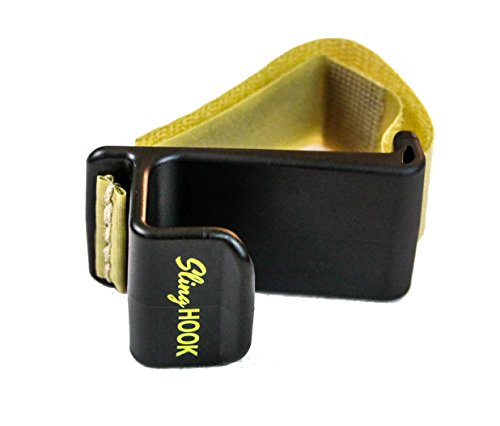
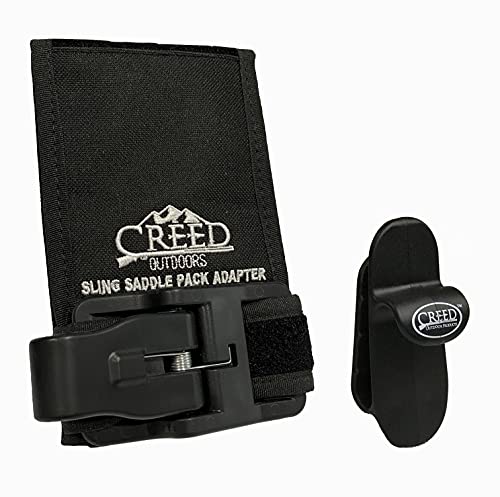
Some accessories support carrying rather than attaching a sling to the rifle. The SlingHook Universal slingclip for Backpack is described as a pack-strap clip that holds a sling, and the Sling Saddle – Universal Combo with Pack Adapter is described as using an existing sling to position a rifle against the body. Those products don’t replace rifle attachment hardware. Check whether the intended use is connecting the sling to the rifle or supporting an already attached sling on a pack or shoulder.
Connect the front and rear ends without twisting the strap
Once compatibility is confirmed, follow the accessory maker’s installation directions for each end. Keep the webbing flat as you connect it, and orient the strap so its adjustment hardware remains accessible rather than buried against the stock. If the sling uses an adjustable loop, buckle, or pad, note how the manufacturer says the strap should route through it. A twisted strap can make adjustment awkward and may cause the sling to sit poorly on the shoulder.
For a QD system, use the manufacturer’s instructions to insert and lock the swivel in its matching socket. For a hook or clip, connect it only to an approved, compatible point and verify that the gate or locking feature has returned to its secured position. For a fixed loop, thread or secure the strap as shown in the sling documentation. Avoid relying on appearance alone: a component that seems attached may not be fully engaged.
Keep the sling clear of controls, moving parts, sights, and any mechanism the rifle manual identifies as requiring unobstructed access. This is particularly relevant when the rifle has a break-barrel or another moving action, because a strap routed across a working area could interfere with normal operation. The specific clearance needs vary by rifle design. If the sling’s position conflicts with the rifle’s operation, stop and reassess the placement rather than forcing a workaround.
Set the length for carrying, not as a substitute for secure attachment
After both ends are attached, adjust the sling gradually while the rifle remains under the manufacturer’s safe-handling instructions. The strap should allow the carrying position intended by its design without pulling on the fittings or placing the rifle where its direction cannot be controlled. A shoulder pad may spread contact over a wider area, but it does not change whether the attachment points are compatible. Check that buckles, adjustment tabs, and excess webbing do not catch on nearby equipment.
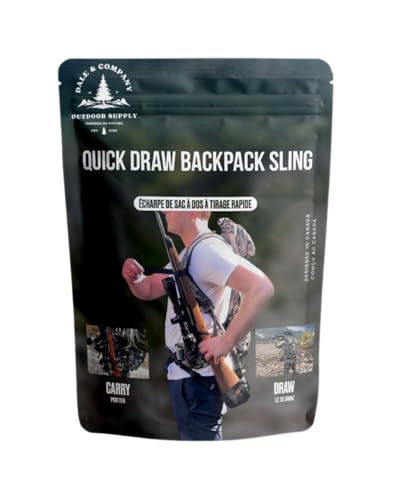
Two-point slings often offer adjustment for different carrying positions, but adjustment methods vary. The WarBull listing describes a quick-adjust feature, and the Dale & Company Quick Release Rifle Sling listing describes three-way adjustment; those are manufacturer descriptions rather than independent fit or performance findings. Follow the supplied instructions to adjust either design. Don’t make a strap so loose that it can snag or shift unpredictably, and don’t overtighten it against the rifle’s fittings.
Position depends on the rifle’s shape, the sling’s design, the user’s clothing, and whether the rifle is being carried over one shoulder or across the body. There is no single length that suits everyone or every rifle. Practice adjustment in a safe, stationary setting before moving with the rifle, keeping the muzzle direction controlled throughout. If the manufacturer restricts a carrying position or adjustment method, follow that guidance.
Check the attachment before carrying
Inspect each connection visually and confirm the locking feature is engaged according to the accessory instructions. With the rifle still made safe, apply only a gentle hand check to the sling and fittings; don’t jerk, swing, or suspend the rifle to test them. Look for movement at the connection, a partly closed gate, a loose fastener, frayed webbing, or a strap that has slipped through its adjuster. If anything shifts or looks damaged, stop using the setup until the issue is resolved through approved instructions or qualified service.
Also check whether the sling interferes with the rifle’s safety, action, sights, or other controls. Follow the manual for any function checks, and do not operate the rifle in a way that the maker does not permit. Reinspect the connection after the first short period of carrying and whenever the sling is removed, reattached, or adjusted. A quick check cannot certify a component, but it can reveal an obvious incomplete connection or adjustment problem.
Carry practices and legal requirements vary by location and by the type of rifle. This guide does not determine whether a particular rifle may be carried in a particular place or manner. Check current local rules, the rifle maker’s instructions, and any site-specific requirements before transporting or using it. Keep the rifle pointed in a safe direction and secured when not in use, following applicable guidance for your area.
Choose among the listed sling accessories by function
The products in this guide cover different jobs, so compare function before choosing by appearance. The DDOUT product is listed as a pair of swivel mounts rather than a complete sling, while the WarBull, REERON, Dale & Company, HCPMTUKM, and GORAL listings describe sling products with different connection or adjustment features. The SlingHook and Sling Saddle listings focus on supporting a carried rifle with a pack strap or body-positioning accessory. Confirm what each package includes and whether separate rifle-side fittings are needed.
Consider the connection style you can actually use, the adjustment method you prefer, and whether a shoulder pad or pack adapter serves your carrying situation. The REERON listing describes a shoulder pad and rotating swivel mounts, while the GORAL listing describes a padded strap and clips. The Sling Saddle listing says it uses an existing rifle sling, so it is not a replacement for the sling itself. These descriptions can help narrow a shortlist, but they do not establish independent durability, comfort, or fit results.
Brand claims such as quiet operation, quick release, or heavy-duty construction should be treated as product-description claims unless supported by independent evidence. The supplied information does not establish comparative testing, verified load limits, or universal compatibility. Check the current listing and manufacturer instructions for the exact item being considered, since configurations can vary. If the rifle’s attachment type is unknown, identifying it is more useful than selecting a sling based only on a broad claim.
Keep air-rifle setup questions separate from sling compatibility
Air rifles can use different powerplants and actions, but those categories alone don’t tell you which sling fitting a model has. A PCP rifle may require compatible filling equipment for operation, while a spring-powered model has different operating requirements; neither fact determines the sling interface. If you are planning a complete PCP setup, our PCP air-rifle filling guide covers that separate equipment question. For sling installation, rely on the specific rifle manual and the attachment hardware instructions.
Likewise, an underlever, break-barrel, bullpup, single-shot, or multi-shot label does not by itself confirm a sling point or a safe strap route. Models within a broad category can differ in stock shape, fittings, and moving parts. The product data here describes sling and carrying accessories, not the sling provisions of a specific air-rifle model. Verify the exact model and configuration before ordering hardware, especially if product availability or fittings differ in your market.
For any rifle, use only attachment points and installation methods the manufacturer identifies as suitable. A sling is useful only when its connections are compatible, secured, and positioned without obstructing safe handling. If the fitting type is unclear or a component does not lock as intended, pause and consult the manufacturer or a qualified service provider. Confirm the connection again before carrying, and keep local rules and safe storage requirements in view.




Write Your Review
No reviews yet. Be the first to share your experience!