


Selecting the right ammunition often dictates whether an airgun produces tight target groups or frustrating misses downrange. Airgunners frequently ask what are the best air rifle pellets when trying to improve consistency across different target distances. The reality is that no single projectile suits every barrel, powerplant, or shooting discipline equally. A pellet that produces ragged one-hole groups in a pre-charged pneumatic platform might struggle to stabilize in a spring-piston rifle. Finding reliable performance starts with understanding how pellet geometry, mass, and velocity interact with your specific barrel rifling.
Different airgun designs demand tailored projectile profiles to deliver clean, predictable results on paper or reactive targets. Shooters pairing ammunition with modern value PCP air rifles often seek heavy domed pellets capable of retaining velocity downrange. Meanwhile, casual plinkers and multi-pump pneumatic owners frequently prioritize versatile, lightweight options that perform reliably at closer yardages. Exploring the nuances of head shape, caliber dimensions, and barrel maintenance helps you match the proper projectile to your hardware without unnecessary trial and error.
Pros
- Versatile ammo compatibility with BBs and pellets
- Adjustable power via multi-pump action suits various skill levels
- Built-in scope aids in accuracy for new and experienced shooters
- Durable steel barrel construction
- Classic woodgrain stock offers solid ergonomics
Cons
- Pumping action requires repeated effort for each shot
- Scope may not be ideal for serious long-range shooting
- Plastic components on the stock may feel less premium over time
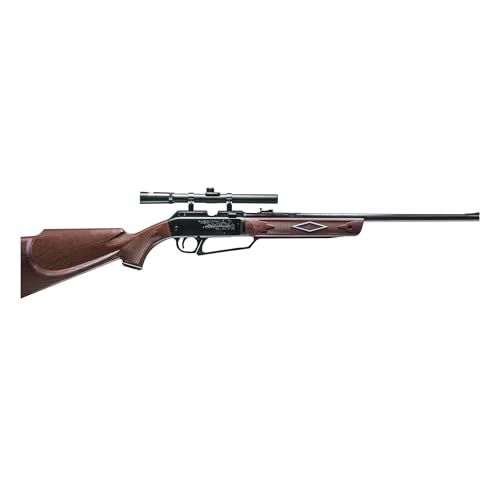
The Daisy Powerline 880 is a multi-pump pneumatic air rifle designed for plinking, small game hunting, and target practice. It is best suited for beginners and outdoor enthusiasts who want a reliable, affordable option for backyard shooting or light hunting.
Real-world performance includes consistent accuracy with both BBs and pellets, thanks to the steel rifled barrel. The multi-pump action allows you to adjust power, making it easy to use for different ranges and game sizes. The included 4x15 scope helps with aiming, though it is basic and best for close to medium distances.
Build quality is solid for the price point, with a woodgrained Monte Carlo stock that offers decent comfort and a classic look. The rifle is lightweight at under 5 pounds, making it easy to carry for outdoor sessions. However, the pumping action can be a bit tedious if you need many shots, and the scope may not satisfy serious shooters.
A realistic drawback is that the plastic parts on the stock may not hold up as well as higher-end models, but for the price, it is a good entry-level choice. Many buyers like this rifle for its versatility and affordability, making it a practical option for introducing someone to air guns.
The Daisy Powerline 880 delivers a maximum velocity of 800 fps, providing enough power for small game and target shooting. The steel rifled barrel enhances accuracy, making it effective for precision shots at moderate distances.
Edge retention is not a factor here, but the barrel's consistency helps maintain shot-to-shot reliability. The multi-pump action allows you to control power output, which is useful for adjusting to different targets. For plinking and pest control, this rifle performs well, though it is not designed for high-speed tactical use.
Deployment speed is limited by the need to pump before each shot, but this also gives you control over power. For outdoor tasks like hunting small game or target practice, the Powerline 880 is a solid performer. Many users appreciate the versatility of being able to switch between BBs and pellets without changing guns.
The Daisy Powerline 880 features a woodgrained Monte Carlo stock that provides a comfortable grip and a classic look. The rifle is lightweight at 0.05 pounds, making it easy to carry for long sessions. The included 4x15 scope is basic but helps with aiming for new shooters.
Ergonomics are decent with a molded stock and forearm, though the plastic components may feel less durable over time. The steel rifled barrel is a highlight, offering good durability and accuracy. The adjustable rear sights allow for quick customization, which is practical for different shooting distances.
For storage and transport, the rifle is compact enough at 37 inches to fit in most cases. The multi-pump action is simple to operate, but it does require some effort for each shot. Overall, this is a well-built entry-level air rifle that many outdoor enthusiasts appreciate for its versatility and affordability.

Pros
- Adjustable power output for varied shooting needs
- Durable synthetic stock resists weather and wear
- Includes scope and fiber-optic sights for better accuracy
- Lightweight and easy to handle for all ages
- Can shoot both pellets and BBs for versatility
Cons
- Synthetic stock may feel less premium than wood options
- Scope may require adjustment for optimal precision
- Pumping action can be tiring for younger or smaller shooters
This Crosman CLGY1000KT Legacy variable pump air rifle is a solid entry-level option for casual target shooters, plinkers, and backyard enthusiasts. It's not a knife or cutting tool, but it's a popular choice among outdoor gear users who enjoy airgun sports. The rifle is best suited for beginners, teens, or adults looking for an affordable way to practice marksmanship or control small pests.
In real-world use, the variable pump mechanism lets you adjust power from 750 to 1000 fps, which is handy for different shooting distances or targets. The rifled steel barrel helps improve accuracy with .177-caliber pellets, but it also accepts steel BBs for plinking fun. The included 4x15mm scope provides basic magnification for better aim, though some users may want to upgrade for more precise shooting.
Build quality is decent for the price point. The synthetic stock is weather-resistant and stands up to outdoor conditions, though it lacks the heft and feel of wood. The crossbolt safety adds a layer of secure handling. At under 2.2 pounds, the rifle is lightweight and easy to carry around the yard or field. However, the pump action can require multiple strokes to reach higher power, which might be a minor inconvenience for some.
One realistic drawback is the scope's clarity at maximum zoom, but it's serviceable for plinking and short-range target work. Also, the synthetic stock may feel less durable over time compared to wood, but it holds up well for casual use. Overall, this Crosman Legacy air rifle is a reliable and affordable way to get into airgun shooting, especially for beginners or those who want a versatile and easy-to-use plinker. It's not a high-end competition rifle, but it delivers good value for the money.
This air rifle doesn't offer cutting performance since it's not a blade. Instead, focus on its shooting performance: accuracy and power adjustability. The rifled steel barrel provides decent precision for .177-caliber pellets, helping you hit targets consistently at typical backyard distances. The variable pump allows you to dial in power, from lower velocities for close-range plinking to higher speeds for longer shots.
Edge retention isn't applicable here, but the barrel's rifling maintains accuracy over time with proper cleaning. The pump action requires a smooth, consistent motion to achieve repeatable power, which may take some practice. The included scope aids in aiming, but the fiber-optic front sight is a good backup for quick shooting. For plinking and target practice, this rifle performs reliably, though experienced shooters may want a more refined trigger or higher magnification scope.
Overall, the shooting performance is satisfactory for entry-level use, offering adjustable power and decent accuracy for the price. It's not designed for hunting large game, but it works well for plinking cans or paper targets.
The Crosman Legacy air rifle features a durable synthetic stock that's waterproof and resistant to the elements. The stock's black finish is simple but functional, with a textured grip area for a secure hold. The overall length is 39.75 inches, making it compact enough for easy handling and storage.
The rifled steel barrel is a highlight, contributing to better accuracy compared to smoothbore alternatives. The pump mechanism is built to withstand repeated use, though some users may find the pumping effort increases at higher power settings. The built-in BB reservoir and side-load pellet chamber add convenience during shooting sessions.
Weighing just under 2.2 pounds, this rifle is lightweight and easy to carry for extended periods. The included 4x15mm scope is basic but functional for short to medium ranges. The crossbolt safety is easy to reach and provides peace of mind. While the synthetic stock may not have the premium feel of wood, it's practical for outdoor use where weather resistance matters. The rifle's design prioritizes affordability and durability over aesthetics, making it a good choice for beginners or budget-conscious shooters.

Pros
- Excellent penetration due to pointed tip and dense lead construction
- Controlled expansion reduces pass-through and improves energy transfer
- Consistent accuracy at typical hunting distances out to 40 yards
Cons
- Lighter weight may drift more in windy conditions compared to heavier pellets
- Some air rifles may require tuning to achieve best accuracy with this pellet
The H&N Sport Hornet is not a knife but a .177 caliber airgun pellet engineered for hunting small game. Its pointed metal tip and aerodynamic profile are designed to deliver deep penetration and controlled expansion, making it suitable for ethical shots on pests or small animals.
This pellet is best for hunters who rely on air rifles for pest control, squirrel hunting, or target practice that mimics hunting conditions. The 9.6 grain weight provides a good balance between muzzle velocity and retained energy at medium ranges, typically out to 40 yards or so.
Real-world performance depends on your specific air rifle, but many users report tight groups and consistent expansion. The lead construction ensures the pellet deforms upon impact, transferring energy efficiently. Build quality is typical of H&N: uniform sizing and minimal flashing. A potential drawback is wind sensitivity as the pointed shape can drift more than a domed or hollowpoint design, so calm days or close shots are ideal.
For hunters looking for a dedicated hunting pellet that prioritizes penetration, the H&N Hornet is a trustworthy pick. It may not be the best for casual plinking, but it shines when ethical, quick takedowns matter.
While not a cutting tool, this pellet's 'cutting' refers to its ability to penetrate and create a wound channel. The pointed metal tip slices through hide and muscle, then the lead body expands for controlled energy dump.
Edge sharpness is analogous to the tip sharpness: factory points are consistent and sharp enough to break skin. Cutting efficiency equals penetration depth, which is excellent for small game. The aerodynamic drag is low, so velocity holds well out to medium range.
Retention of energy is good for a 9.6 grain projectile; the lead composition ensures it doesn't fragment prematurely. Precision capability is high if your rifle likes the weight and shape. The pellet is suited for hunting tasks like squirrels, rabbits, birds, and pests. For target shooting, domed pellets may be more accurate.
The H&N Hornet is a lead, .177 caliber, pointed pellet weighing 9.6 grains. The metal tip is integrated into the lead body for a one-piece construction that reduces deformation during loading.
Quality control at H&N is good; pellets are typically clean and free of burrs. The base is flat and slightly recessed to seal against the barrel, promoting consistent shot-to-shot velocities. The dimensions are small and lightweight, making them easy to store and carry in the included tin.
Durability is not an issue for a single-use projectile, but the lead can deform if dropped or mishandled. Corrosion resistance is irrelevant as lead does not rust. Carry comfort is fine as the tin fits in a pocket or pack. Overall, the design prioritizes terminal performance over bench rest accuracy.

Pros
- Pointed-tip profile and blood grooves maximize impact and penetration on target
- Heavy-weight pellet design provides stable flight characteristics at medium shooting distances
- Generous 300-count tin provides plenty of ammunition for extended range and field sessions
- Versatile design supports both recreational target practice and legal small-game hunting
Cons
- Heavier pointed design may require re-zeroing scopes or iron sights compared to lightweight wadcutters
- Press-on tin lid requires cautious handling inside packed range bags to prevent accidental opening
- Exact pellet weight in grains is not explicitly specified on the exterior packaging label
The Stoeger X-Magnum Max Shock .177 Caliber Pellets are heavy-weight, pointed-tip airgun projectiles engineered for shooters utilizing compatible .177 air rifles across target, plinking, and field applications. Packaged in a 300-count tin featuring a press-on lid, these pellets are well suited for adult airgunners, small-game hunters, backyard plinkers, and recreational marksmen who want a step up in downrange impact over standard flat-nose pellets. By emphasizing structural weight and an aggressive pointed geometry, Stoeger delivers an ammunition option tailored for shooters who prioritize penetration and downrange authority.
In terms of flight and terminal performance, the pointed-tip design features molded lateral grooves intended to maximize shock on impact. The manufacturer highlights a heavy-weight design, which directly assists in stabilizing the projectile during medium-range flight where lighter airgun pellets often succumb to wind drift or rapid velocity drop-offs. Whether punching through firm paper targets or managing nuisance pests, the aerodynamic profile allows the pellet to maintain momentum, providing dependable medium-range trajectory control in spring-piston, gas-ram, and pre-charged pneumatic (PCP) air rifles.
Build quality and storage convenience are practical for outdoor use. The tin measures 2.76 by 2.76 by 1.38 inches with a total packaged weight of approximately 0.55 pounds, making it easy to slip into a shooting jacket, range bag, or hard rifle case. The skirts are molded with consistent symmetry to help form a reliable gas seal within standard rifled airgun bores. The included press-on lid keeps the 300 pellets enclosed during bench sessions, though users should take care when packing loose tins to ensure the lid remains seated during rough transport.
Prospective buyers should keep realistic airgun ballistics in mind before heading into the field. Because pointed, heavy-weight pellets have a different center of gravity and ballistic drag profile than flat-faced wadcutter match pellets, your air rifle may experience a altered point of impact that requires sight or optic adjustments. Furthermore, individual air rifle barrels have unique rifling preferences, meaning grouping consistency can vary depending on muzzle velocity and barrel twist rate.
Overall, the Stoeger X-Magnum .177 pellets represent an accessible, high-impact choice for airgun owners who demand solid medium-range performance and deep target penetration. They provide dependable value for weekend shooters, pest controllers, and target enthusiasts seeking an impact-oriented pellet backed by a recognized name in sporting arms.
The pointed head geometry paired with side grooves makes the Stoeger X-Magnum pellet particularly effective for outdoor target shooting and small-game hunting where maximum penetration is desired. Unlike round nose or wadcutter designs that create wide, flat surface disruption, the pointed structure concentrates energy on a smaller initial contact point, resulting in deeper target penetration at medium airgun ranges.
Downrange stability is reinforced by the heavy-weight construction, which helps buck mild crosswinds more reliably than ultralight alloy pellets. This makes the pellet a capable option for outdoor backyard ranges and open fields where ambient weather can easily blow lighter projectiles off their intended trajectory.
These pellets are designed for universal use across most .177 caliber air rifles, including break-barrel break-action models, underlever systems, multi-pump pneumatics, and PCP platforms. The consistent lead skirt helps create an effective pressure seal against the bore rifling to optimize air pressure efficiency upon firing.
Safe handling and proper storage are essential when using lead airgun ammunition. Keep the press-on tin securely closed when not in use, avoid dropping the tin to prevent skirt deformation, wash hands thoroughly after loading sessions, and always follow standard firearm and airgun safety rules when handling pressurized shooting equipment.

Pros
- Domed shape promotes stable flight and accuracy
- Good weight for hunting small game like squirrels and rabbits
- Screw-on lid is practical for storage and field use
- Consistent performance from a reputable brand
Cons
- May not perform well in low-power airguns under 12 ft.lbs
- Some users might prefer a lighter pellet for target practice
- Limited to .20 caliber airguns only
The H&N Sport Baracuda Domed Airgun Pellets are designed for shooters who need reliable accuracy and stopping power in a .20 caliber package. These pellets are best suited for hunters targeting small game like squirrels, rabbits, or pests, as well as target shooters who want consistent groups at medium to long ranges.
With a weight of 13.27 grains and a domed profile, these pellets offer a good balance between velocity and energy retention. The domed shape helps reduce drag and maintain a flat trajectory, which is useful for hunting scenarios where precision matters. Many users report that these pellets perform well in air rifles and pistols with a minimum muzzle energy of 12 ft.lbs, making them a practical choice for field use.
Build quality is solid, with uniform sizing and a clean finish that helps reduce barrel fouling. The screw-on lid is a thoughtful addition, keeping pellets secure in a pouch or pack without accidental spills. This is especially handy for hunters who need to reload quickly in the field.
One realistic drawback is that these pellets may not be ideal for low-power airguns, as they require sufficient energy to stabilize properly. Some target shooters might also prefer a lighter pellet for plinking or indoor practice. However, for those focused on hunting or long-range accuracy, the Baracuda domed pellets are a dependable option.
Overall, if you own a .20 caliber airgun with adequate power, these pellets are worth considering. They deliver consistent performance and are backed by H&N Sport's reputation for quality. Just make sure your airgun meets the energy requirement to get the best results.
While these are airgun pellets rather than knives, their cutting performance relates to how effectively they transfer energy to a target. The domed design creates a wider impact area, which can help with clean kills on small game by delivering a solid shock. The 13.27 grain weight provides enough mass to penetrate fur and tissue without over-penetrating, making them suitable for ethical hunting.
Accuracy is a key factor here. The domed shape promotes stable flight, reducing wind drift and maintaining a predictable trajectory. This helps shooters place shots precisely, which is critical for humane hunting. The pellets are also consistent in size and weight, which contributes to tighter groups at longer distances.
For target shooting, these pellets offer good precision for paper punching or field target competitions. The domed profile may not expand like hollow points, but it still provides reliable performance for most hunting scenarios. Overall, the Baracuda domed pellets are a solid choice for shooters who prioritize accuracy and energy transfer.
The H&N Sport Baracuda domed pellets are manufactured with attention to detail. Each pellet is uniform in size and weight, which helps reduce flyers and improve consistency. The domed head is smooth and free of burrs, which can help reduce barrel leading and maintain accuracy over time.
The 13.27 grain weight is a standard choice for .20 caliber hunting pellets, offering a good balance between velocity and energy. The pellets come in a sturdy plastic container with a screw-on lid, which is practical for storage and transport. The lid seals tightly, preventing moisture or debris from affecting the pellets.
Durability is decent for a lead pellet. They are soft enough to engage rifling without damaging the barrel, but firm enough to hold their shape during flight. The multi-color packaging helps identify the caliber quickly, which is useful when sorting through different pellet tins.
Overall, the design is functional and reliable. The screw-on lid is a standout feature for field use, and the consistent manufacturing helps ensure repeatable performance. These pellets are a practical choice for hunters and target shooters who value quality and convenience.

Pros
- Rust-resistant zinc plating helps maintain BB quality over time
- Precision grinding promotes better accuracy compared to unpolished BBs
- Convenient pour spout reduces spills and waste during reloading
- Large 2,500-count package provides long-lasting supply for regular shooting
Cons
- Steel construction may not be suitable for all air guns; check compatibility
- Some users might prefer lead pellets for maximum precision in competition shooting
- Pour spout, while handy, can occasionally clog if BBs are not stored properly
The Air Venturi Steel BBs are a practical choice for sport shooters, hunters in training, and outdoor enthusiasts who enjoy casual plinking or target practice with .177 caliber air guns. These zinc-plated steel BBs are designed to offer reliable performance and rust resistance, making them a solid option for beginners and experienced marksmen alike.
Accuracy is a key consideration for any shooting activity, and these BBs are precision-ground to promote consistent flight paths. While they may not match the precision of high-end lead pellets, they deliver dependable performance for general target shooting and backyard fun. The blemish-free manufacturing helps reduce the risk of jams, which is a common frustration with lower-quality BBs.
Durability is enhanced by the zinc-plated coating, which creates a thick, even barrier against rust. This means you can store your BBs without worrying about corrosion, even in less-than-ideal conditions. The extra-durable container with a handy pour spout is a thoughtful touch, making dispensing easy and mess-free during range sessions or when reloading between shots.
These BBs are best suited for casual plinking, target practice, and introductory shooting. They are not designed for competitive shooting or hunting where maximum precision is required. However, for sport shooters looking for a cost-effective way to hone their skills or simply enjoy some outdoor recreation, they offer a great balance of performance and value.
One realistic limitation is that steel BBs can be harder on air gun barrels than lead pellets, so it is important to check your air gun's compatibility before use. Additionally, the pour spout, while convenient, may occasionally clog if BBs are stored in humid conditions. Overall, the Air Venturi Steel BBs are a reliable, affordable option for everyday shooting enjoyment.

Pros
- Easy to use no complex setup or tools needed
- Gentle on the barrel bore while effectively removing carbon and lead
- Compact storage box keeps pellets handy and protected
Cons
- Not reusable each pellet is a single-use item
- May not remove heavy fouling as thoroughly as solvent and brush methods
- Limited to .22 caliber airguns; not suitable for other calibers
The uolent Cleaning Cotton Wool Felt Airgun Cleaning Pellets are a straightforward, no-fuss maintenance tool for .22 caliber air rifles and pistols. These felt pellets are designed to be loaded like regular ammunition and fired through the barrel, scrubbing away powder residue, lead buildup, and debris with each shot. This approach is ideal for airgun owners who want a quick cleaning method without breaking down the rifle or using rods and patches.
Best suited for hunters, target shooters, and plinkers who use .22 airguns regularly, these pellets offer a convenient way to keep the bore clean between deep cleanings. The wool felt is soft enough to avoid scratching the rifling yet dense enough to pick up fouling. Each pellet is single-use, so you will need to shoot several in sequence for a thorough clean. The included storage box keeps the pellets organized and protected from moisture or dirt.
In real-world use, these pellets work well for light to moderate cleaning after a shooting session. They are not a substitute for a full solvent-and-brush deep clean, but they help maintain accuracy by preventing fouling buildup. The lack of cleaning rods is a plus for field carry you can stash the box in your range bag or hunting pack and quickly clean your airgun without extra gear.
Build quality is adequate. The felt is consistent in size and texture, and the box is simple plastic with a snug lid. Some users may find that pellets occasionally get stuck or break apart inside the barrel, especially if the bore is very dirty, so it is wise to inspect the barrel after use. Overall, these are a practical addition to any airgunner's maintenance routine, especially for those who value speed and convenience over meticulous deep cleaning.
While these are cleaning pellets, not cutting tools, their felt material effectively cuts through fouling. Each pellet compresses slightly as it passes through the barrel, with the wool fibers grabbing residue. The cleaning action is comparable to a dry patch but more thorough due to the pellet's density.
The felt is soft enough to avoid damaging the rifling but firm enough to remove carbon and lead deposits. Edge sharpness is not applicable here, but the pellet's cutting efficiency against debris is decent for routine maintenance. For accuracy preservation, using 5-10 pellets in sequence can noticeably reduce bore buildup.
These pellets are best for light to moderate cleaning after a day of shooting. For heavy fouling, a chemical solvent and brush combo remains more effective. The deployment speed is instant just load and shoot. There is no lock mechanism or precision cutting involved, but the control during use is straightforward: point the airgun in a safe direction and fire.
Suitability for outdoor tasks is high for airgun hunters who need a quick field clean. Food preparation and wood processing do not apply, but the product's role in maintaining a clean barrel ensures reliable performance in hunting or pest control scenarios.
The design is simple: each pellet is a cylinder of compressed wool felt. The material quality is consistent the felt is dense and free of loose fibers that might shed inside the barrel. The pellets measure standard .22 caliber diameter and fit snugly into the breech without excessive force.
The storage box is a basic plastic container with a hinged lid and snap closure. It holds 120 pellets and keeps them dry and clean. Portability is excellent the box is small enough to fit in a coat pocket or range bag. There is no pocket clip or sheath, but the box serves well for transport.
Durability of the pellets themselves is single-use, but the box can last for many refills. Corrosion resistance is not applicable since the felt is non-metallic. The ergonomics of using the pellets are trivial you simply pick one up and load it. Overall, the design prioritizes convenience and ease of use for regular maintenance. The lack of any rod or patch system reduces hassle, making these a practical choice for airgun owners who value simple maintenance routines.
How to Identify the Best Air Rifle Pellets for Your Setup
Finding the ideal projectile requires looking closely at how pellet engineering interacts with airgun mechanics. When evaluating what are the best air rifle pellets for personal use, the direct answer depends on your barrel rifling, muzzle energy, and intended target distance. Domed pellets generally provide the most consistent aerodynamic stability across varied distances, while flat-head wadcutters excel at short-range target punching. Understanding these distinct characteristics ensures that every shot delivers reliable accuracy and appropriate kinetic transfer.
Evaluating Pellet Head Designs and Aerodynamic Flight
Domed pellets, often called round nose or diabolo designs, remain the benchmark standard for all-around shooting performance. The curved frontal radius creates a streamlined aerodynamic profile that resists wind drift far better than flat designs. These projectiles maintain stable gyroscopic flight as they travel downrange, making them the preferred configuration for field target events and medium-to-long-range shooting. Products like the Haendler & Natermann Baracuda domed line demonstrate how a rounded nose profile helps sustain velocity over extended trajectories.
Wadcutter pellets feature a completely flat face designed specifically for paper target competition at fixed ten-meter distances. When a wadcutter strikes a paper target, the crisp outer edge punches a perfectly round hole that makes scoring quick and unambiguous. The flat frontal surface encounters high aerodynamic drag, which causes velocity to decay rapidly past short ranges. Because of this steep velocity drop, flat-faced pellets work best in low-to-medium velocity airguns used primarily for indoor practice or structured target matches.
Pointed pellets incorporate a sharp conical tip intended to enhance penetration on impact. Ammunition designs like the H&N Sport Hornet or Stoeger X-Magnum pointed pellets are engineered to concentrate force onto a narrow contact area. While pointed shapes offer noticeable penetration capabilities, their flight stability can be sensitive to minor imperfections in manufacturing symmetry. Shooters using pointed projectiles generally achieve their tightest groupings at modest ranges where aerodynamic drag has less time to induce flight wobble.
Hollowpoint pellets utilize a recessed frontal cavity designed to expand upon impacting soft media. This expansion expends kinetic energy rapidly inside the target, which reduces the likelihood of complete pass-through during lawful pest management. Hollowpoint pellets require adequate muzzle energy to trigger reliable expansion, as low-velocity airguns often lack the force needed to peel back the lead cavity walls. When driven at suitable velocities, a quality hollowpoint provides balanced shock delivery while retaining acceptable short-range accuracy.
Caliber Selection and Grain Weight Dynamics
Caliber dimensions dictate projectile mass, ballistic coefficient, and trajectory curvature. The ubiquitous .177 caliber offers flatter trajectories and higher initial velocities, making it ideal for target competition and general plinking. Larger calibers like .22 and .25 carry significantly more mass, which delivers increased downrange impact energy at the cost of a more pronounced parabolic arc. Intermediate options, such as the .20 caliber projectiles found in specialized sport hunting pellets, attempt to bridge the gap between high velocity and substantial mass retention.
Matching pellet grain weight to your rifle muzzle output is critical for maintaining stable flight dynamics. Light pellets fired from high-powered pre-charged pneumatic systems can easily exceed the speed of sound, creating unstable transonic turbulence that shatters grouping consistency. Conversely, firing an excessively heavy pellet from an entry-level spring gun results in a sluggish trajectory with severe vertical drop. A balanced setup keeps pellet speeds comfortably within the subsonic range of roughly 750 to 900 feet per second for optimal gyroscopic stability.
Traditional airgun pellets are manufactured from soft lead alloys that readily conform to barrel rifling lands and grooves. Lead-free alternatives made from tin, zinc, or polymer-jacketed alloys cater to ranges with strict environmental rules. Non-lead pellets are significantly lighter than their lead counterparts of identical caliber, which creates higher muzzle velocities but lower downrange wind resistance. Choosing between lead and alternative alloys requires assessing whether local regulations, indoor range guidelines, or personal preferences take priority.
Matching Pellets to Specific Airgun Powerplants
Pre-charged pneumatic rifles offer consistent, high-pressure air bursts that can efficiently propel heavier projectile designs. Because PCP platforms generate substantial foot-pound energy levels, they excel when paired with heavy domed pellets that take full advantage of long rifled barrels. Airgunners who utilize modern break-barrel air rifles, however, must consider the distinct mechanical snap produced by a moving internal piston. A spring-piston or gas-ram mechanism requires pellets with well-formed skirts that seal instantly against cylinder pressure spikes.
Spring-piston rifles generate a rapid pressure peak followed by a swift mechanical recoil cycle. Using pellets that are too light in a powerful spring-piston rifle can cause the piston to slam against the compression tube end, mimicking the destructive effects of dry-firing. Moderately weighted domed or wadcutter pellets offer the necessary backpressure to cushion the piston stroke smoothly. Maintaining this pneumatic cushion preserves mainspring longevity and protects delicate optical sights mounted to the receiver.
Multi-pump pneumatic rifles provide flexible power outputs adjusted by the number of pump strokes applied before each discharge. Rifles like the Daisy Powerline 880 or Crosman Legacy allow users to dial in lower velocities for basement target shooting or higher outputs for outdoor plinking. These variable-pump rifles generally perform best with standard-weight lead pellets that chamber smoothly into the breech without distorting thin skirt edges. Because pneumatic pumps produce zero recoil, shooters can focus entirely on consistent trigger pull and clean sight alignment.
Understanding Pellets Versus Steel BBs and Slugs
Dual-ammo air rifles frequently offer the versatility of loading both steel BBs and standard pellets, but their performance characteristics differ substantially. Standard .177 steel BBs, such as zinc-plated rounds, measure slightly smaller than barrel bore diameter and do not engage rifling grooves. As a result, steel BBs bounce down the barrel, producing casual plinking accuracy with high ricochet potential on hard surfaces. Soft lead pellets engage the rifling directly, stabilizing via spin to deliver vastly superior downrange precision.
Firing hard steel BBs through a precision rifled barrel can gradually degrade steel lands over extended use. Many dual-fuel airguns employ hardened steel barrels or smooth bores to mitigate this concern, but dedicated target rifles should never chamber steel shot. Lead pellets safeguard delicate rifling while providing an airtight seal that utilizes available air volume far more efficiently. If plinking cans at close range is the goal, steel BBs provide economical enjoyment, but formal target work demands proper pellets.
Airgun slugs have emerged as a distinct projectile category designed primarily for high-power PCP rifles shooting at extreme distances. Unlike waist-narrowed diabolo pellets that rely on flared skirts for aerodynamic drag stabilization, slugs resemble miniature firearm bullets with smooth bearing surfaces. Slugs possess substantially higher ballistic coefficients, yet they demand specialized high-twist barrel liners and massive air output to shoot accurately. For standard springers, multi-pump rifles, and moderate-power airguns, traditional diabolo pellets remain the correct and effective choice.
Selecting Ammunition for Common Shooting Disciplines
Structured target practice demands absolute consistency in head diameter, weight distribution, and skirt geometry. Competitive shooters rely almost exclusively on match-grade wadcutters or premium domed pellets produced under rigorous manufacturing tolerances. For informal backyard plinking where knocking over soda cans provides satisfaction, affordable multi-purpose pellets offer plenty of accuracy without straining the shooting budget. Selecting ammunition based on your actual shooting environment ensures you avoid paying for match-level precision when casual recreation is the main objective.
Lawful pest control and small-game hunting require dependable shot placement combined with sufficient terminal energy transfer. Precision placement always supersedes raw expansion, meaning an accurate domed pellet that hits the vital zone outperforms an erratic hollowpoint that misses. Shooters operating underlever air rifles often appreciate the stationary barrel stability that aids steady field shooting. Verifying regional game laws and adhering to established minimum energy thresholds ensures ethical, responsible field practice at all times.
Shooting airguns beyond forty or fifty yards introduces significant wind deflection and trajectory drop that test shooter skill. Domed pellets with heavy grain ratings retain their velocity profile longer, resisting crosswinds much more effectively than lighter alternatives. Pointed and flat-nose pellets generally begin to lose stability at these extended yardages, showing erratic vertical and horizontal spread. Long-distance airgun target work therefore rewards investing in aerodynamic round-nose designs manufactured with strict weight tolerances.
Barrel Harmonix, Head Sizing, and Pellet Testing
Individual airgun barrels exhibit unique internal tolerances, meaning two consecutive rifles off the assembly line may prefer entirely different ammunition. Manufacturers often produce precision pellets in minute head-size increments, such as 4.51 mm, 4.52 mm, or 4.53 mm in .177 caliber. A slightly larger head diameter engages barrel rifling lands more firmly, improving air seal and spin stabilization in slightly oversized bores. Conversely, tighter bores often produce better velocities and tighter spreads when fed standard or smaller head diameters.
Experienced airgunners frequently utilize pellet sampler packs to test various brands, weights, and nose styles through a new rifle barrel. Conducting structured shooting sessions from a stable benchrest at twenty yards reveals which projectile pattern groups best. Observing group tightness rather than velocity alone provides the true indicator of mechanical compatibility. Once a rifle demonstrates a clear preference for a specific projectile model, purchasing that exact production batch ensures repeatable shooting results.
Lead alloy formulation varies noticeably across ammunition brands, ranging from ultra-pure soft lead to antimony-hardened mixtures. Softer lead skirts expand instantaneously upon firing to seal the barrel bore, making them well-suited for lower-pressure spring rifles and multi-pump pneumatics. Harder lead alloys resist skirt crushing during handling and feed more reliably through rotary multi-shot magazines. Identifying whether your loading mechanism is single-shot or magazine-fed helps determine whether skirt rigidity is an important purchasing consideration.
Barrel Maintenance and the Role of Cleaning Pellets
Over time, lead deposits and environmental dust accumulate inside the rifling grooves of an airgun barrel. Specialized wool felt cleaning pellets offer a convenient method for sweeping away loose debris and light lead deposits without abrasive metal rods. These cylindrical felt wads, sized for specific calibers such as .177 or .22, are loaded into the breech and fired through the bore. The soft fiber material compresses against the rifling walls, gathering contaminants and restoring a clean interior surface.
Shooters using felt cleaning pellets must exercise caution depending on the powerplant of their specific airgun. Spring-piston and gas-ram rifles should never fire an unweighted felt cleaning pellet alone, as the negligible mass provides zero air resistance, causing piston slam. In spring-powered rifles, experienced shooters place a standard lead pellet directly behind the felt wad to provide the necessary backpressure cushion. Pre-charged pneumatic and multi-pump rifles can discharge felt cleaning pellets directly without risking internal mechanical damage.
Airgun barrels do not require the frequent chemical solvent scrubbing typically associated with powder-burning firearms. In fact, a thin, uniform microscopic layer of lead conditioning, often called seasoning the barrel, actually promotes consistent grouping. Cleaning is generally only necessary when groups noticeably open up or when switching between drastically different pellet alloy formulations. Following conservative cleaning routines and manufacturer care instructions prevents premature seal wear and protects delicate internal crown rifling.
Practical Principles for Safe and Reliable Pellet Selection
Responsible airgun ownership requires strict attention to pellet handling, range backstops, and safe projectile storage. Because many pellets contain lead, shooters should wash their hands thoroughly after handling ammunition and store tins securely away from young children. Always verify that your backstop is capable of absorbing repeated impacts, as heavy pellets can penetrate soft wood or degrade thin sheet metal over time. Checking local municipal ordinances regarding backyard target shooting prevents legal complications and ensures safe community enjoyment.
Ultimately, determining what are the best air rifle pellets comes down to matching projectile design with your rifle powerplant and shooting objective. A quality domed pellet represents the safest starting baseline for overall balance, trajectory predictability, and downrange precision. By testing a few reputable brands, respecting grain weight limitations, and practicing disciplined safety habits, you will maximize both the accuracy and enjoyment of your shooting setup.


Write Your Review
No reviews yet. Be the first to share your experience!