


Determining the actual energy output of a pellet gun is a common puzzle for target shooters and property owners alike. When people ask how powerful is a .22 air rifle, they usually want to know whether it can deliver enough punch for backyard targets or small pest management. Power in the airgun realm is measured not just by projectile speed, but by muzzle energy in foot-pounds. A standard .22 caliber pellet carries significantly more mass than a smaller projectile, meaning it retains momentum downrange even when traveling at moderate speeds. If you are exploring affordable options, looking into entry-level break-barrel air rifles helps establish a baseline for what mechanical spring systems produce.
Muzzle output depends heavily on whether the air rifle uses a break-barrel spring, a gas piston, or a pre-charged pneumatic reservoir. Advertised figures frequently highlight maximum feet per second using lightweight alloy pellets, but real-world lead pellets generate different kinetic energy profiles. Understanding how velocity, projectile weight, and operating pressures interact ensures you select a platform suited to your specific shooting goals. A closer look at velocity ratings, foot-pound calculations, and real-world shooting limits reveals exactly what kind of performance to expect from modern airgun designs.

Pros
- Comprehensive kit covers two common airgun calibers
- Durable metal jags and patch holder with threaded connections
- Convenient zippered pouch for tidy storage and transport
Cons
- Cable length may be short for longer air rifle barrels
- Nylon brushes may wear faster than brass alternatives
- No cleaning solvent included in the kit
This Raiseek Airgun Cleaning Kit is a complete maintenance solution designed for .177 and .22 caliber air rifles. It is best suited for airgun owners who value accuracy and reliability and want a simple, organized way to keep their barrels clean. Many shooters find that regular cleaning helps maintain consistent velocity and precision, especially after extended use or when switching pellet types.
The kit includes a nylon coated flex cable, two sizes of nylon brushes, cotton mops, brass jags, a patch holder, and 50 cleaning patches. All components fit neatly into a zippered pouch that measures 7.83 by 5.67 inches, making it easy to store in a range bag or carry to the field. The threaded connections on the brushes, jags, and patch holder provide a secure fit to the cable, reducing the chance of parts detaching during use.
In terms of real-world performance, the flex cable is flexible enough to navigate the bore without binding, and the nylon brushes are effective at loosening debris. The brass jags and cotton mops allow for thorough solvent application and patch work. The kit is not designed for heavy fouling removal, but for routine maintenance it works well. Some users may find the cable length of 31.5 inches adequate for most air rifles, but longer barrels may require extra care.
Build quality is solid for the price point. The metal components feel sturdy, and the pouch zipper operates smoothly. A potential drawback is that the nylon brushes may wear out faster than brass alternatives, but they are gentle on the barrel. No cleaning solvent is included, so buyers will need to purchase that separately.
Overall, this kit is a practical choice for airgun owners who want a dedicated cleaning set for .177 and .22 calibers. It is especially useful for those who shoot regularly at the range or in the field and want to maintain their rifle's accuracy without hassle. For the price, it offers good value and convenience.
This cleaning kit is not a cutting tool, but its performance is measured by how effectively it cleans the bore of an air rifle. The nylon brushes provide gentle scrubbing action that helps remove lead and powder residue without damaging the barrel. The cotton mops are useful for applying cleaning solvent and picking up loosened debris.
The brass jags and patch holder allow for precise patch placement, which helps ensure even coverage during cleaning. The flex cable feeds smoothly through the barrel, reducing the risk of snagging. The included patches are of standard quality and work well for most routine cleaning tasks.
Edge retention is not applicable here, but the components are designed to be durable enough for regular use. The nylon brushes may need replacement after several cleanings, but the brass jags and patch holder should last longer. Overall, the kit performs its intended function efficiently for typical airgun maintenance.
The Raiseek Airgun Cleaning Kit features a practical design centered on organization and ease of use. The zippered storage pouch is made from a durable fabric that holds all components securely. The pouch is compact enough to fit in a range bag or backpack without taking up much space.
The flex cable is nylon coated, which helps prevent scratching the barrel's interior. The metal jags and patch holder have threaded ends that screw into the cable, providing a secure connection. The nylon brushes are flexible and gentle on the bore, though they may not be as long-lasting as brass alternatives.
Weight is minimal, making the kit easy to carry. The pouch has a simple design with no extra pockets, but it keeps everything contained. The components are well-suited for regular maintenance and should hold up well with proper care. Corrosion resistance is adequate for the materials used, though storing the kit in a dry environment is recommended.
Calibers: .177 and .22
Includes: 1 flex cable, 2 nylon brushes, 2 cotton mops, 2 brass jags, 1 patch holder, 50 cleaning patches
Cable length: 31.5 inches
Pouch dimensions: 7.83 x 5.67 inches
Thread size: 5-40
The kit comes with a complete set of cleaning tools for .177 and .22 caliber air rifles. You get one nylon coated flex cable, one .17 cal nylon brush, one .22 cal nylon brush, one .17 cal cotton mop, one .22 cal cotton mop, one .17 cal brass jag, one .22 cal brass jag, one .17 cal patch holder, and 50 cleaning patches. All items fit inside the zippered pouch for convenient storage and transport.

Pros
- Multi-shot capability with the 10X magazine is a huge advantage over single-shot breakbarrels
- High velocity in .22 caliber provides enough energy for small game hunting and pest control
- Adjustable trigger and recoil-reducing rail enhance accuracy and consistency
Cons
- Breakbarrel action requires significant cocking effort, which may be tiring for some users over long sessions
- Scope quality may not match higher-end optics, so some buyers might upgrade later for better clarity
The Gamo Swarm Magnum Pro 10X Gen3i is a breakbarrel air rifle chambered in .22 caliber, designed for hunters and target shooters who value quick follow-up shots. Unlike traditional single-shot breakbarrels, this model features a 10-shot inertia-fed magazine that automatically loads the next pellet after each shot, making it ideal for small game hunting or pest control where multiple shots are needed.
This rifle is best suited for outdoor enthusiasts, hunters, and plinkers who want a powerful, spring-piston gun without the need for CO2 cartridges or a hand pump. The breakbarrel action delivers a maximum velocity of 1300 FPS in .22 caliber, providing enough energy for ethical shots on rabbits, squirrels, and other small game at reasonable distances.
In real-world use, the multi-shot capability sets this rifle apart. The 10X Gen3i magazine works reliably once you get the hang of loading it, and the manual safety combined with an automatic cocking safety system adds peace of mind. The 2-stage adjustable Custom Action Trigger (CAT) lets you dial in the pull weight for a crisp break, which helps with accuracy. The included scope is decent for getting started, but some users may find it lacks clarity at longer ranges or in low light.
Build quality is solid for a mass-market air rifle. The synthetic stock is durable and weather-resistant, though it feels a bit utilitarian. The Recoil Reducing Rail (RRR) on the 11mm dovetail mount helps keep the scope from shifting under recoil, a common issue with powerful breakbarrels. At 6.88 pounds, it's manageable for carrying in the field, though not as light as some dedicated hunting rifles.
One realistic drawback is the cocking effort. Breakbarrel air rifles require significant force to compress the spring, and this model is no exception. Users with less upper body strength may find it tiring after a few dozen shots. Additionally, the scope and mounting system may not hold up perfectly over time under heavy recoil, so investing in a quality aftermarket scope and mounts could be a smart upgrade.
Overall, the Gamo Swarm Magnum Pro 10X Gen3i is a practical choice for hunters who want a multi-shot breakbarrel without the complexity of PCP air rifles. It offers good power, a fast follow-up shot capability, and a reasonable price point. For target shooters or plinkers who don't need the multi-shot feature, a simpler single-shot might be more cost-effective. But for those who pursue small game, this rifle delivers where it counts.
While the Gamo Swarm Magnum Pro 10X Gen3i is not a cutting tool, its performance in terms of projectile delivery is worth discussing for hunters. The .22 caliber pellet at up to 1300 FPS offers significant energy transfer, which translates to effective penetration on small game. The multi-shot magazine allows for quick follow-up shots if needed, improving the odds of a clean harvest.
The breakbarrel action cocks with a single motion, and the included scope helps with precision aiming. The 2-stage adjustable trigger allows for a lighter pull, reducing the chance of jerking the shot. The Recoil Reducing Rail helps maintain zero, so your point of impact stays consistent. For hunters, this means more accurate shot placement and better performance in the field.
However, like all breakbarrels, there is a learning curve to shooting accurately due to the recoil and lock time. The automatic cocking safety is a nice touch, ensuring the rifle cannot fire until fully cocked. For target shooting, the velocity and accuracy are sufficient for hitting cans or paper out to 40-50 yards with practice.
For bushcraft or survival scenarios, this air rifle could be used for small game procurement, but it is not a substitute for a knife or cutting tool. Its primary role is delivering pellets, and it does that well within its design parameters.
The Gamo Swarm Magnum Pro 10X Gen3i features a synthetic black stock that is lightweight and resistant to weather, making it suitable for outdoor use. The dimensions (49.2 x 2 x 6.5 inches) and weight of 6.88 pounds make it portable enough for carrying during hunting trips, though it is not as compact as a traditional rifle. The breakbarrel mechanism is robust, with a barrel that locks securely into place after cocking.
The 10X Gen3i magazine is a key design element, allowing for rapid reloading without fumbling with individual pellets. It is inertia-fed, meaning the motion of the shot cycles the next pellet into the chamber. The magazine is easy to load and remove, though it adds some bulk to the overall profile. The 11mm dovetail rail with Recoil Reducing Rail (RRR) is designed to absorb some of the spring piston's vibration, helping to protect the scope and maintain accuracy.
The trigger is the 2-stage adjustable Custom Action Trigger (CAT), which offers a take-up stage followed by a crisp break. This is a welcome feature for accuracy, as many budget air rifles have heavy, gritty triggers. The manual safety is located near the trigger guard and is easy to engage with your thumb. The automatic cocking safety system ensures the rifle cannot fire until the barrel is fully closed and locked.
Durability is decent for the price point, but the scope included is a basic unit that may not hold zero perfectly over many shots. Some users may want to upgrade to a higher-quality scope and mounts for better long-term reliability. The synthetic stock has a textured grip area, but it lacks the ergonomic contours of more premium stocks. Overall, the design focuses on functionality and multi-shot capability, with decent build quality for the price.
Caliber: .22 (5.5 mm)
Action: Breakbarrel
Magazine Capacity: 10 rounds
Max Velocity: 1300 FPS (alloy pellets)
Trigger: 2-stage adjustable Custom Action Trigger (CAT)
Safety: Manual and automatic cocking safety
Stock: Synthetic black
Rail: 11mm dovetail with Recoil Reducing Rail (RRR)
Included Scope: Yes
Dimensions: 49.2 x 2 x 6.5 inches
Weight: 6.88 pounds

Pros
- Comes with a hand pump so you can fill it anywhere without specialized equipment
- Synthetic stock is weatherproof and lightweight at 11 pounds
- Single-shot bolt action is simple and reliable for hunting and target shooting
Cons
- Hand pumping to 2000 psi can be physically demanding for some users
- Single-shot capacity may limit rapid follow-up shots in hunting scenarios
- Weight of 11 pounds might be heavy for extended carry during hikes or long stalks
The Crosman C3622SKT is a .22-caliber PCP air rifle built for hunters and outdoor enthusiasts who want a self-contained air gun setup. This model comes with a hand pump, eliminating the need for bulky scuba tanks or compressors. It's a great choice for small game hunting, pest control, and target practice in rural or suburban settings.
Designed for practical use in the field, the rifle features a synthetic stock and foregrip that resist moisture and temperature extremes. The steel breech adds durability where it matters most. The bolt action is smooth and straightforward, and the single-shot design encourages precise shot placement.
Realistically, the 11-pound weight may feel heavy during long walks, but it helps absorb recoil and adds stability when shooting from field positions. The hand pump requires some effort to reach the 2000 psi fill, but it's a fair trade-off for independence from external air sources. Many hunters appreciate the quiet report of PCP air rifles compared to powder burners.
Build quality is solid for the price point, and the adjustable rear sight allows for windage and elevation adjustments. The included pump connects easily to the rifle's quick-disconnect fitting. Maintenance involves keeping the barrel clean and storing the pump properly.
Overall, the Crosman C3622SKT is a practical entry into PCP air rifles for anyone who values portability and self-sufficiency. It's best for target practice, small game hunting, and survival training scenarios where noise and cost are factors.
While this product is an air rifle rather than a cutting tool, its performance in the field relates to accuracy and shot placement. The rifled steel barrel ensures consistent spin on .22-caliber pellets, boosting precision at typical air gun ranges up to 50 yards. The adjustable rear sight helps fine-tune point of impact for different distances.
The 700 fps muzzle velocity provides enough energy for ethical small game harvests at appropriate ranges. The single-shot bolt action slows the shooter down, which can improve deliberate aim and control. The 2000 psi reservoir delivers up to 25 shots with a gradual drop in velocity over the fill, so the first ten shots are the most consistent.
In terms of real-world efficiency, this setup works well for squirrel, rabbit, and pest birds. The pump action for refilling is quiet, and the rifle's report is low enough to avoid disturbing neighbors. For precision work like paper targets or tin can plinking, the trigger pull is clean and predictable.
The Crosman C3622SKT uses a synthetic stock and foregrip that offer solid grip texture and weather resistance. The steel breech is an upgrade over plastic versions, adding longevity under heavy use. The overall weight of 11 pounds is balanced toward the front, which aids offhand shooting but may feel heavy compared to lighter powder guns.
The hand pump is a manual two-stage design that connects via a Foster quick-disconnect fitting. It has a moisture filter to keep the air dry. The reservoir is built into the rifle under the barrel, and the bolt handle works smoothly for single loading. The adjustable rear sight has protective ears and clicks for windage and elevation.
Ergonomically, the stock has a raised cheek piece and a rubber buttpad that does not slip on clothing. The foregrip has finger grooves that help secure the shooting hand. The rifle is not easily disassembled for transport, but it fits in standard gun cases. Corrosion resistance is good thanks to synthetic materials and a blued steel barrel.
Carry comfort is adequate for hiking to a hunting spot, though a sling would be a useful addition. The pump adds some bulk to the kit but can be strapped to a pack. Overall, the design prioritizes field reliability and ease of filling over ultralight portability.
Pros
- High fill pressure 3500 PSI for powerful and consistent shot velocities
- Included 4x32 scope and 10-shot magazine add value and convenience
- Relatively light at 7.4 pounds for a PCP air rifle, aiding portability
Cons
- PCP air rifles require a high-pressure air source (tank or compressor) – not included
- Limited to single-shot or 10-shot magazine – no built-in manual loading option
- Multi-color finish may show wear faster than a solid matte or synthetic stock
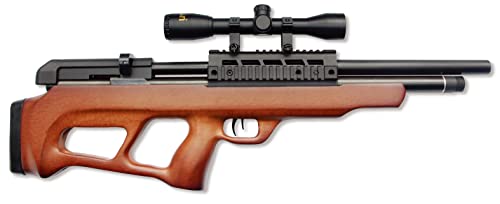
The Beeman Commodore .22 PCP air rifle is a pre-charged pneumatic (PCP) airgun designed for hunters and target shooters who value power and accuracy. This rifle comes equipped with a 4x32 scope and a 10-shot magazine, making it ready for field use straight out of the box. The .22 caliber combined with a 3500 PSI fill pressure offers enough energy for small game hunting, pest control, and paper punching at moderate ranges.
This air rifle is best suited for hunters looking for a quiet, powerful alternative to rimfire rifles, as well as backyard target shooters who want consistent shot-to-shot performance. Many users may appreciate the included optics and magazine system, which reduce the need for additional accessories. The 7.4-pound weight helps with carry comfort during long walks in the woods or range sessions.
Build quality appears solid, with a synthetic stock that withstands weather and rough handling. The PCP system provides a smooth, consistent shot cycle with no recoil, which can improve accuracy over spring-piston designs. However, potential buyers should note that a high-pressure air source (such as a hand pump or SCBA tank) is required to fill the rifle – this is not included and adds to the setup cost.
Realistic drawbacks include the need for dedicated filling equipment and the fact that the scope and magazine are included but may not be top-tier quality. Some enthusiasts may choose to upgrade these components. Overall, the Beeman Commodore .22 offers good value for someone entering the PCP world or expanding their air gun collection, provided they understand the additional gear requirements.
As an air rifle, "cutting performance" refers to its shooting and accuracy characteristics rather than blade tasks. The .22 caliber pellet delivers enough energy for clean shots on small game at typical airgun distances (25-50 yards). The 3500 PSI fill pressure allows for a flat trajectory, which helps with range estimation and shot placement.
The included 4x32 scope provides adequate magnification for precise aiming, and the 10-shot magazine enables quick follow-up shots if needed. The PCP system ensures consistent velocity from shot to shot, which is crucial for repeatable accuracy. The lack of recoil makes it easier to stay on target and spot hits through the scope.
For hunters, this setup works well for squirrels, rabbits, and similar-sized quarry. Target shooters will find the accuracy sufficient for paper targets and plinking cans. The .22 caliber offers a good balance between energy retention and minimal noise, making it backyard-friendly in many areas. The bolt-action cycling is smooth and reliable, and the magazine feeds pellets without jams when properly loaded.
The Beeman Commodore .22 is built around a synthetic stock with a multi-color finish that adds a tactical look while providing weather resistance. The stock is ergonomically shaped with a raised cheek rest and textured grip areas, which may help with comfortable shooting over extended sessions. The 32-inch overall length keeps it compact enough for storage and transport.
The air cylinder is made of aluminum or steel (likely aluminum to keep weight down), and the barrel is button-rifled for accuracy. The fill port is recessed and protected, and a pressure gauge on the cylinder lets you monitor remaining air. The 4x32 scope is mounted via dovetail bases and includes caps for protection. The 10-shot rotary magazine fits flush and is easy to load and insert.
Weight is 7.4 pounds, which is fairly light for a PCP rifle, especially one with a scope. This aids carry comfort during field use. The overall build appears durable for regular outdoor use, with synthetic materials that resist moisture and impacts. The multi-color finish may show scratches over time, but it should not affect function. The trigger is adjustable for pull weight, allowing shooters to fine-tune it. The bolt handle is knurled for positive grip. In terms of portability, the rifle fits in most gun cases and is easy to handle.

Pros
- Lightweight at 4.9 pounds, easy to carry on long hunts or hikes.
- Multi-caliber capability allows switching between .22 and other calibers for varied use.
- High-pressure reservoir supports many shots per fill, reducing downtime.
Cons
- Requires a high-pressure air source (hand pump or tank) for filling, which adds upfront cost.
- Limited to 3500 PSI, may not match higher-end PCP rifles for extreme long-range shooting.
- Zero reviews available, so real-world performance feedback is limited.
The Beeman Raider .22 PCP air rifle is a versatile pre-charged pneumatic airgun designed for hunters, pest controllers, and target shooters. Its 3500 PSI reservoir provides ample power for small game hunting, while the multi-caliber design allows users to adapt to different shooting needs. Weighing just 4.9 pounds, it is easy to carry on long hikes or hunting trips, making it a practical choice for outdoor enthusiasts.
Based on product specifications, the Raider offers consistent shot-to-shot performance with minimal recoil, which may appeal to shooters seeking accuracy. The .22 caliber delivers effective energy for ethical kills on rabbits, squirrels, and similar game. However, it requires a high-pressure air source, such as a hand pump or scuba tank, which adds to the initial investment.
Many buyers may appreciate the lightweight construction and multi-caliber flexibility, though the lack of user reviews means real-world performance data is limited. For those already invested in PCP airguns or willing to purchase the necessary filling equipment, the Beeman Raider could serve as a reliable field companion. It is best suited for hunters and pest controllers who prioritize portability and versatility over extreme power.
As an air rifle, the Beeman Raider does not involve cutting or blade-related tasks. Its performance is measured by accuracy, velocity, and energy delivery rather than edge sharpness or cutting efficiency. The .22 caliber pellet provides sufficient kinetic energy for small game hunting and pest control, with a flat trajectory suitable for ranges up to 50 yards.
The PCP system ensures consistent shot velocities, which may help maintain accuracy over multiple shots. The lightweight design may aid in quick target acquisition during field use. For hunters, this translates to reliable performance on small game, while target shooters may appreciate the repeatability. The multi-caliber option allows users to switch to different calibers for varying tasks, though this requires additional barrels or modifications.
The Beeman Raider features a synthetic stock and metal receiver, contributing to its 4.9-pound weight. The multi-color finish adds a tactical aesthetic, while the overall construction appears durable for outdoor use. The 3500 PSI reservoir is integrated into the stock, maintaining a balanced feel.
Portability is a key strength, as the lightweight design makes it easy to carry during long hunting sessions or hikes. The multi-caliber capability is a unique feature, though it may require additional components for full versatility. Ergonomics are standard for a rifle of this type, with a comfortable grip and cheek weld. The lack of user reviews means long-term durability is unconfirmed, but Beeman's reputation suggests reliable build quality.
Caliber: .22 (multi-caliber capable)
Power Source: Pre-charged pneumatic (PCP)
Maximum Fill Pressure: 3500 PSI
Weight: 4.9 pounds
Color: Multi
Dimensions: 1 x 1 x 1 inches (packaging)
Product Group: Sports
Binding: Tools & Home Improvement

Pros
- Quick and straightforward method for clearing barrel debris at the range or in the field
- Gentle cotton material protects delicate air rifle rifling and crown edges
- Generous 100-count package provides dependable value for routine upkeep
- Compact dimensions make it effortless to store in any shooting kit or range bag
Cons
- Not intended to completely replace dedicated cleaning rods and brushes for heavy fouling
- Engineered exclusively for .22 caliber barrels and cannot be used in .177 or .25 calibers
- Spring-piston air rifle users must observe proper resistance guidelines to avoid dry-fire stress
The Gamo .22 Caliber Air Rifle Cotton Cleaning Pellets are specialized firearm maintenance accessories developed specifically for airgun enthusiasts seeking an efficient way to care for their barrels. Engineered for sport shooters, pest-control hunters, backyard plinkers, and competitive air rifle marksmen, this 100-count supply provides a quick method for swabbing out the bore. Maintaining clean rifling inside an air rifle barrel is critical for velocity stability and group consistency, and having a portable cleaning option allows shooters to service their equipment right at the firing line or out in the field.
In terms of cleaning performance, the manufacturer highlights these cotton pellets as an expedient way to strip away loose dirt, dust, and accumulated lead particles from the bore lining. While centerfire and rimfire rifles demand heavy chemical solvents and bronze brushes to tackle high-heat copper and powder fouling, air rifle barrels primarily collect light lead buildup and environmental particulate. These pre-formed cotton pellets compress slightly as they traverse the barrel, sweeping away loose particulate before it impacts pellet seating or rifling engagement.
The physical design of the product emphasizes practicality and portability. Packaged in a compact container measuring approximately 5.5 inches by 3.5 inches by 1.25 inches, the pellets occupy minimal space in a range pack, shooting vest, or gun safe organizer. Each pellet is composed of compressed cotton fibers tailored specifically to .22 caliber barrel diameters. This non-abrasive construction ensures that delicate crown geometry and internal lands remain entirely safe from the gouging or scratching that rigid metallic rods might risk if misaligned.
Application and handling are straightforward, though safe operation requires awareness of air rifle mechanics. The pellets can be utilized during regular pull-through cleaning setups or propelled through pneumatic and pre-charged pneumatic (PCP) systems to blow out debris. Shooters utilizing spring-piston or gas-ram air rifles should be mindful of dry-fire safety, as unweighted cotton pellets provide minimal backpressure; pairing them with an appropriate lead pellet or using a pull cord is a recognized method to protect internal seals. Keeping the container stored in a dry environment preserves the cotton fibers from ambient moisture before use.
Shooters should recognize the practical limits of this maintenance accessory. As noted in the manufacturer documentation, these cotton pellets are engineered to help maintain performance but are not intended to replace comprehensive cleaning with a dedicated rod, brush, and patch system. Stubborn lead deposits or heavy grease migration from the action will still require occasional mechanical cleaning. Additionally, these pellets are caliber-specific, designed strictly for .22 caliber barrels and unsuitable for smaller .177 or larger bore configurations.
For air rifle owners looking to extend intervals between detailed teardowns, the Gamo .22 Caliber Cotton Cleaning Pellets serve as a practical, low-cost maintenance solution. They offer reliable convenience for field bags and range kits, making them an excellent choice for shooters who value bore hygiene, consistent grouping, and simple barrel care during high-volume shooting sessions.
Integrating Gamo .22 Caliber Cotton Cleaning Pellets into a scheduled cleaning routine helps maintain bore hygiene without subjecting delicate barrel steel to unnecessary friction. Unlike conventional firearms, air rifles do not produce hot carbon or corrosive primer residues, meaning soft mechanical swabbing is often sufficient to maintain consistent pellet velocities.
To ensure optimal results, store the pellet container in a cool, dry range bag compartment away from excess humidity and gun oils. Utilizing these pellets periodically after dusty field trips or extensive target sessions keeps buildup minimal and prolongs the time needed between intensive rod-and-brush cleanings.
Pros
- Adjustable objective eliminates parallax error for both close and far targets
- Close focus capability (5 yards) works well for indoor or backyard plinking
- Comes with mounting rings so you don't need extra purchases
- Windage and elevation turrets are fingertip adjustable and hold zero reliably
Cons
- Weighs 1.5 pounds, which may feel heavy on lighter air rifles
- No illuminated reticle, limiting low-light usability
- Only suitable for air rifles with manageable recoil; not meant for high-power firearms
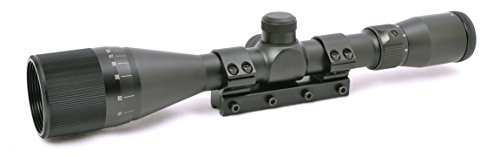
The Hammers 3-9x40AO is a no-frills air rifle scope built for shooters who value practicality and affordability. It is specifically intended for spring-powered air guns in .177 and .22 magnum calibers, making it a natural fit for pest control, target practice, and small game hunting. The adjustable objective (AO) is a standout feature at this price range, allowing you to dial out parallax from 5 yards to infinity. This means you can shoot accurately at very close range, which is handy for backyard plinking or shooting in confined spaces.
This scope is best suited for airgun enthusiasts who want a reliable optic without breaking the bank. Hunters who take squirrels or rabbits at moderate distances will appreciate the 3-9x magnification range, while plinkers will like the close focus ability. The scope includes mounting rings, so installation is straightforward out of the box. Build quality appears adequate for air rifle use, with a one-inch tube and black anodized finish. However, the 1.5-pound weight is noticeable on lightweight air rifles, and there is no illuminated reticle for low-light conditions. Many users find the optics clear enough for the price, and the fingertip turrets make zeroing easy. Overall, this scope is a smart choice for anyone starting out in airgun shooting or looking for an inexpensive upgrade over factory iron sights.
While not a cutting tool, the Hammers scope delivers 'cutting-edge' optical performance in its class. The multi-coated lenses provide decent light transmission and contrast, allowing you to see your target clearly. The 40mm objective gathers enough light for daytime shooting and partly overcast conditions. The adjustable objective effectively eliminates parallax error, which is critical for precise shot placement. At 3x magnification, the field of view is wide enough for close-range snap shots, while 9x lets you pick off targets at longer distances. Windage and elevation adjustments are crisp and tactile, with 1/4 MOA per click, making fine-tuning straightforward. There is no reticle illumination, so aiming in deep shadows or twilight requires good ambient light. Overall, the optical performance is reliable for an air rifle scope at this price point, enabling consistent accuracy when paired with a decent gun and shooter technique.
The Hammers 3-9x40AO is constructed with a one-inch aluminum tube and a matte black finish that resists minor scratches and reflection. The turrets are capped and tactile, with positive clicks that inspire confidence during adjustment. The objective lens housing rotates smoothly for parallax adjustment, and the markings are clear. The scope includes steel rings that fit 3/8-inch and 11mm dovetail rails common on many air rifles. The overall weight of 1.5 pounds is on the heavier side; it may affect the balance of a lightweight air rifle but adds stability on heavier platforms. The eyepiece has a lockable fast-focus ring for quick reticle focus. Rubber seals are likely present, but the scope is not nitrogen purged (no mention of fog-proofing). For an entry-level air rifle scope, the build quality is acceptable, though the finish may wear over time with heavy use. The mount included is basic but functional, so upgrading to a higher-quality mount may improve consistency.
Magnification: 3-9x
Objective Diameter: 40mm
Tube Diameter: 1 inch
Adjustment Type: 1/4 MOA per click, fingertip windage/elevation
Parallax Setting: Adjustable Objective (AO) from 5 yards to infinity
Reticle: Standard duplex (non-illuminated)
Length: 13 inches
Weight: 1.5 pounds
Included Accessories: Mounting rings
Color: Black
Manufacturer: Hammers
This scope suits shooters who own a spring-piston air rifle in .177 or .22 caliber and need a dependable optic for target shooting, plinking, or small game hunting. The adjustable objective is especially useful for those who shoot at varied distances, as it ensures the reticle stays on target without parallax shift. Before purchasing, make sure your air rifle has a dovetail rail compatible with the included rings. If you shoot in low-light conditions often, consider a scope with an illuminated reticle instead. For the price, this Hammers scope delivers good value, but you may want to invest in a lighter scope if your air rifle is small and you plan to carry it in the field frequently.
Understanding .22 Air Rifle Power: Velocity, Energy, and Capabilities
A typical .22 caliber air rifle generates between 12 and 35 foot-pounds of energy (FPE) at the muzzle, though performance varies widely based on internal powerplant design and ammunition choice. Entry-level models and target-oriented rifles often launch pellets between 550 and 700 feet per second (FPS), while high-output magnum platforms can push projectiles past 1,000 FPS. Muzzle energy reflects the true striking power of an air rifle rather than raw speed alone. Recognizing this distinction helps shooters understand what kind of impact a .22 caliber projectile actually delivers downrange.
Velocity Versus Muzzle Energy in .22 Caliber Platforms
Air rifle marketing often emphasizes maximum velocity because large numbers naturally catch consumer attention. However, velocity provides only half the equation when calculating projectile force. Muzzle energy, measured in foot-pounds of energy, combines both the speed of the pellet and its physical weight in grains. A fast but ultra-light pellet might post impressive chronograph numbers, yet it often sheds that energy rapidly once it encounters air resistance.
The standard calculation for kinetic energy multiplies projectile mass in grains by the square of velocity, dividing the result by a constant of 450,240. For instance, a standard 14.3-grain lead pellet traveling at 700 FPS produces roughly 15.5 foot-pounds of muzzle energy. If a magnum platform fires an ultra-light 9.5-grain alloy pellet at 1,000 FPS, it generates approximately 21 foot-pounds. Despite the massive difference in velocity, the difference in kinetic energy remains far narrower than the raw speed numbers suggest.
A heavier .22 projectile typically delivers superior energy transfer upon impact compared to smaller calibers. The wider surface area and greater mass allow the pellet to deform reliably while transferring kinetic force into the target. Lighter alloy pellets may break the sound barrier, but crossing that threshold often disrupts projectile stability. Experienced shooters generally prefer standard lead pellets traveling at subsonic speeds because stable flight delivers far better downrange accuracy.
Break-Barrel and Gas-Piston Power Dynamics
Break-barrel rifles rely on a coiled mechanical spring or a pressurized gas cylinder to compress air behind the pellet during firing. Modern designs, such as the Gamo Swarm Magnum Pro 10X Gen3i, utilize high-output powerplants capable of reaching up to 1300 FPS in .22 caliber with alloy ammunition. That velocity level puts such break-barrels among the most powerful spring-driven options currently manufactured. Delivering that level of performance requires substantial cocking effort and generates significant mechanical vibration inside the action.
The rapid forward motion of the piston creates a distinct bi-directional recoil impulse known for challenging optical sights. When the spring releases, the rifle initially recoils backward before abruptly jerking forward as the piston strikes the front of the compression cylinder. Standard firearm scopes often fail quickly under this forward snap because their internal lenses are braced only against rearward recoil. Using specialized mounts, like the 11mm dovetail Recoil Reducing Rail, helps absorb shock before it reaches delicate optics.
Matching a magnum break-barrel with an appropriate sight requires deliberate planning. Dedicated airgun optics, like the Hammers 3-9x40AO spring air gun scope, incorporate reinforced reticles and adjustable objectives designed to withstand intense piston vibration. In addition, spring rifles require consistent shooting technique, often called the artillery hold, to achieve repeatable accuracy. Holding a high-power break-barrel too tightly against a shooting rest restricts natural movement and can cause sudden shifts in point of impact.
Pre-Charged Pneumatic Performance and Pressure Systems
Pre-charged pneumatic rifles store high-pressure breathing air within an onboard reservoir to propel pellets without violent mechanical piston motion. Operating pressures can range from moderate 2000 PSI reservoirs to heavy-duty 3500 PSI cylinders found on modern sporting platforms. Because PCP rifles release air through an internal strike valve, they produce virtually zero firing recoil. This absence of internal vibration makes them exceptionally easy to shoot accurately over extended sessions.
Platform design directly influences energy potential and shot consistency. A compact setup like the Crosman C3622SKT features a 2000 PSI reservoir with a rifled steel barrel capable of reaching up to 700 FPS and delivering up to 25 shots per fill. This moderate velocity profile makes pumping by hand relatively practical while providing plenty of power for plinking and short-range targets. Shooters exploring value-focused PCP air rifles often appreciate how lower reservoir pressures reduce physical fatigue during manual filling.
Higher-pressure designs, such as the Beeman Raider or Beeman Commodore models featuring 3500 PSI reservoirs, offer elevated energy ceilings and broader shot capacity. Managing 3500 PSI requires dedicated high-pressure hand pumps, specialized scuba tanks, or compact electric compressors. Higher cylinder capacity allows the valve mechanism to sustain higher muzzle velocities across a multi-shot magazine without dropping pressure after just a few shots. Evaluating your willingness to manage high-pressure air equipment is essential before investing in an advanced PCP setup.
Downrange Energy Retention and Caliber Comparisons
A central advantage of the .22 caliber pellet lies in its ballistic coefficient relative to smaller projectiles. When compared to a typical .177 pellet, the .22 pellet carries roughly 70 percent more mass, which helps it resist aerodynamic drag. Even if a .177 rifle shoots faster at the muzzle, the heavier .22 retains a higher percentage of its kinetic energy at 30, 40, and 50 yards. This energy retention translates into greater downrange knockdown capability and reduced deflection from crosswinds.
Trajectory shape represents the primary trade-off when moving from .177 up to .22 caliber. Because the .22 pellet is heavier and often travels slightly slower, its flight path exhibits a noticeably steeper arc over distance. Shooters must learn holdover points or adjust their optical turrets when transitioning between close and distant targets. At extreme ranges, understanding ballistic drop becomes crucial for placing shots precisely within an intended target area.
Comparing .22 platforms against larger ammunition formats highlights distinct capability boundaries. While a standard .22 air rifle excels at precision target shooting and controlled pest control, stepping into high-power big-bore air rifles introduces an entirely different category of performance designed for much larger game. A .22 caliber pellet rifle will never match the raw energy of a .30 or .50 caliber platform, yet it offers unmatched efficiency, quieter operation, and lower ammunition costs for routine recreational shooting. Evaluating caliber roles prevents unrealistic expectations about what smaller bore projectiles can achieve in the field.
Practical Applications and Field Limitations
A quality .22 caliber air rifle delivers ample power for standard backyard target plinking, formal silhouette matches, and small pest management. At energy levels between 12 and 20 FPE, these rifles reliably dispatch small garden pests such as rats, mice, and squirrels at reasonable sporting distances. Magnums and higher-pressure PCP platforms producing 25 to 30 FPE extend effective reach to larger pests like rabbits or crows within ethical shooting boundaries. Precise shot placement remains far more critical than raw power when taking pest management shots.
Recognizing the absolute limitations of an air rifle prevents dangerous shooting errors and unethical hunting practices. Even the most powerful .22 air rifle produces only a fraction of the muzzle energy generated by a standard .22 Long Rifle powder cartridge. Cartridge firearms generate well over 100 foot-pounds of energy, making them suitable for scenarios where air rifles completely lack penetrating power. Airguns should never be used on predators, medium-sized wildlife, or defensive scenarios under any circumstances.
Responsible shooting also requires strict adherence to safety protocols and property boundaries. A .22 caliber pellet traveling at 700 to 900 FPS can easily penetrate sheetrock, break glass, or ricochet off hard surfaces. Always establish a substantial pellet trap or natural dirt backstop capable of catching stray shots without failure. Furthermore, local municipal ordinances often classify air rifles alongside conventional firearms, so verifying regional laws before discharging a rifle in residential areas is vital.
Bore Maintenance and Velocity Consistency
Consistent power output depends heavily on maintaining clean, undamaged barrel rifling. Over hundreds of rounds, soft lead pellets leave microscopic deposits inside the bore grooves, which can eventually alter projectile friction and lower muzzle velocity. Routine care preserves the smooth passage of pellets and keeps your chronograph readings stable. However, cleaning an airgun requires distinctly different techniques than servicing a conventional powder firearm.
Using improper cleaning equipment can permanently ruin delicate airgun rifling and breach seals. A dedicated system, such as the Raiseek Airgun Cleaning Kit with a nylon-coated flex cable and brass jags, allows users to pull patches safely from breech to muzzle without scratching steel rifling. Solid steel rods designed for firearms can nick the crown of an airgun barrel, instantly ruining accuracy. For quick maintenance sessions between full cleanings, Gamo cotton cleaning pellets offer a convenient way to remove loose debris without disassembling components.
Applying standard firearm solvents or petroleum-based oils inside an air rifle compression chamber is extremely hazardous. When subjected to the rapid air compression of a spring or gas piston, volatile oils can detonate violently in a phenomenon known as dieseling. Dieseling damages internal synthetic seals, bends mainsprings, and causes erratic, dangerous spikes in muzzle pressure. Always use manufacturer-recommended, non-petroleum silicone lubricants designed explicitly for high-pressure pneumatic systems.
Sighting Systems and Power Management Considerations
Tapping into the full power potential of a .22 platform requires a sighting system that matches the rifle’s effective range and recoil impulse. While open iron sights work well for casual plinking at 15 yards, extracting consistent precision at 40 yards demands a dependable magnified optic. Parallax adjustment proves vital in airgun shooting because targets often sit closer than standard 100-yard firearm scope calibrations. An adjustable objective lets shooters eliminate optical parallax as close as five yards, ensuring crisp reticle alignment.
Multi-shot magazines and adjustable trigger units further enhance practical accuracy downrange. Systems like the 10X GEN3i Quick-Shot inertia magazine allow rapid follow-up shots without having to manually fumble with individual pellets between breaks. Similarly, two-stage adjustable triggers allow shooters to lighten pull weight, reducing the tendency to pull shots off target during release. Combining a smooth trigger release with a stabilized optical zero guarantees that available projectile energy connects exactly where intended.
Matching your realistic shooting expectations to the appropriate air rifle powerplant saves time, money, and frustration. If you prioritize self-contained simplicity and vigorous power, a magnum break-barrel offers high velocity without requiring external pumps. If pinpoint shot-to-shot consistency and effortless cocking take precedence, a pre-charged pneumatic platform provides an exceptionally refined shooting experience. Evaluating how velocity, projectile weight, and mechanical operation work together allows you to choose a .22 caliber air rifle that delivers reliable power for your specific needs.




Write Your Review
No reviews yet. Be the first to share your experience!